Most people buy a fishing rod and reel combo because it is the cheapest way into the sport, and then quit two trips later because the thing tangles on every third cast and the drag either locks up or slips. That is almost never the combo's fault. It is a setup problem, and it is fixable in about twenty minutes at the kitchen table.
I have been rigging rods for other people for a long time, first as a charter captain out of Destin and now behind the counter of a tackle shop where I spool line for anybody who walks in with a question. The setups that fail are the ones nobody tuned. The setups that catch fish are the ones where somebody took the time to set the drag, check the guides, tie a real knot, and learn to let the rod do the casting.
This is that setup, in the order I do it.
Why you should trust me
I ran charters out of Destin for 24 years before my knees retired me from the boat. These days I run a tackle shop, spool line for working captains, and rig combos for whoever walks in with a box and a blank look. I have set up rods for six-year-olds fishing a farm pond and for retirees chasing redfish off the jetties. I test gear the same way I always have: a full season of real fishing and a backbone test that would scare most anglers. The rod is a tool. The fish is the review.
What a boxed combo gives you, and what it leaves out
A combo kit usually includes three things: a rod, a reel, and line already wound on the spool. Some kits add a small tackle box, a handful of lures, and a carry bag. What no box includes is a drag set for the line weight, a knot you would trust on a fish, or terminal tackle matched to the water in front of you.
That is the entire job. You are not upgrading anything. You are setting the drag, checking the guides, tying a proper knot, and learning to load the rod instead of whipping it. Do those four things and a beginner combo outfishes an expensive rod with a bad drag setting every single time.
The two combos I hand beginners most often
I keep two setups on the shop counter so people can feel what a beginner combo should be before they spend anything. One is built for kids. The other packs down small enough to live in a car trunk or a backpack, which is what most adults actually need.
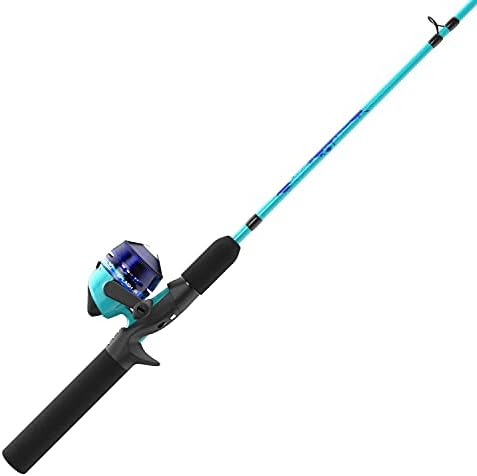
Kids and first-timers: Zebco Kids Splash Jr. Spincast Reel and Fishing Rod Combo, 4-Foot 2-Piece Fishing Pole, Right-Hand Retrieve, Pre-Spooled with 6-Pound Cajun Line
 Visit on Amazon →
The push button is the reason this one wins for a kid. There is no bail to flip, no line to trap under a finger, and no way to backlash it. Press the button, cast, release. That is the whole motion, and a seven-year-old can learn it in an afternoon on a dock.
The rod is a 4-foot two-piece, so it breaks down for the back seat of a car, and the reel comes pre-spooled with 6-pound Cajun line. Right-hand retrieve means the handle sits on the side most kids expect. Nothing about it needs assembly beyond joining the two pieces.
Flaws but not dealbreakers: Six-pound line is light. This is a panfish, trout, and small bass setup, not a catfish rig and not something you hand a teenager who wants to fish heavy cover. The short rod also keeps casts short, which is a feature for a kid on a dock and a limitation for an adult who wants to reach a far bank.
Anyone buying a first rod for a child between roughly five and ten, or an adult who wants a loaner for visiting nieces and nephews, will get years out of this one.
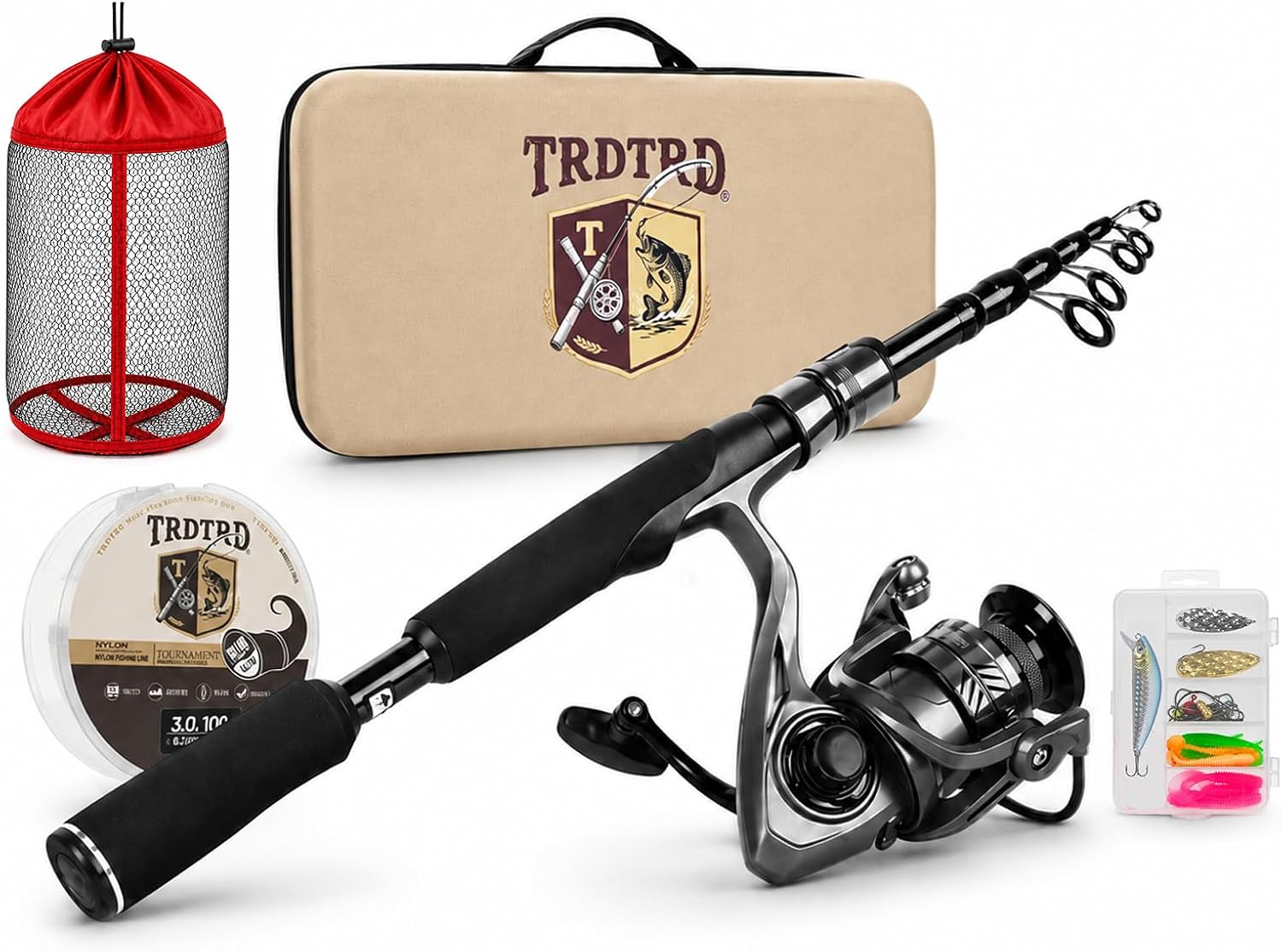
Travel and pack-in pick: Fishing Rod and Reel Combo Kit, Telescopic Fishing Rod, Collapsible Fishing Rod, Portable Fishing Set w/Tackle Box, Lures & Bag, 4.2oz Carbon Fiber, 5.2:1 Anti-Twist Reel, Freshwater/Light Saltwater
 Visit on Amazon →
This is the one I recommend to adults who fish on trips rather than at home. The blank is telescopic, the kit includes a tackle box, a set of lures, and a carry bag, and the listing puts the rod at 4.2 ounces in carbon fiber with a 5.2:1 anti-twist reel. It is rated for freshwater and light saltwater, which covers a farm pond, a lake, a canal, and a calm inshore morning.
The reason to buy it is the collapsed length. A rod that lives in a bag gets fished. A rod that lives in a garage does not.
The trade-off with any telescopic blank is that it flexes a little differently than a one-piece rod, and it depends on every section seating fully. Extend it section by section and give each joint a twist until it locks. Do that and the rod performs. Skip it and you will feel a soft, mushy tip on the cast and blame the rod for it.
Flaws but not dealbreakers: Telescopic rods collect grit in the joints if you leave them extended and sandy. Collapse it, wipe the sections, and it lasts. The light saltwater rating means rinsing it with fresh water after every trip. Salt does not forgive anything it touches, and guides are the first thing to go.
Anyone who travels, hikes into a pond, fishes from a kayak, or keeps a rod behind the truck seat should look here first.
The setup workflow, step by step
Now the part that actually matters. Do these in order and you will not fight the combo on the water.
Step one: set the drag before anything else. Hold the rod up, pull line off the spool by hand, and turn the drag knob until the line comes off with steady resistance and no jerking or locking. Too tight and you break line on the hookset. Too loose and you never bury a hook. Do this at home, not on the water with a fish on.
Step two: check every guide. Run a cotton swab around the inside of each ring. If it snags fibers, the ring is cracked or grooved, and it will shred your line a little more on every cast. A grooved guide is the most common problem on a combo that has been sitting in a garage for two seasons.
Step three: check the reel seat. Mount the reel and try to rock it side to side. Any movement means the hoods are not tight or the seat is worn. A wobbly reel seat on a fish with shoulders is a disaster waiting to happen, and it is the one flaw you cannot fix on the bank.
Step four: deal with the line. Monofilament has memory. If the line comes off the spool in coils the shape of a spring, it will do the same thing on the water. On a spinning reel, strip it and wind new line on under tension. On a spincast reel, that is a shop job, and it is worth the few minutes.
Step five: tie a knot you trust. Improved clinch for monofilament up to about 20-pound test. Palomar for braid and for anything heavier. Wet the knot before you snug it down. A dry knot burns itself and fails at the worst possible moment.
Step six: add a leader if the water calls for it. In clear water or light saltwater, tie a short fluorocarbon leader to the main line with a double uni or an Alberto knot. In a muddy farm pond chasing bluegill, skip it. Leaders are for fish with eyesight and teeth.
Step seven: rig for the water in front of you. Match the hook to the bait, not to the fish you hope to catch. A split shot above the knot gets you down. A bobber keeps a kid interested. Start simple and add weight only when you have to.
Step eight: learn to load the rod. The cast is the rod bending and unloading, not your arm throwing the lure. Bring the rod back until you feel the blank load, then push forward smoothly and let the tip do the work. On a push-button reel, release the button at the top of the forward motion. On a spinning reel, trap the line against the blank with your index finger, open the bail, and release at the same point. Whipping the rod does not add distance. It adds tangles.
Line, drag, and the numbers that matter
Match the line to the rating printed above the handle. A rod rated for 6 to 12-pound line will not cast 20-pound monofilament well, and it will not survive a drag locked down against it.
A workable rule of thumb is to set the drag at roughly a quarter to a third of the line's rated breaking strength. You can check it with a spring scale if you have one, or by hand if you do not: pull line off the spool and it should come off steadily, not in jerks and not freely.
Fill the spool to just shy of the lip. Overfilled spools throw loops. Underfilled spools cost you casting distance and put more drag on the line as it leaves the reel.
Mistakes I see at the shop counter
- Overfilling a reel because the line looked low. It looked low because it had been cast a few times. Let it settle before you add more.
- Leaving the drag locked down in storage. That flattens the drag washers, and it is why a reel that worked last summer slips this summer.
- Storing a rod with a wet lure attached. Hooks rust, and the rust stains the blank.
- Retrying a frayed knot instead of cutting back and tying a new one. The last few feet of line take the abuse. Cut back a foot and start clean.
- Buying heavier line than the rod can handle because bigger sounds stronger. The rod cannot cast what it was not rated for, and the reel will not manage it.
What this all costs
A beginner combo is one of the cheapest ways into any outdoor sport, and both of the setups above are listed on Amazon. Check current Amazon price there rather than trusting a number printed in an article, because listings move. The math that matters is not the sticker anyway. It is the cost per trip over the two or three seasons a well-maintained combo lasts, and that number is small enough to stop thinking about.
The part that costs you is skipping the setup. A combo with a locked drag and a grooved guide is a wasted season.
The bottom line
Buy the combo that matches the water you actually fish and the person who will actually hold it. A kid on a dock needs the push button and the short rod. An adult who fishes on trips needs the telescopic kit and the bag. Then set the drag, check the guides, tie a real knot, and let the rod cast instead of your arm.
That is the job. Do it once at the kitchen table and the combo will do its part for years.