Most starter kits fail on the first trip for the same reason: nobody spooled the reel right, nobody set the drag, and nobody looked at the guides before the line ran through them. A beginner fishing rod and reel kit is a box of parts until you set it up, and the setup takes about 40 minutes at the kitchen table. Those 40 minutes are the difference between a combo that casts and a combo that birds-nests on the second cast.
I have fished out of Destin for 24 years. I ran charters until my knees told me to quit, and now I run a tackle shop and test rods full time. I have spooled more line than most factories, and I have watched hundreds of beginners walk in with a boxed combo and walk out with that same combo rigged wrong. The rod was almost never the problem. The setup was.
Here is the order I use, every time: line rating first, spooling second, knots third, drag fourth, and a pre-trip check last. Skip a step and the fish will find out.
Why you should trust me
I spent 24 years on the water as a guide before I moved behind the counter. Every rod that comes through my shop gets judged on the same four things, and I keep a logbook of action curves for the rods I fish myself. My rule is simple: I do not care what the catalog says a rod does. I care how it loads on a real cast, whether the mid-section holds up when a fish turns, and whether the guides survive a season of sun and salt.
That is the lens I used to pick the two setups below. One is a complete starter kit for an angler who owns nothing. The other is a hard-water rod for the panfish and perch crowd. Neither is the most expensive option in its class, and that is on purpose. You do not need the most expensive rod. You need the one that matches the fish you actually catch.
How I judge a starter kit
Four things decide whether a kit is worth spooling up.
Action. Action is how the rod bends, not how stiff it feels in the store. A fast rod bends near the tip, a moderate rod bends through the middle, a slow rod bends deep into the butt. For a beginner, moderate is the safe answer, because it casts a wider range of lure weights without demanding a perfect cast.
Guides. The guides are the rod as far as your line is concerned. Cheap rings groove, and a grooved ring shreds line and costs you fish. Run a cotton swab around the inside of each ring before you fish. If it snags fibers, the ring is damaged and the rod goes back.
Reel seat. The reel seat is the fitting that holds the reel. Grab the reel and try to rock it side to side. If it moves, the seat is loose or the fit is sloppy, and a wobbly reel seat on a decent fish is a disaster waiting to happen.
Line rating. The printed line rating is the range the blank was built to handle. Stay inside it. A rod rated 4-8 lb does not want 15 lb line on it, no matter what the guy at the big box store tells you.
What a complete kit actually needs
A working kit is six things: a rod, a reel, line, terminal tackle, a way to cut and pinch, and a box to carry it. That is the whole list. Anything past that is convenience.
The short answer for a first setup: buy the combo that includes everything, then spend your first upgrade money on fresh line instead of a second rod. Line is the first thing I change on any boxed combo, because line is cheap and bad line ruins good gear.
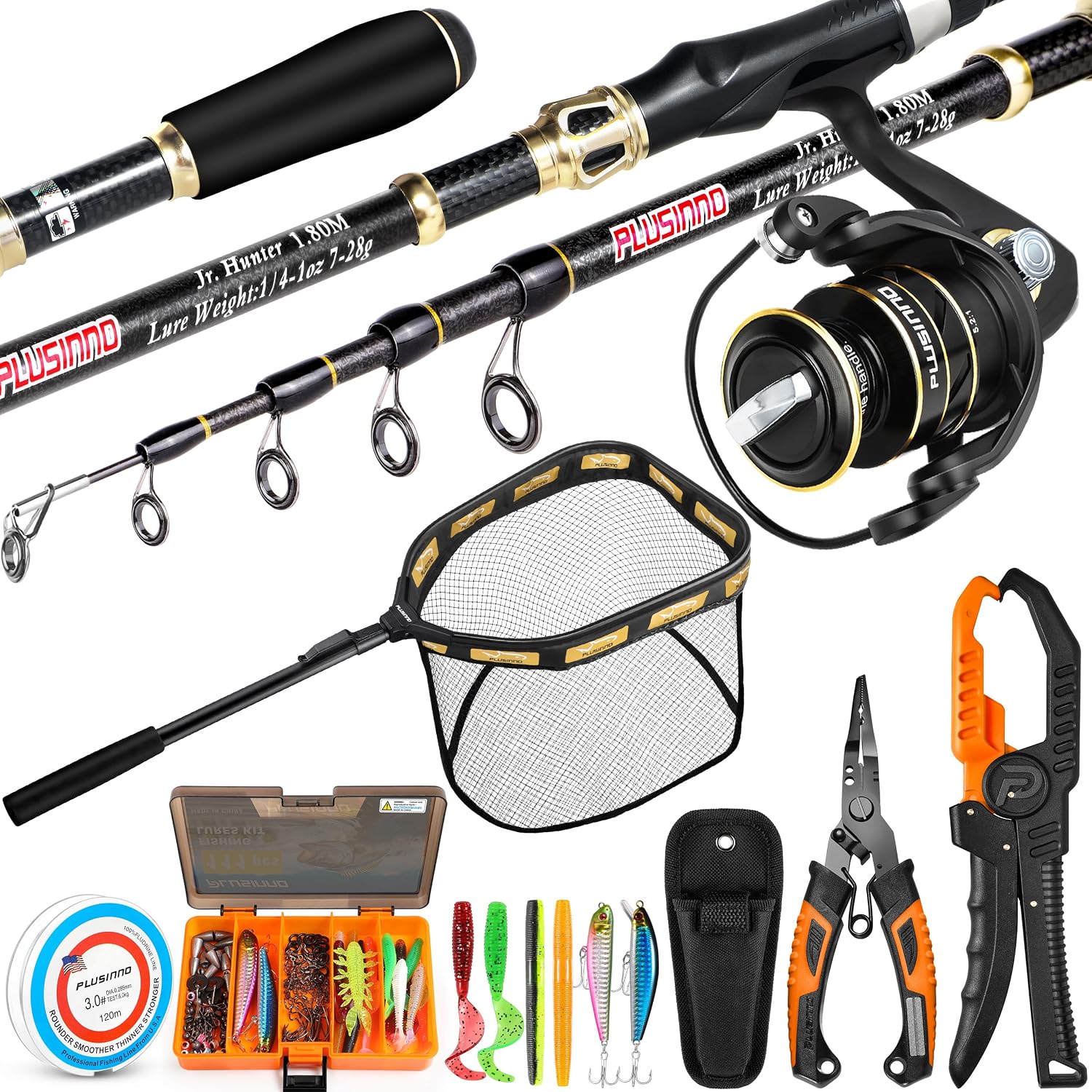
The all-in-one starter pick: PLUSINNO Fishing Gear,Full Fishing Pole kit Include Fishing Rod and Reel Combo, Tackle Box with Fishing Lures, Fishing Accessories, Fishing Pliers,Fishing Gifts for Men with Fishing Tool Kit
 Visit on Amazon →
This is the kit I hand to someone who has never owned a rod. You get the rod and reel combo, a tackle box with lures, the smaller accessories, and a pair of pliers, which matters more than beginners think. Pliers are how you pinch a split shot and how you get a hook out of a fish without losing a finger.
What I like about the shape of this kit is that it solves the problem that stops most beginners cold: they buy a rod, then discover they still need line, hooks, weights, and something to carry it all in. This box closes that gap in one purchase.
Flaws but not dealbreakers: It is a kit, which means the money is spread across a lot of pieces instead of concentrated in one great reel. Treat the reel as a starting point, plan on a fresh spool of line rated for the rod, and check every guide ring before the first trip. Do those three things and this setup will fish.
Anyone who wants one box, one trip to the water, and no shopping list should start here.
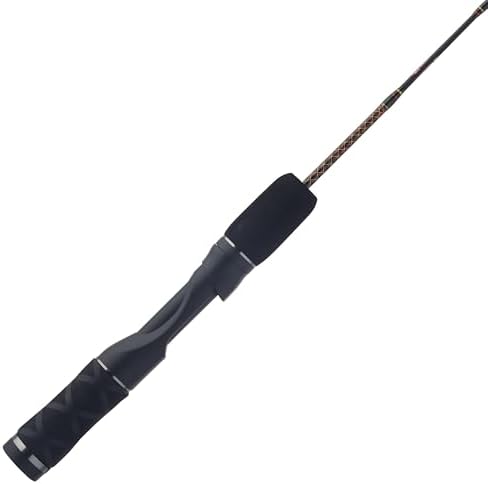
The hard-water pick: Ugly Stik 32" GX2 Ice Spinning Rod, 1-Piece Fishing Rod, Medium Rod Power, 4-8 lb Line Rating
 Visit on Amazon →
The 4-8 lb line rating tells you exactly what this rod is for: panfish, perch, crappie, and small trout through a hole in the ice. Medium power in a 32 inch blank is a short, quick tool built to set a hook in a small fish in deep water, not to fight a 20 pound anything.
Ugly Stik has been the value king in my shop for as long as I have been selling rods. The blanks are tough, and the action is good enough for the vast majority of anglers. This is the rod I recommend when someone wants to try ice fishing without committing serious money to a sport they might fish six weekends a year.
Flaws but not dealbreakers: It is a one-piece rod, so it will not break down for a backpack or a small car trunk. Measure your transport space before you order. Ice guides also need attention: wipe them dry after every trip, because freezing water plus a dirty ring is how you groove a guide in one season.
Anyone fishing panfish through the ice, or fishing small water from a dock in the winter, will get their money out of this rod.
Setting up the kit, step by step
Step one: inventory the box. Lay everything out and count it. Check the rod for cracks at the tip, look at the reel foot where it seats, and run that cotton swab around every guide ring. If a ring is cracked or missing, stop and return it before you spool. A damaged guide will shred a fresh spool of line in an afternoon.
Step two: match the line to the rod rating. Read the rating printed above the handle. The ice rod says 4-8 lb, so 6 lb monofilament or a 6 to 8 lb braid is the right neighborhood. The kit rod will carry its own rating. Stay inside the printed range. Overloading a blank with heavy line is the most common beginner mistake, and it costs you casting distance and hooksets.
Step three: spool the reel. Fill the spool to about an eighth of an inch below the lip. Too little line and the coils have to jump too far to leave the spool, which kills distance. Too much and the line slaps the lip and you get a wind knot. Keep tension on the line as it goes on by running it through your fingers or through the pages of a thick book. A loose spool is a spool full of loops waiting to happen.
Step four: tie the right knot. For monofilament, an improved clinch knot is the workhorse. For braid, a Palomar. Wet the knot before you cinch it down. A dry knot burns itself and fails under load, and it will fail on the one fish you wanted.
Step five: set the drag before the first cast. The drag should slip before the line breaks. A good starting point is roughly a third of your line breaking strength, which you can feel by pulling line off the spool by hand. If it takes real effort to pull line off with the reel in gear, back the drag off. Locked drags are how beginners lose fish and rods.
Step six: rig for the fish in front of you. For panfish and perch, a small jig under a bobber or a tiny jig near the bottom. For ice, downsize everything: smaller jig, lighter line, slower presentation. Match the hatch, not the catalog.
Step seven: organize the box once. Lures in one compartment, hooks and weights in another, pliers in your pocket or on a lanyard, not buried. You will not dig through a box with cold hands and a fish on.
Step eight: run the pre-trip check. Guides clean, reel seat tight, drag set, knot wet and seated, hook point sharp. Thirty seconds at the truck. That is the whole checklist.
Cold weather and off-season care
Ice fishing is hard on gear. Water gets into everything, then freezes. After every trip, wipe the rod down, dry the guides, and back the drag off to zero so the washers are not compressed all winter. Store the rod straight, not leaning in a corner, because a one-piece blank stored under load takes a set. Rinse the reel with fresh water if you fished any salt, and put a drop of reel oil on the handle knob once a season.
What this all costs
I will not quote you a price here, because prices move and I would rather you check the listing yourself. What I will tell you is how to think about the spend.
The all-in-one kit is the cheapest path to a working setup, because it bundles the rod, reel, line, tackle, and pliers into one purchase. The ice rod is a second-season buy, the one you add after you know you like standing on a frozen lake. Fresh line is the best money you will spend on either one.
Compare that to the alternative: buying a rod, then a reel, then line, then terminal tackle, then a box, one piece at a time, and paying a little more at each stop. The kit is not a compromise. It is a shortcut.
What a kit will not fix
Two things.
First, a kit will not make you a caster. Spend an hour in a park or on a dock practicing before you fish. Learn to load the rod with the weight of the lure instead of muscling it. That single skill matters more than any upgrade you can buy.
Second, a kit will not tell you where the fish are. Read your local regulations, ask at the shop, and fish the spots that match the season. Gear gets you in the game. Water reading wins it.
That is the job. Set the kit up right, check it before you leave, and let the rod do the work.