Most spinning rod and reel combos get blamed for problems the angler created in the first ten minutes of ownership. Line goes on wrong, the drag gets cranked down and left there, a guide gets nicked in the truck bed, and suddenly the rig that felt fine in the store casts like a wet rope. I spent 24 years guiding out of Destin before my knees moved me behind a tackle counter, and I have watched that exact sequence from both sides of the transaction. A spinning rod and reel combo is not a mystery. It is a tool with about six moving parts, and you can check every one of them in a driveway in under an hour.
This is the setup routine I use. Not the catalog version. The version that holds up through a season of saltwater, a kid learning to cast, and the afternoon a big jack decides your drag setting was only a suggestion.
None of it requires a bench, a torque wrench, or a degree. It requires you to slow down and pay attention to the parts that actually touch the fish.
Why you should trust me
I guided out of Destin for 24 years before my knees voted me into retail. Now I run a tackle shop, which means I spool reels, replace grooved guides, and listen to anglers describe a "bad rod" that turns out to be a bad setup. I keep a logbook of action curves for every rod that crosses my counter, and I have spooled more line than most factories. My rule is simple: no rod gets recommended until it has been fished enough to show me how it loads, how the backbone holds under pressure, and whether the guides survive a season. A combo I hand a paying client has to cast clean on the first try, because nobody on a boat has patience for a backlash.
How I picked and how I tested
The checklist below is the same one I run on every combo that comes through the shop, and it is why two very different price tiers both made the cut here.
Guides first. Run a cotton swab around the inside of every ring. If the cotton snags, the ring is cracked or grooved, and a grooved ring will shred line all season. Cheap guides are the fastest way to ruin an otherwise decent rod.
Reel seat second. Lock the reel in, then load the rod the way you would with a fish on. If the seat rocks under load, walk away. A wobbly reel seat on a 20-pound fish is a disaster waiting to happen.
Drag third. Pull line off the spool by hand and feel the start-up. It should break free smooth, not in a lurch. A drag that stutters is a drag that snaps line.
Line lay fourth. Look at the spool from the side. The line should stack evenly, with no bulge in the middle and no gap at the lip.
Balance fifth. Put the reel on and find the point where the rod sits level across your finger. It should balance at or just ahead of the forward grip. A tip-heavy combo wears you out by noon, and tired hands cast badly.
The combos worth starting with
Two combos cover most of what a new angler needs. One is a ready-to-fish pair for kids, guests, and the back of the truck. The other is the combo you buy when you plan to keep it for a decade and hand it down after that.
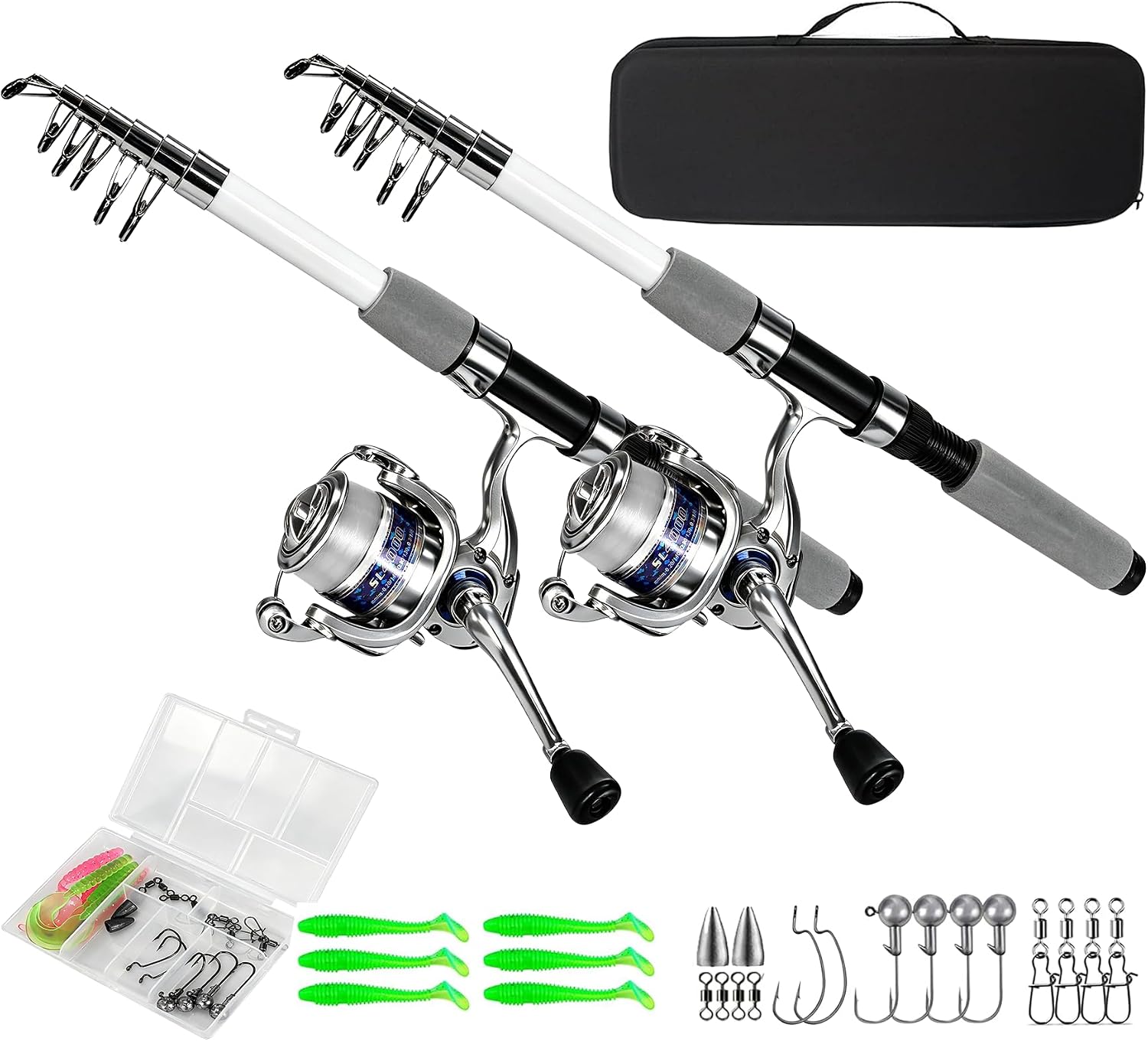
Budget pick: Spining Reels and Fishing Rod Combos (2-Pack), 5ft /6ft Fishing Pole, Size 2000 Reels, Pre-Spooled with 10 lb and 15 lb Mono Line
 Visit on Amazon →
Two rods, two size 2000 reels, and line already on both spools: a 5-foot pole with 10-pound mono and a 6-foot pole with 15-pound mono. That is a starter kit and a spare in one box. Check current Amazon price and you will see why this is the pair I hand a family heading to the pier for the first time.
The 5-foot rod is the one for a kid in tight quarters, a dock, or the back of a kayak where a longer rod bangs into everything. The 6-foot rod is the general-purpose one, and 15-pound mono gives you enough margin to land a decent slot redfish or a channel cat without a fight that lasts twenty minutes.
Two caveats. Factory-spooled line is often filled a little shy of where it should be, so check the spool lip before the first cast and top it off if there is a visible gap. And budget guides are the first part to fail, so run the cotton swab check every few trips and rinse both rods after saltwater. If a ring starts to groove, that rod becomes a tomato stake.
Flaws but not dealbreakers: The reels are basic, and the drag will not feel like a machined stack. Set it light, let the fish run, and this pair does the job it was built for.
This is the right buy for a beginner, a kid, or anyone who wants two rods ready to go without spending a weekend spooling.
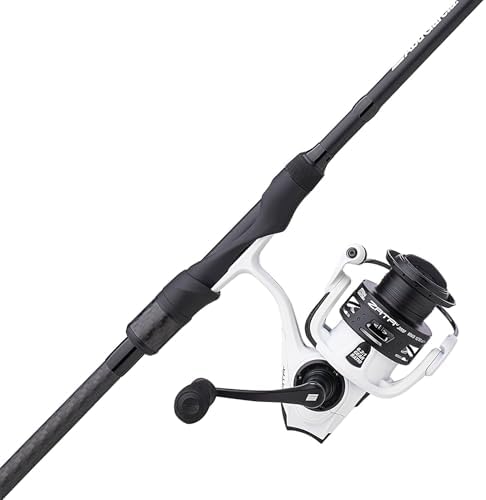
Upgrade pick: Abu Garcia Veritas Spinning Reel and Fishing Rod Combo
 Visit on Amazon →
This is the other end of the shelf: one rod, one reel, built to be fished hard for years instead of handed to a guest. Check current Amazon price and compare it to the two-pack, because the difference is not decoration. Better guides, a reel seat that locks down and stays locked, and a drag that starts smooth are what you are paying for, and those three things are the difference between landing a fish and telling a story about the one that got away.
If you fish two or three times a month and you are tired of replacing gear, buy once here and skip the annual upgrade cycle. This combo balances well with a 2000 to 3000 class reel, casts light lures without loading awkwardly, and has the backbone to fight something with shoulders.
Two caveats of its own. Do not over-spool it out of excitement; the same eighth-inch rule applies. And match your line to the rod's rating rather than grabbing whatever is on the shelf, because a rod loaded with the wrong line weight will never cast the way it was designed to.
Flaws but not dealbreakers: You are buying a combo, and the reel is not a top-shelf flagship. It is still a reel I would fish myself without complaint.
This is the combo for the angler who has decided fishing is going to be a habit.
The actual setup workflow
Now the part that matters, and it works on either combo above or on whatever you already own.
Step one: Match the rod to the fish you actually catch. Not the fish in the catalog photo. If you fish docks and ponds for bass and panfish, a medium power rod is right. If you are chasing redfish and snook around structure, you want more backbone. The 5-foot rod is a tight-quarters tool; the 6-foot is the all-rounder. Pick the length that fits where you stand, not the one that looks best online.
Step two: Check the guides before anything else. Cotton swab, every ring, inside edge. A snag means stop. A grooved guide frays line, and frayed line breaks on the fish you wanted.
Step three: Seat the reel and load the rod. Tighten the reel seat by hand, then bend the rod against a soft pull and watch the seat. Any movement means tighten again, or the seat is not going to hold. This takes ten seconds and saves a fish.
Step four: Check the spool fill. On the pre-spooled two-pack, this is your first job. Line should come to within about an eighth of an inch of the spool lip. Overfilled spools throw loops off the top; underfilled spools cost you distance and make the drag work harder than it should.
Step five: If you respool, do it under tension. Run the line through a wet rag or a phone book held shut with your knee. Slack line goes onto the spool in loose coils, and those coils come off in a bird's nest on your third cast.
Step six: Set the drag before you cast. Start at roughly a quarter to a third of the line's breaking strength. On the 10-pound mono on the 5-foot rod, that is about two and a half to three pounds of pull. On the 15-pound on the 6-foot rod, a little more. Pull line off by hand and feel for smooth start-up. A drag set at half the line's rating is a drag that will break it.
Step seven: Tune the cast on grass. Rig a lure or a casting plug in the middle of the rod's weight range and cast on the lawn before you go near water. Check that line peels off the spool evenly and learn how the rod loads. Ten minutes on grass saves an hour of untangling on the boat.
Step eight: Rinse and inspect after every saltwater trip. Freshwater rinse on the rod, the guides, and the reel. Back the drag off between trips so the washers are not compressed for weeks. Recheck the guide rings every few trips, because the ring is the part that fails silently.
That is the whole routine. None of it is difficult, and all of it is what separates a combo that fishes from a combo that frustrates.
What I would skip
Skip anything sold as saltwater ready with guides that corrode after one season, and skip combos where the reel seat has play in the store. Both are promises the hardware cannot keep. Skip the urge to buy the longest rod on the rack if you fish from a kayak or a crowded pier. And skip the idea that you need a second combo before you have learned to cast the first one well. Two rods in the box is plenty; two rods in your hands at once is a mess.
The bottom line
A spinning rod and reel combo is a system, and the setup is the part you control. Check the guides, lock the reel seat, fill the spool to the right line, set the drag light, and tune your cast on grass. Do those five things and a modest combo will out-fish an expensive one that was thrown together in a parking lot.
Start where your budget and your patience meet. The two-pack gets a beginner or a kid fishing this weekend. The Veritas combo is the one you keep. Either way, the rod is a tool and the fish is the review, so get the setup right and go find out.