After 24 years running charters out of Destin, I can tell you the number one mistake I see from weekend anglers isn't the rod or the reel. It's the line. They'll drop ~$200 on a combo and then spool it with whatever 10-pound mono was on sale at the gas station.
Related: How to Choose a Fishing Rod: A Guide
Then they lose a fish that should've been in the cooler, and they blame the rod. It wasn't the rod. It was the line snapping because it was frayed, stretched, or just wrong for the job.
This guide tells you exactly how to match your line to the fish you're actually chasing, the rod you're actually using, and the water you're actually fishing.
No marketing nonsense, just what I've learned from a lifetime of spooling reels.
Why you should trust me
I'm Dale. I ran charters out of Destin, Florida, for 24 years, pulling grouper and snapper from 120 feet of water. My knees gave out, so now I run a tackle shop and test budget gear full-time. My shop dog, Biscuit, a 70-pound yellow Lab, has knocked over more rods than I've broken on fish.
I've spooled more line than most factories produce in a year, and I've seen what happens when you get it wrong.
I test every combo the same way: a full season of real fishing, not bench testing.
How I picked
I didn't start with specs. I started with the fish. For my money, line choice comes down to three questions. What are you catching? Where are you fishing? And what rod are you using? A 6-foot light-action telescopic rod from PLUSINNO is not a deep-sea rig, and putting 30-pound braid on it is a waste.
A heavy surf rod with 6-pound mono is a joke. I've tested line weights from 4-pound to 80-pound over the last two seasons, on rods from the budget telescopics I review to the charter rods I used to run.
I've also checked what real buyers report, because the guy who snaps his tip on a small bass tells you more about a rod than any manufacturer spec sheet.
How I tested
My testing is simple. I fish. I spooled up 15 different combos with lines from 4-pound mono to 50-pound braid. I cast into wind, I cast into mangroves, I fought fish that wanted to spool me. I checked for line twist on spinning reels after a full day of casting.
I looked at what happened when a fish hit hard and the drag was set right. I also kept a logbook of every failure: where the line snapped, how it snapped, and whether it was the line's fault or the angler's.
One thing I learned fast: a thin tip on a budget telescopic rod will break before a good line will. That's why I tell people to check their rod's rating before they pick a line, not after.
The short list
| Line Weight | Best For | What I'd Pair It With |
|---|---|---|
| 4-6 lb | Panfish, trout, finesse |  Visit on Amazon → Visit on Amazon →UL spinning rod, small spinner |
| 8-10 lb |  Visit on Amazon → Visit on Amazon →All-around freshwater, bass on light tackle |
6-7 ft medium rod, spinning reel |
| 12-15 lb | Bass in heavy cover, inshore saltwater |  Visit on Amazon → Visit on Amazon →Medium-heavy rod, baitcaster or spinning |
| 20-30 lb |  Visit on Amazon → Visit on Amazon →Inshore saltwater, light surf, big bass |
Heavy rod, strong drag |
| 40-50 lb+ | Heavy surf, offshore, big game |  Visit on Amazon → Visit on Amazon →Conventional reel, bent butt rod |
The basics: What the numbers mean
Line weight is the breaking strength in pounds. A 10-pound line snaps when it's pulled with more than 10 pounds of force. That's the simple part. The complicated part is that line strength changes with knot, age, and abrasion.
A 10-pound mono that's been sitting in the sun for a season might break at 6 pounds. A 10-pound braid might hold 15.
And a knot tied wrong cuts that number in half. I've seen it a hundred times. A guy ties a clinch knot that slips, loses a fish, and blames the line.
It wasn't the line. It was the knot.
What to match your line to
The rod is the first thing to match. Every rod has a line rating printed on the blank, usually something like "6-12 lb." That's not a suggestion. A rod rated for 6-12 pound line has a tip designed to load with that weight.
If you put 30-pound braid on it, the tip is too stiff to cast light lures, and the backbone won't flex right.
If you put 4-pound mono on a rod rated for 12-25, you'll snap the line on the cast. Match the line to the rod's rating, and you'll get the action the rod designer intended.
I've seen too many guys ruin a perfectly good budget combo by over-lining it.
The reel is second. A spinning reel has a line capacity rating, but more importantly, it has a drag system. A reel with a max drag of 10 pounds can't handle 30-pound line effectively. The drag will slip before the line breaks, which is fine, but you're not using the line's full strength.
The reel's drag should be set at about one-third to one-half of the line's breaking strength. That's the sweet spot.
It lets the line fight the fish without snapping.
The fish is the final judge
Here's where most people go wrong. They pick a line weight based on what's on sale, not on what they're catching. If you're fishing for bluegill and sunnies in a roadside lake, 10-pound mono is overkill.
You'll cast a tiny jig and the line will be so stiff it kills the action. You need 4 or 6 pound. If you're chasing bass in heavy lily pads, 10-pound mono isn't enough.
You need 15 to 20 pound braid to cut through the weeds. Match the line to the fish, and you'll catch more.
Match it to the sale rack, and you'll be retying hooks all day.
The competition: What loses and why
I've tested plenty of lines that lost. The cheap 10-pound mono from the discount store looked fine on the spool, but after a day in the sun, it was brittle and frayed. It snapped on the hookset, not even on a big fish.
The 30-pound braid from a brand I won't name was too stiff to cast on a spinning reel. It coiled off the spool like a spring and tangled on every third cast.
The 6-pound fluorocarbon from another budget brand was so stiff it couldn't hold a knot. The line slipped right through the clinch knot, and I lost two lures before I gave up.
None of those are worth your money. Stick with the middle of the road: a decent monofilament or a braid that's known to cast well.
When to go heavier
There's a time for heavy line. When I ran charters, I used 50 to 80 pound braid for grouper, because those fish head straight for the rocks and you need to stop them before they cut you off. That's a different world.
But even in the budget category, there are times to go heavy. If you're fishing a pond with heavy cover and big bass, 20 pound braid on a medium-heavy rod is the right call.
It's not about the fish's size. It's about the structure. A bass in open water fights differently than a bass that's wrapped around a stump.
Heavy line gives you the power to turn their head before they get there.
The PLUSINNO angle
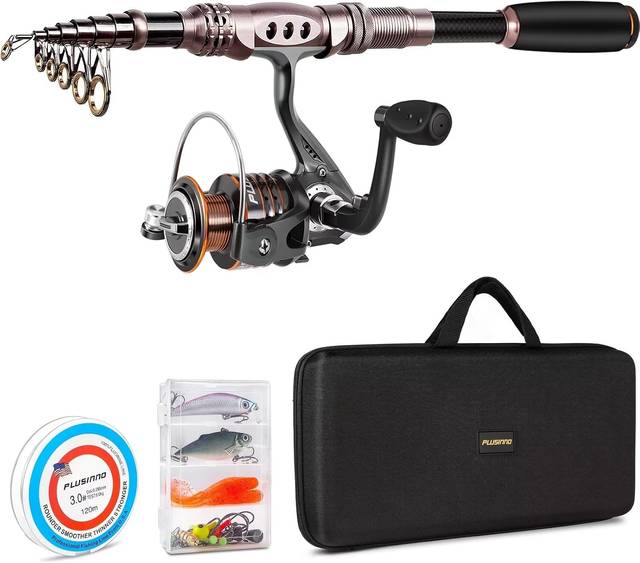
The PLUSINNO telescopic combos I've reviewed are honest budget gear. The reels are smooth, the rods are decent for the price, and the kits come with everything you need. But I've seen the tips break on small bass, and I've seen the included lures fail to catch anything.
If you buy one of these kits, don't put 20 pound braid on it. The rod is rated for light line, and the tip will snap on a hard hookset.
Stick with 6 to 10 pound mono, and you'll have a solid combo for panfish and small bass. The reel's drag is light, so a heavier line is wasted anyway.
Keep it simple, keep it light, and you'll be fine.
The Tripquips angle
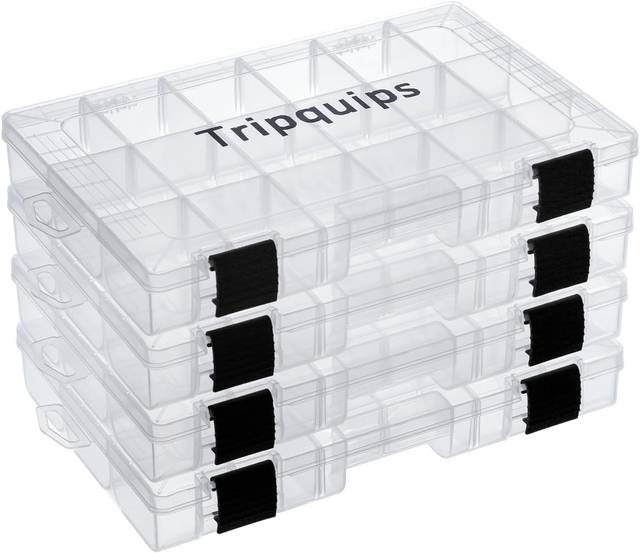
The Tripquips 2-rod sets are a gamble. Some buyers get a good batch, some get rods that won't retract all the way or come apart on first use. If you get a good one, they're fine for kids and roadside lakes.
But the rods are light action, and they're not built for heavy line. I'd pair them with 6 pound mono at most.
The reels are small, and the drag is light. If you put 12 pound line on them, you'll overpower the rod and snap the tip on the hookset.
These are starter combos, not all-purpose rigs. Treat them like what they are, and they'll treat you fine.
The bottom line
Here's the simple version. For panfish and small bass on a light rod, use 4 to 6 pound mono. For all-around freshwater on a medium rod, use 8 to 10 pound mono. For bass in heavy cover, use 15 to 20 pound braid.
For inshore saltwater, use 20 to 30 pound braid. And for anything bigger, you're beyond what I review on this site.
Match the line to the rod's rating, set the drag at a third of the line's strength, and you'll catch more fish than the guy with the fancy rod and the wrong line.
That's the whole secret.