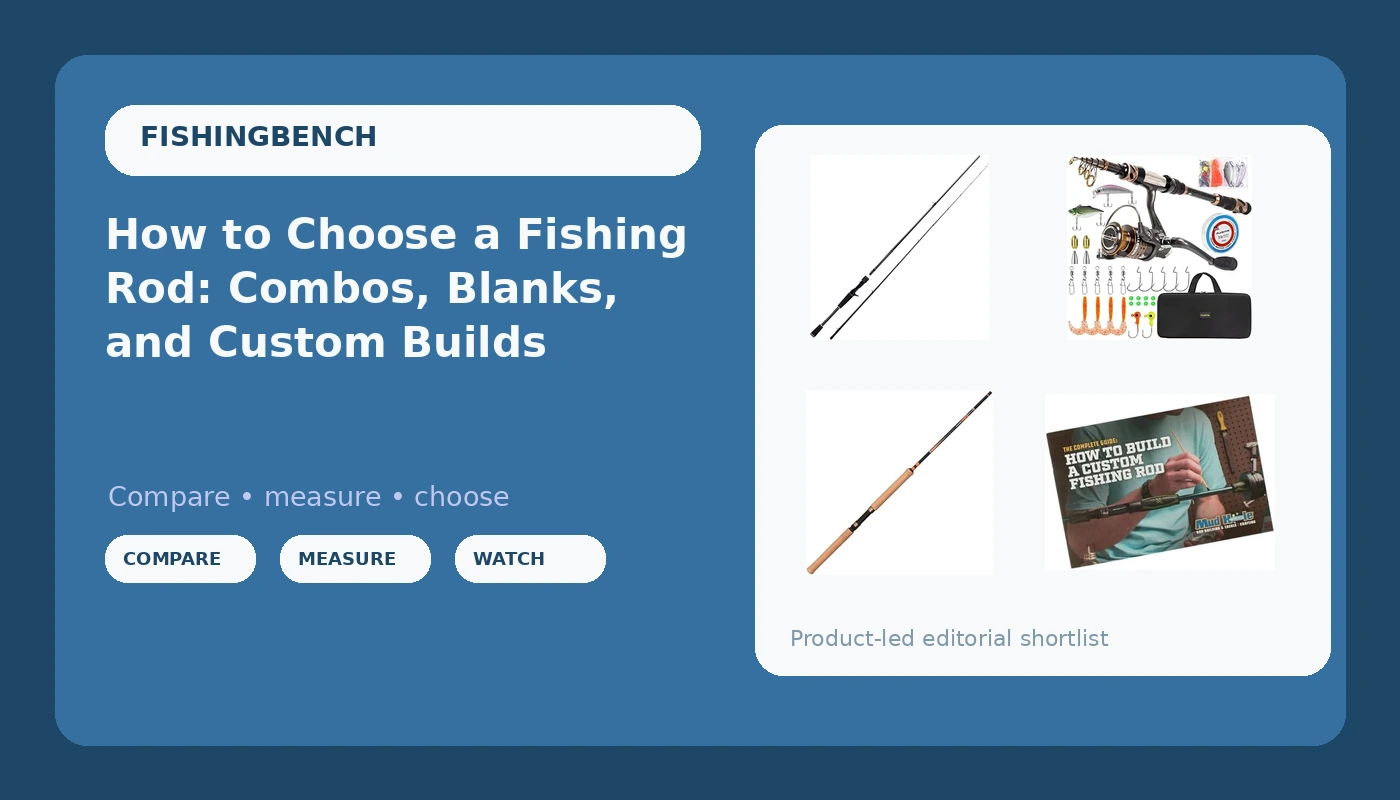
Ask ten anglers how to pick a rod and you get ten answers, most of them about brand loyalty. Ask what they are fishing for, where they stand when they cast, and how the rod gets to the water, and the list collapses fast. That is the idea behind this fishing rod buying guide: the rod is a tool, and the trip is the spec.
The mistake I see most at the counter is buying for the fish in the catalog photo instead of the fish in your local water. A two-piece crappie stick that lives behind the truck seat beats a tournament-grade blank that never leaves the garage. A telescopic combo that fits in a carry-on beats a one-piece rod that never crosses a state line. The four products below are not competing answers to the same question. Each one solves a different part of it: matching a rod to a real trip, a real species, and a real budget.
Related: Rod Action and Power: What the Ratings Actually Mean →
Quick answer
Match the rod to the trip before you match it to a brand. If you need something that packs down and includes a reel, a telescopic combo is the practical starting point. If you are building a general spinning or casting setup and want one rod that covers a lot of water, a mid-range rod offered in both configurations is the versatile choice. If you chase panfish and want a rod designed around that, a species-specific crappie rod is the specialist pick. If you want to understand what you are buying at the component level, a rod-building reference teaches the vocabulary. The sections below explain what each option is for and where it stops being the right tool.
Four useful options
| Model | Best fit | What stands out |
|---|---|---|
| PLUSINNO Fishing Rod and Reel Combos - Carbon Fiber Telescopic Fishing Pole - Spinning Reel 12 +1 Shielded Bearings Stainless Steel BB | Anglers who need a packable setup with the reel included | A carbon fiber telescopic pole paired with a spinning reel specified as 12 +1 shielded stainless steel bearings |
| KastKing Perigee II Spinning & Casting Fishing Rods | One general-purpose freshwater rod for a lot of water | Offered as both spinning and casting rods within the same line |
| B'n'MBnM Russ Bailey Crappie Wizard Rod 2pc. | Crappie and panfish anglers | A two-piece rod designed around crappie fishing rather than adapted to it |
| Rod Building 101: The Complete Guide How to Build a Custom Fishing Rod | Anglers who want to understand rod components before spending | A book-length guide to building a custom rod from the blank up |
The packable starter: PLUSINNO Fishing Rod and Reel Combos - Carbon Fiber Telescopic Fishing Pole - Spinning Reel 12 +1 Shielded Bearings Stainless Steel BB
Telescopic rods are a genuine engineering compromise, and it helps to know which side of it you are buying. A rod that collapses into itself uses fewer guides than a conventional build, and those guides sit closer to the blank, which changes how the line comes off the reel on a cast. The upside is obvious: it fits in a backpack, a kayak hatch, or the trunk of a small car, and it does not care whether you own a rod locker.
The trade-off is sensitivity and long-term durability at the joints. Every telescopic section is a place where the blank slides rather than being one continuous piece of material, so you want to check that the sections extend fully and lock without wobble before you fish it. For a travel rod, a loaner, or a beginner who is not sure yet whether fishing will stick, that is a reasonable trade. For someone chasing spooky fish on light line in clear water, it is not.
The versatile blank: KastKing Perigee II Spinning & Casting Fishing Rods
The useful thing about a line that spans both spinning and casting is that it removes a decision most anglers get backwards. Beginners are usually told to start with spinning gear, and that is correct, because a spinning reel is more forgiving of a sloppy cast. But a lot of freshwater fishing eventually rewards a casting setup, and buying into the same rod family means your hands already know the balance point.
When you compare rods in this range, stop looking at the paint and start looking at three things. First, the reel seat: set a reel in it and try to rock it side to side. Any movement there turns into a wobbly connection under load. Second, the guide rings: run a cotton swab around the inside of each ring. If it snags, that ring will eventually fray line. Third, the bend: have someone hold the tip while you load the rod, and watch whether the curve is smooth or has a flat spot.
The panfish specialist: B'n'MBnM Russ Bailey Crappie Wizard Rod 2pc.
Species-specific rods are the clearest example of why "best rod" is a meaningless phrase. A crappie rod is not a weaker version of a bass rod. It is a rod tuned for light line, small jigs, and a soft, controlled hookset on a fish with a papery mouth. Fish that with a heavy fast-action bass rod and you will pull hooks all day and wonder why.
The two-piece design is worth calling out because it is not just a packing convenience. A two-piece rod gives you a joint in the middle, and how that joint is fitted determines whether the rod feels like one piece or like two sticks taped together. When you assemble any two-piece rod, seat the sections firmly and check the guide alignment from the butt to the tip. If the guides spiral, the joint is not fully seated, and your casting accuracy will suffer for it.
The build-it-yourself reference: Rod Building 101: The Complete Guide How to Build a Custom Fishing Rod
This is the odd one out on the list, and it belongs here anyway. The fastest way to stop overpaying for rods is to understand what is inside one: the blank, the guides, the thread and finish, the reel seat, the grip, and the spacing decisions that tie them together. Once you know how guide placement affects line flow, you stop being impressed by a rod that has too many guides in the wrong places.
Even if you never wrap a guide, the book pays for itself as a buying reference. It gives you the vocabulary to ask better questions at the counter and the judgment to look at a rod and see where the money went. If you have ever wondered why two rods with similar specs feel completely different, the answer is usually in the components and the build, not the marketing copy.
Prices and availability may change. Product images, names, and retailer links must be matched by verified ASIN. Do not state a current price, rating, stock status, or measured result without current evidence.
What rod action actually means
Action describes where the rod bends when it loads. A fast action bends mostly in the upper third, a moderate action bends through the middle, and a slow action bends deep into the butt section. That is the entire concept, and it matters more than any other single spec on the label.
Fast actions are the default recommendation for a lot of fishing because they are sensitive and they set hooks quickly. They also demand more from the angler: a fast tip with a stiff mid-section can rip a small hook straight out of a soft-mouthed fish. Moderate actions load more gradually, cast lighter lures more easily, and forgive a rushed hookset. If you fish a mix of species and do not want to own five rods, a moderate action covers the widest range of situations.
Power is a different measurement entirely. Power describes how much force it takes to bend the rod, and it is usually expressed as light, medium, medium-heavy, and so on. A rod can be fast action and medium power, or moderate action and heavy power. When a manufacturer prints a confusing rating, the bend itself is the truth. Load the rod and watch the curve rather than trusting the label.
Guides, reel seats, and the parts that actually fail
The guides are the part of the rod your line touches most, and they are the first place a cheap build reveals itself. Guide rings come in different materials with different hardness, and softer rings can groove over a season of braided line running across them under tension. A grooved ring is a line shredder, and it will cost you fish before it costs you a new rod.
The reel seat is the second weak point. A seat that does not clamp the reel foot firmly will allow movement under load, and that movement transfers into the whole rod. Check it with the reel you plan to fish, not with a reel from the shop counter.
Then there is corrosion. A rod described as suitable for saltwater needs hardware that can survive salt, which means stainless frames and rings that will not rust after a few trips. Rinse any rod after saltwater use regardless of what the label claims, and pay attention to the guide feet where the finish meets the frame, since that is where corrosion usually starts.
- Decide where the rod will live and travel, then set a maximum packed length.
- Name the species you catch most often, and pick a power rating that matches its mouth and your line.
- Choose an action based on how you cast and how you set hooks, not on what a label advertises.
- Inspect the reel seat with your own reel and run a swab around every guide ring.
- Compare the whole package against your budget, including line and terminal tackle, before you commit.
Matching a rod to the water you fish
- A rod you leave at home because it does not fit the car is worth nothing, so let transport decide the number of pieces first.
- Match power to the fish you actually catch most weeks, not the trophy you hope to meet once.
- Lighter line and smaller hooks reward a softer tip, which is why panfish rods are not just scaled-down bass rods.
- If you fish both fresh and salt water with one rod, inspect the guides and reel seat every trip and rinse after every saltwater session.
- Buy the reel seat and guides you can live with for years; a blank is only as good as the hardware bolted to it.
Which option should you choose?
Choose the PLUSINNO Fishing Rod and Reel Combos - Carbon Fiber Telescopic Fishing Pole - Spinning Reel 12 +1 Shielded Bearings Stainless Steel BB when portability and a matched rod-and-reel package matter more than maximum sensitivity. Choose the KastKing Perigee II Spinning & Casting Fishing Rods when you want one familiar rod line covering both spinning and casting setups for general freshwater fishing. Choose the B'n'MBnM Russ Bailey Crappie Wizard Rod 2pc. when crappie and panfish are the target and you want a rod designed for that job rather than adapted to it. Choose Rod Building 101: The Complete Guide How to Build a Custom Fishing Rod when you want to understand rod components well enough to judge any rod you pick up.
One caveat applies to all four. Nothing here is a substitute for handling a rod before you fish it, and no listing can tell you how a blank loads in your hands. Treat the specifications as a starting filter, not a verdict, and let your own casting style make the final call.
The bottom line
There is no single best fishing rod, only the rod that matches the trip in front of you. If you need a packable setup with the reel included, a telescopic combo gets you fishing with the least fuss. If you want one rod line that covers both spinning and casting for general freshwater work, a mid-range option like the Perigee II keeps your options open. If panfish are the target, a species-specific crappie rod does a job a generalist blank cannot. And if you want to stop guessing about guides, reel seats, and blanks altogether, learning how rods are built is the cheapest upgrade available. Buy for the fish you actually catch, and the rod will earn its place in the boat.