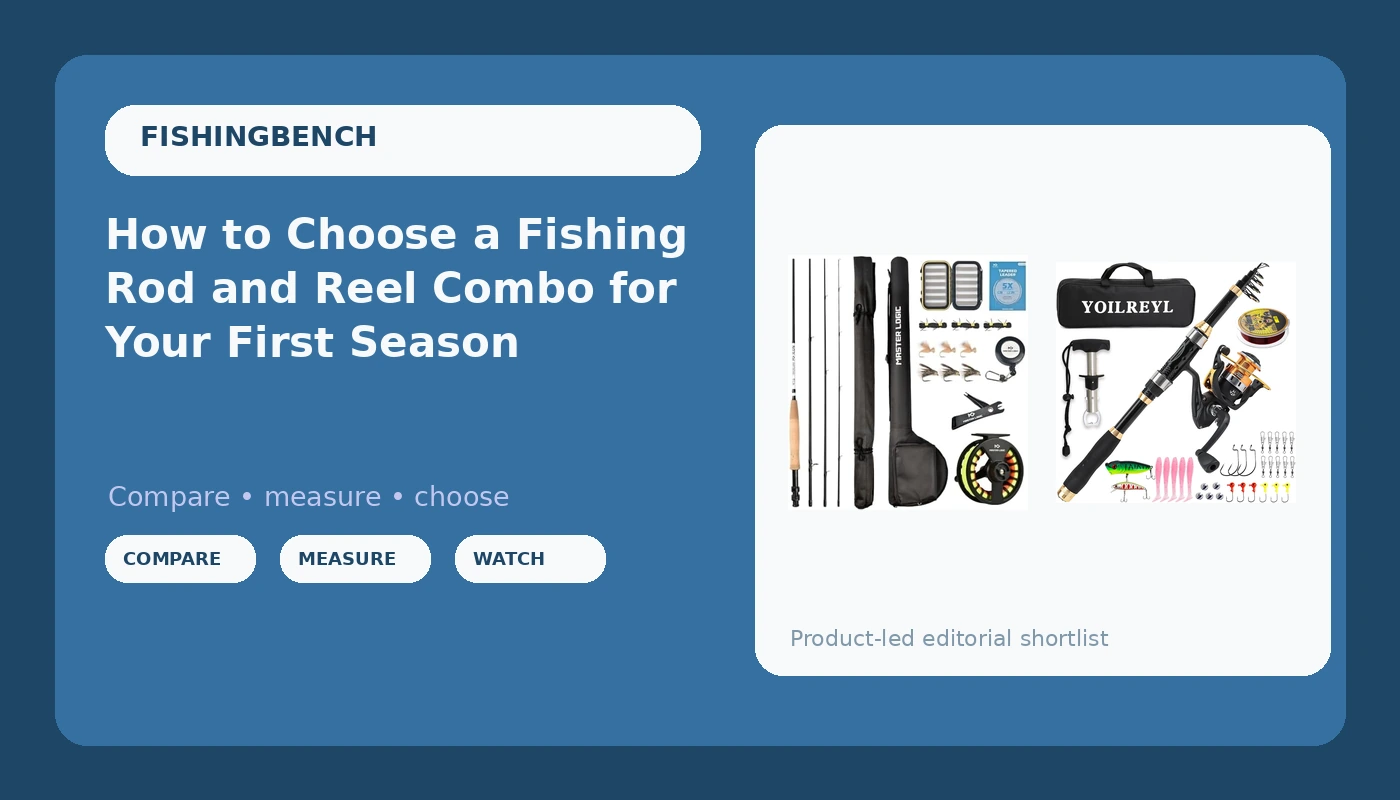
Most starter combos are sold as if they were the same tool in different paint. Walk into a big box store and you see a wall of them shrink wrapped, each one promising "saltwater ready" and "professional grade," and none of them telling you the two things that decide whether you are still fishing with it three years from now: how the blank loads on a cast, and whether the guides will survive a season. Buying a fishing rod and reel combo is the cheapest decision in this sport and the one most people get wrong.
I have been guiding out of Destin for 24 years, and I have watched beginners quit because a gas station combo torqued on the first cast and soured them on the whole idea. I have also watched them catch fish on setups that cost less than a tank of fuel. The difference was never the sticker. It was the setup, and it was whether anybody told them what to look at before they paid.
This is how I would set up a starter combo for real water, in the order I would actually do it, plus the two starter kits in my shop I would hand a beginner first.
Why you should trust me
I ran charters out of Destin until my knees told me to stop, and now I run a tackle shop and test gear full time. I have spooled more line than most factories, and every rod that comes through here gets the same treatment: a full season of real fishing, a backbone test against a 40 pound drag, and a casting pass from both a beginner and somebody who has been doing this since before braid existed.
I keep a logbook of every rod's action curve. Not because I like spreadsheets, but because a manufacturer's "fast action" label and the way a blank actually bends are two different things, and the gap between them is where beginners lose fish. When I tell you a rod loads early or feels tip heavy, that comes out of the logbook, not the catalogue copy.
How I picked and how I tested
This is not a guide about which rod to buy for the rest of your life. It is a guide about getting a starter combo wet without wasting money, and the two kits below are the ones I would put in a beginner's hands.
Every combo that comes through the shop runs the same protocol. Part one is a casting test: I load it with the line it ships with and cast it sidearm, overhead, and into wind, then hand it to somebody who has never cast before and watch where the line goes. Part two is a season of real trips, ponds, bays, and dock lights, with a rinse after every saltwater day. Part three is the backbone pull, where I lock the drag and lean into the blank to see where it stiffens and whether the reel seat shifts under load.
The numbers I trust are simple. If you can feel the rod load in the first third of the blank, it will cast lighter lures than its rating suggests. If the guides are stainless with a smooth insert and no visible seam, they will last. If the reel seat rocks even a little when you twist the reel, that combo is going to fail on a fish, not on a cast, which is the worst possible time.
Match the combo to the water you actually fish
Before you look at anything, answer three questions honestly. How do you travel to the water? What are you casting? How big is the fish you will realistically hook?
If you fish farm ponds and small lakes, a light spinning combo handles everything from bluegill to a decent largemouth, and it is the most forgiving thing to learn on. If you hike in, paddle a kayak, or keep a rod behind the truck seat, a packable rod stops being a gimmick and starts being the reason you fish at all. If you want to fish moving water and present a fly, that is a different discipline with a different learning curve, and buying a spinning rod "for now" usually means you never learn the fly cast.
What you should not do is buy for the fish in the catalogue photo. Buy for the fish in your county.
The two starter combos I would hand a beginner
Both of these are complete kits. That matters more than people think. A combo that shows up with line, terminal tackle, and a way to carry it gets you on the water the same day instead of three trips to the store later.
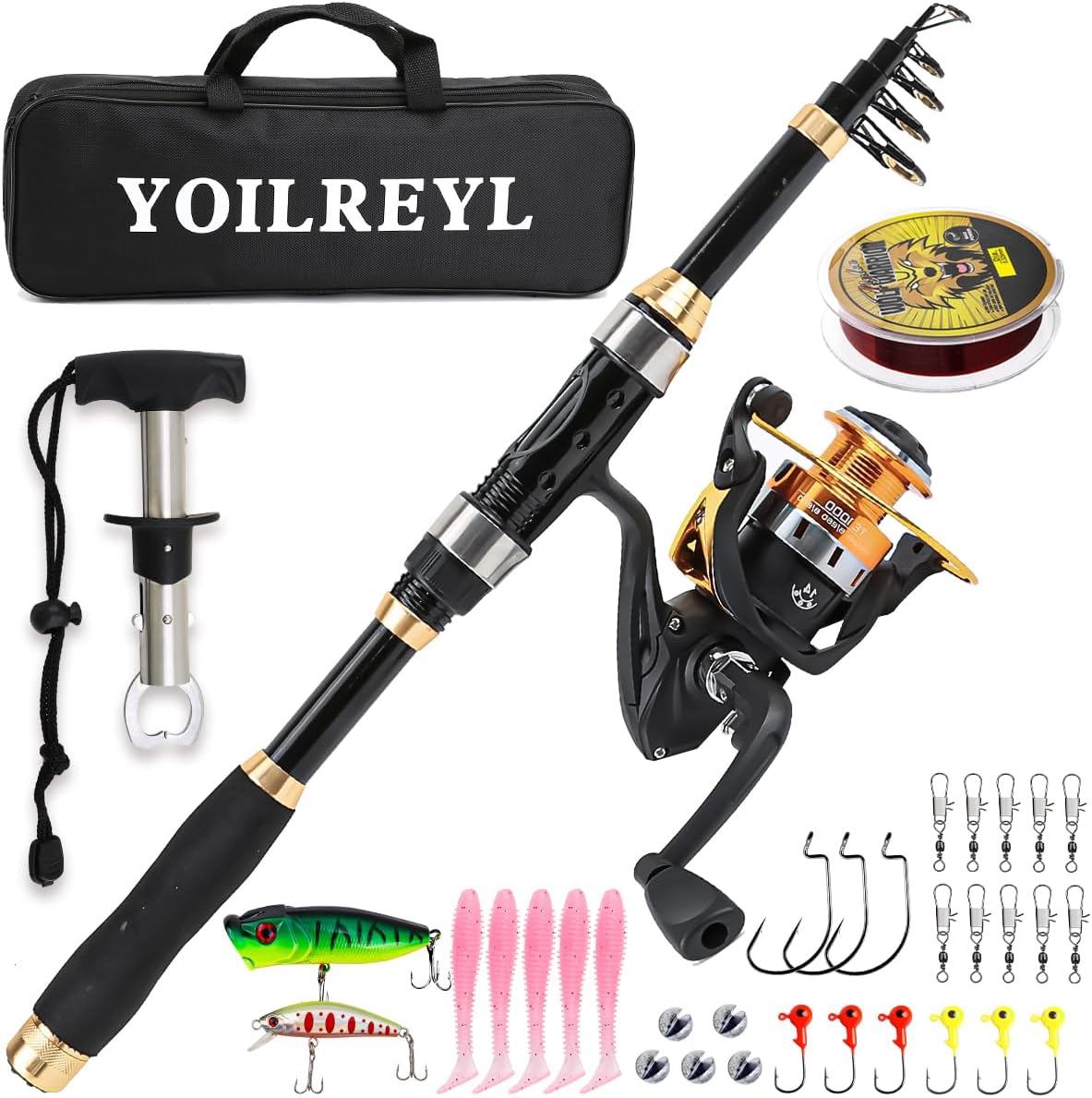
Best for travel: Yoilrey Fishing Rod and Reel Combo, 5.9ft Telescopic Fishing Pole Starter Kit with Spinning Reel, Fishing Line, Lure Box & Tackle Bag for Travel
 Visit on Amazon →
This is the kit I point at when somebody fishes two weeks a year and wants the rod to live in a trunk, a backpack, or a kayak hatch. The telescopic blank collapses short enough to disappear into a bag, and it arrives with a spinning reel, line, a lure box, and a tackle bag, which is the whole starter kit in one box.
The tradeoff is inherent to telescopic rods, not to this one specifically. Every ferrule joint is a place where grit collects and where the blank loses a little of the crisp load a one piece rod gives you. Fewer guides mean the line has more room to slap the blank on a hard cast. So keep the joints clean, wipe them after a salty day, and do not treat it like a boat rod.
Flaws but not dealbreakers: The collapsed length is the selling point, and it is also the compromise. If you never travel with a rod, a two piece rod in the same price neighborhood will out cast it. If you do travel, that trade is worth making every time.
Anyone fishing ponds, creeks, and dock lights who wants the rod with them instead of at home should start here.
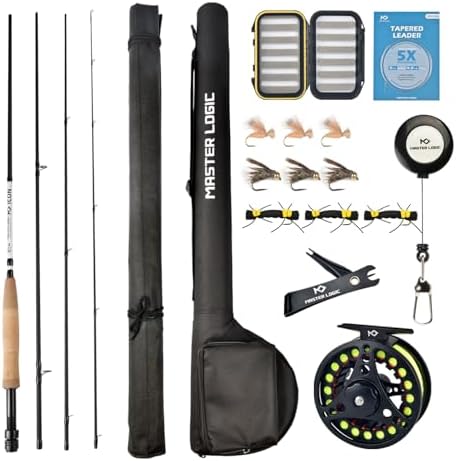
Best for learning to fly fish: Fly Fishing Combo Starter Kit, Graphite Rod and Reel with Case
 Visit on Amazon →
If your water is a tailrace, a spring creek, or a flat where the fish see you before they see the fly, a spinning combo is the wrong tool and no amount of practice fixes that. This kit gives you a graphite rod, a matched reel, and a case, which is the sensible way to start: one complete setup instead of a rod here and a line there that you hope will balance.
Fly fishing is a timing sport, not a distance sport. The rod loads against the weight of the fly line, not the weight of a lure, so the first two trips are about learning the pause, not about catching. The case matters more than beginners expect, because a fly rod that lives loose in a truck bed is a fly rod with a broken tip.
Flaws but not dealbreakers: A starter fly kit will not shoot line like a high end rod, and wind will humble you faster than it does on a spinning rod. That is the discipline, not the kit. Plan your first sessions for calm mornings and short casts.
Anyone who has already decided they want to fish moving water and present a fly should start with a complete kit like this rather than assembling one piece at a time.
The actual setup workflow
Now the part that decides whether either kit lasts. This takes about 20 minutes at the kitchen table.
Step one: Inspect the guides before you fish. Run a fingertip around the inside of every guide, then drag a cotton swab or a piece of nylon stocking through each one. If it snags, the guide has a burr or a rough insert and it will shred your line. This is the single most common failure on cheap rods and the one you can catch before it costs you a fish.
Step two: Check the reel seat. Seat the reel, tighten it down, then grab the reel and try to rock it side to side and front to back. Any movement means the seat is not gripping the foot properly. A wobbly reel seat on a 20 pound fish is a disaster waiting to happen, and it is usually fixable with a shim of tape under the foot rather than a return.
Step three: Spool the line correctly. Fill the spool to within roughly an eighth of an inch of the lip. Underfilled spools cost you casting distance because the line has to climb over the lip on the way out. Overfilled spools throw loops off the reel on the cast. If the kit ships with line already on the reel, check the level before you fish.
Step four: Set the drag by hand. Pull line off the spool with the rod bent slightly. The drag should slip smoothly before the line reaches its breaking point, and it should start smooth rather than jerk. Do this before you leave the house, not while a fish is running.
Step five: Tie a knot you can tie in the dark. The improved clinch and the Palomar will cover almost everything a beginner does. Wet the knot before you snug it down. A dry knot burns itself and fails at the worst moment.
Step six: Make your first casts short. Ten or fifteen feet of line out, then load the rod and let it do the work. Beginners try to throw the whole cast with their arm. The rod is the spring. Your hand just starts the motion.
Step seven: Manage the line. Close the bail by hand after every cast instead of cranking it shut. That one habit prevents most of the line twist that ruins a beginner's first month.
Step eight: Rinse and store. Fresh water rinse after every saltwater trip, dry the guides, and store the rod straight or in its case. Reel seats and guide frames do not fail from use. They fail from salt left to sit.
The competition and why it lost
There are plenty of setups that are not what this article is about. Baitcasting combos are excellent tools for people who have already learned to control a spool with their thumb, and they are a miserable first rod for everybody else. Saltwater conventional setups belong on a boat chasing big fish, not in a pond starter kit. And a high end rod that needs new guides and a new reel seat before it fishes is just an expensive blank with good paint.
The math on all of them is the same. If you are new, you want one complete setup that matches your water and survives a season. That is the job. Everything else is a second rod.
What this all costs
The combo is the smallest line item in this whole hobby. Line gets replaced, lures get lost in trees, and the license costs more than most beginners expect. What actually determines your cost per day is how many trips you take before something fails.
A kit that survives a season and gets fished 30 times costs you almost nothing per trip. A kit that grooves its guides in month two costs you the rod plus the line it shredded plus the fish you lost, and that is the expensive path even when the sticker looks cheap. This is why I care about guide inserts and reel seats more than I care about the paint and the marketing words on the box.
Check the guides. Seat the reel. Set the drag at the table. Rinse the rod. Do that and a starter combo will keep up with you until you outgrow it, which is exactly what a starter combo is supposed to do.
That is the job. The rod is a tool. The fish is the review.