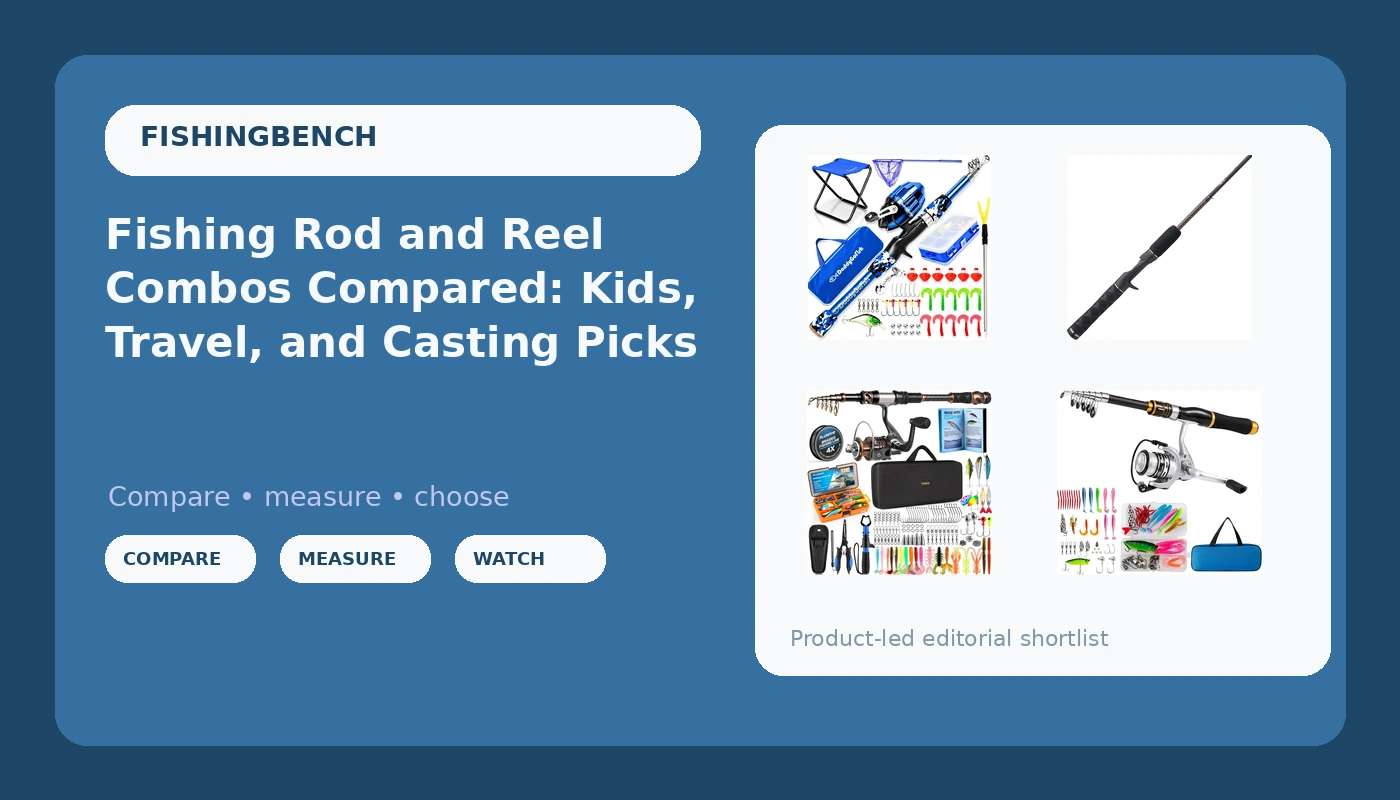
I have spooled more line than most factories, and I still hear the same question over the shop counter every week: which fishing rod and reel combo should I buy? After 24 years of guiding out of Destin and a tackle shop that has outlasted three of my kneecaps, my answer never changes. Buy for the fish you actually catch, not the one in the catalog photo. A fishing rod and reel combo is a starter decision, and starter decisions should be cheap enough that you can change your mind in a season without feeling robbed.
Related: Fishing Rod Action Explained: Fast Vs Moderate Vs Slow
The best pick for most households in 2026 is the Ugly Stik GX2 casting rod if you already own a casting reel, and the PLUSINNO telescopic kit if you want a rod, a reel, and a box of tackle in one purchase. Everything below is sorted by who is holding the rod: a seven-year-old on a dock, a traveling adult with a suitcase, or somebody who wants one cheap kit living in the truck.
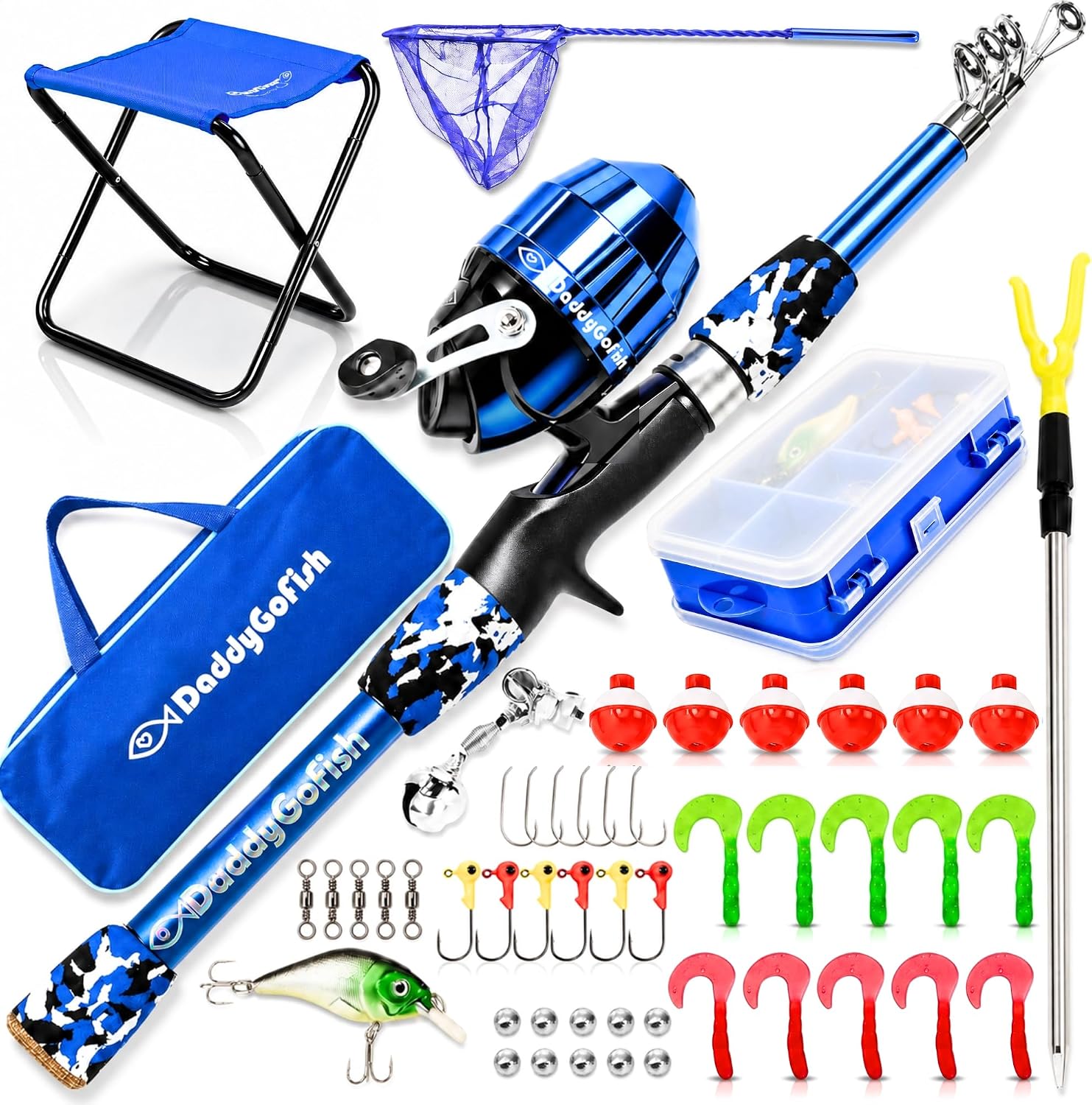
Kids Fishing Pole for Boys, Girls & Youth Age, Toddler Fishing Pole Set Kit
Short, light, and sized for small hands, so a kid keeps casting instead of quitting
Limited reach and power, it is a starter tool, not a rod an adult will enjoy fishing
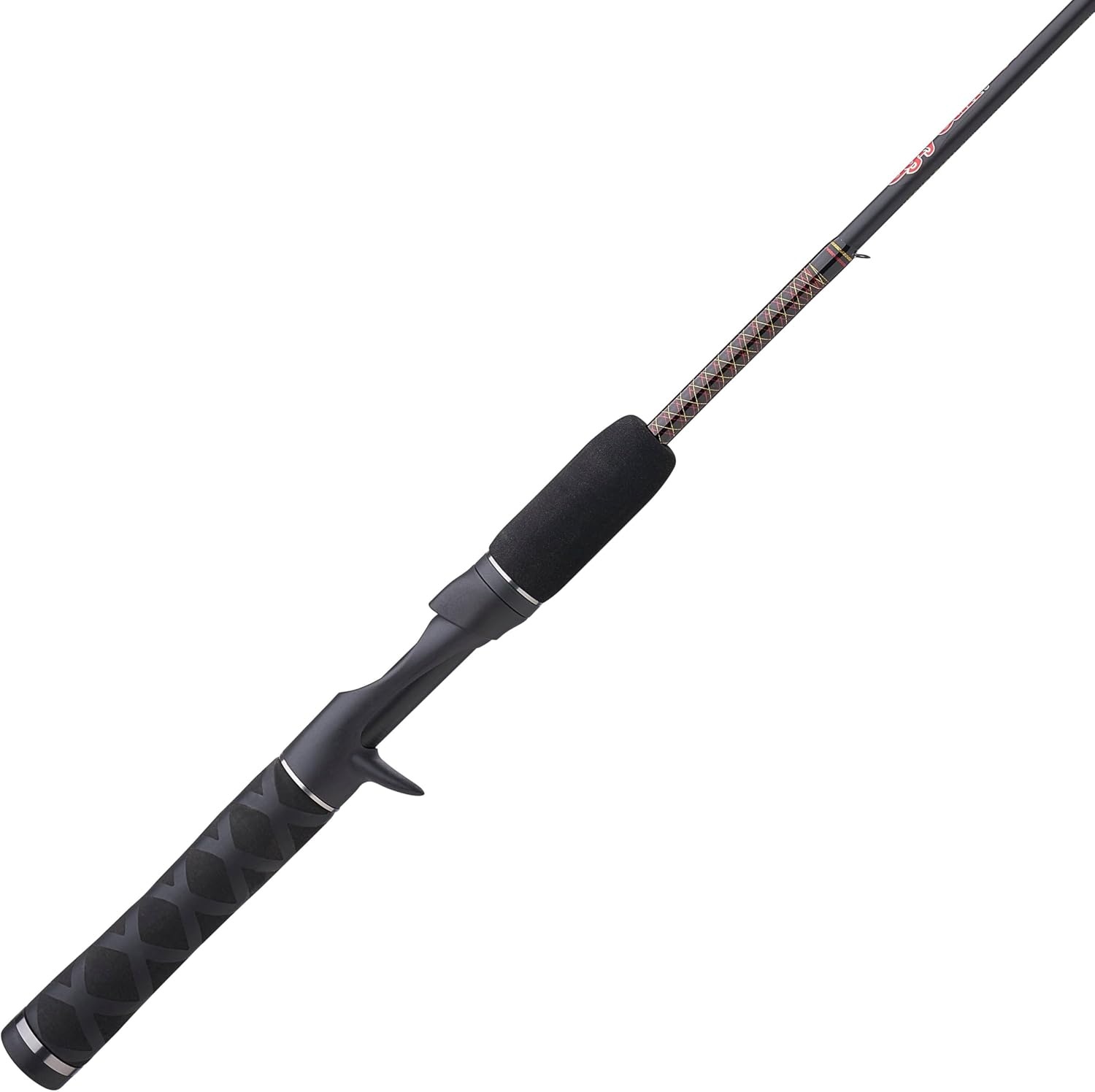
Ugly Stik GX2 Casting Fishing Rod
The value king, near indestructible, and good enough for 90 percent of anglers
Rod only, so it needs a casting reel, and the budget guides want a rinse after saltwater
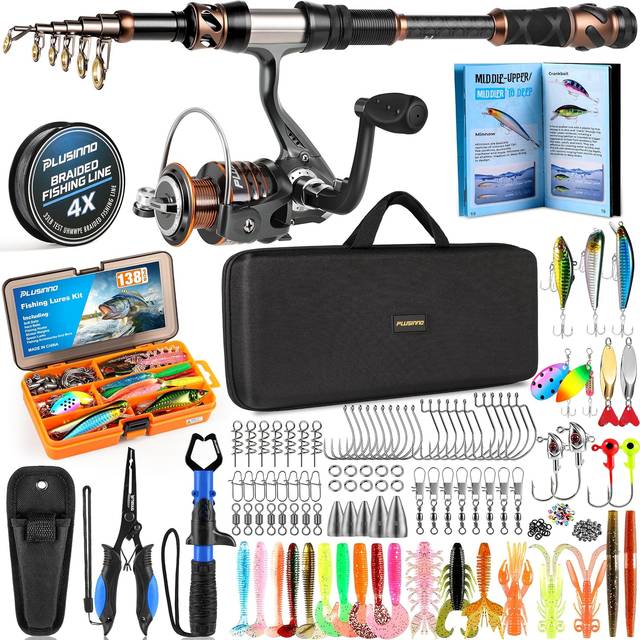
PLUSINNO Fishing Rod and Reel Combo with Telescopic Fishing Pole, Portable Travel Fishing Rods Kit with Tackle Box Carrier Bag & Manuals, Fishing Gear Tool Kit for Freshwater, Fishing Gifts for Men
The most complete kit here, rod, reel, tackle box, bag, and manuals in one purchase
Telescopic joints soften the action, and the bundled reel is a placeholder
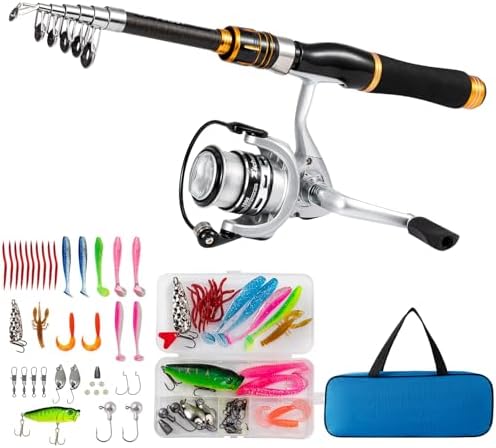
Telescopic Fishing Rod and Reel Combo, Complete Fishing Kit with Lures Tackle Box, Freshwater Saltwater Spinning Rod for Bass Trout Fishing Pole Beginner (5.2ft)
The lowest cost way to find out whether anyone in the family likes fishing
Short rods give up distance and backbone, so it is not a surf, jetty, or heavy cover rod
Prices and availability were captured from Amazon Creators API and may change.
How I judge any rod, combo or not
Four things, in this order. Action, which is how the rod bends and unloads on a cast. Backbone, the power through the mid-section when a fish decides it wants to be somewhere else. Guides, the rings that route your line, because cheap guides groove and shred line. And the reel seat, because a wobbly reel seat on a 20-pound fish is a disaster waiting to happen.
A combo adds a fifth question: is the reel worth the line it holds, or is it a placeholder you will replace within a season? Most bundled reels are placeholders. That is not a scandal, it is just how the math works when a rod, a reel, and a tackle box have to fit under one price.
I do not care what the label says about power. Power is marketing. How the rod loads and unloads is engineering. A medium-heavy sticker on a rod that folds into the butt under a three-pound bass is a sticker, not a spec. I keep a logbook of action curves for every rod that passes through the shop, and the pattern is boringly consistent: the rods that feel right on a cast are the rods that fight fish well, and the label rarely predicts which is which.
Action first, then species, then price
Action is the spec that actually matters, and it is the one nobody reads. A fast rod bends in the top third, which gives you crisp casts and quick hooksets. A moderate rod bends through the middle, which is forgiving on treble hooks and light line. A slow rod bends deep into the handle, which is what you want for live bait and big, slow-moving fish.
Match that to the fish you actually catch. Bluegill and stocked trout in a neighborhood pond want a light, moderate action that lets a small fish bend the rod and feel like a fight. Bass around grass and docks want something faster with real backbone, because you are pulling a fish out of cover, not playing it in open water. If your honest answer to "what do you catch?" is "whatever bites at the local park," buy moderate action and spend the saved money on line.
The kids rod: short, light, and honest about what it is
The kids set is the one I keep a few of behind the counter for grandparents who walk in on a Friday before a lake trip. It is short, it is light, and the whole point is that a small angler can hold it for an hour without complaining. That matters more than anything else at that age. A kid who is comfortable keeps casting. A kid fighting a rod that is too long and too heavy quits in twenty minutes and wants a snack.
What it is not: a rod an adult will enjoy. The reach is short, so distance is limited, and the backbone is built for panfish and stocked trout, not for a slot redfish. If the plan is dock fishing for bluegill under a bobber, this is exactly the right tool. If the plan is a family trip where the adults also fish, buy this for the kid and something else for yourself. Sharing one rod is how family fishing trips turn into arguments.
The Ugly Stik GX2 casting rod: still the value king
I have said this in the shop for years and I will say it here. Ugly Stik is the value king. The GX2 is close to indestructible, the action is good enough for 90 percent of anglers, and it survives being stepped on, sat on, and jammed into a trunk. That is why guides and shop owners hand these to beginners without flinching. It is also why it is the rod that stays in my truck when the good graphite stays home.
The catch is in the name. This is a casting rod, which means it takes a casting reel, not the spinning reel sitting in your garage. If you do not already own a baitcaster, budget for one, and budget for the backlash phase while you learn thumb control. That is the honest trade-off, and it is the reason this rod is not the right answer for a total beginner who wants one box and no decisions. If you already have a casting reel, this is the rod I would buy.
One note on the GX2 family in general: the guides are the weak point on the budget end. They hold up fine with monofilament and light braid, but if you fish braid hard in saltwater, rinse the rod after every trip and check the ring interiors for grooves. Corroding guides are my number one pet peeve, and they show up fastest on rods that live in a boat locker.
The telescopic combos: one box, everything in it
Both telescopic kits solve the same problem, which is a rod that fits in a trunk, a backpack, or an overhead bin. Beyond that they are different animals.
The PLUSINNO kit
The PLUSINNO combo is the more complete of the two. Rod, reel, tackle box, carrier bag, and manuals, all in one purchase. For a gift, that packaging matters. For a beginner, the tackle box matters more, because it means the first trip does not require a second trip to the store. Telescopic rods are genuinely useful for travel fishing, and this one collapses small enough to live in a suitcase next to your socks.
The trade-off with any telescopic rod is the same one: more joints mean more places for the action to feel soft, and a soft mid-section shows up when you hook something with shoulders. The reel that ships with a combo is rarely the reel you would pick yourself. Treat it as a starting point. Fish it, learn what you like, then upgrade the reel before you upgrade the rod. A better reel on an average rod beats an average reel on a better rod, every time.
The 5.2 foot telescopic kit
The smaller telescopic kit is the cheapest and the most packable of the four. At 5.2 feet it is short enough for a kid to handle, small enough for a backpack, and light enough to cast one-handed in a tight spot. For pond bluegill, stocked trout, and creek bass, it does the job it was built for.
Be realistic about the limits. Short rods give up distance and backbone, so this is not the kit for surf, jetties, or anything with structure and current. It is the right answer for a beginner who wants to spend as little as possible to find out whether they like fishing, and for a parent who wants a spare rod in the car for the "can we go fishing?" moment. It is also a fine step-up rod for a kid who has outgrown the first one but is not ready for a full-length rod.
Guides and reel seats: where cheap combos actually fail
This is the part of the buying decision nobody talks about, and it is where the money quietly goes. A rod that costs $300 but needs $100 of upgrades is a $200 rod with good paint. Guides that groove after one season will eat your line and cost you fish. A reel seat that wobbles will eventually cost you a fish you will think about for a year.
When you unbox any of these, do three things. Run a cotton swab around the inside of every guide ring and look for a snag, because a swab catches what your finger cannot feel. Mount the reel and try to rock it side to side in the seat. Then load the rod by pulling line against a drag setting and watch where the bend actually starts. If the bend starts two inches into the tip on a rod labeled fast, the label is wrong. That is a five-minute check that tells you more than any spec sheet on the box.
Do you need a combo, or just a rod?
Buy a combo if you are new, if you are buying for a kid, or if the rod is going to live in a car and be used four times a year. The bundled reel and tackle will not be great, but they will get you fishing this weekend, and that is worth more than a perfect setup you assemble over three months of research.
Buy a rod only if you already own a reel you trust. The Ugly Stik GX2 is that purchase. It is the rod I would hand a beginner who has a decent spinning reel in the garage, and it is the rod that keeps earning its spot in the truck.
Saltwater, freshwater, and the "saltwater ready" label
I fish saltwater, so I read that label with suspicion. On a rod, "saltwater ready" usually means the guides and the reel seat hardware are supposed to survive salt. On cheap combos, it means the paint is shiny. If you are fishing the surf, the jetty, or the bay, rinse everything with fresh water after every trip, dry the rod before it goes in the locker, and put a drop of oil on the reel handle and the seat threads once a month. That routine does more for rod life than any hardware upgrade in this price range.
If your fishing is ponds, lakes, and creeks, ignore the saltwater question entirely and spend the money on better line instead. Line is the cheapest upgrade in fishing and the one most beginners skip.
What I would buy for each angler
For a seven-year-old on a dock with bobbers and a bucket: the kids set, no question.
For a teenager who has been fishing twice and wants to learn to cast properly: the Ugly Stik GX2 with a casting reel, plus a lesson in thumb control.
For an adult who travels and wants to fish on work trips: the PLUSINNO kit, because everything is already in the bag.
For the lowest-cost way to find out whether anyone in the family likes fishing: the 5.2 foot telescopic kit.
What I am testing next
I have a stack of mid-range spinning rods on the bench for a full season of real fishing, each one run through the same sequence: how it loads on a real cast, whether the backbone holds against a big fish, whether the guides survive a season, and whether I would hand it to a paying client. That last question is the only one that matters, and it is the reason so many rods with nice paint never make it into a client's hands.
The rod is a tool. The fish is the review.