Most anglers buy a rod by the number printed on the blank and the picture on the box. Then they spend a whole season wondering why they miss crappie bites, or why a two-pound bass keeps coming unbuttoned at the boat. I have watched that from the back of a charter boat for 24 years, and the rod was almost never the problem. The match was. Spinning rod action and power, read correctly, tell you more about how a rod will fish than any label, any price tag, or any "tournament grade" sticker.
I ran charters out of Destin until my knees voted me out of the business. Now I run the tackle shop and test gear full time, which means I spool more line in a month than most anglers spool in a decade. Every rod that comes through my door gets logged. Where it bends, how fast it recovers, what it does when a fish turns its head. I keep an action curve for every rod in the logbook, because the bend tells the truth and the catalog copy does not.
This is not a buying guide dressed up as a how-to. This is the sequence I actually use when a customer walks in with a rod in one hand and a photo of a fish on their phone. Follow it and you will know what you own, what it can do, and what to change.
Why you should trust me
Twenty-four years of putting paying clients on fish, then a tackle shop counter where I hear the same mistakes every week. My rule for gear is simple: no rod gets an opinion out of me until it has fished at least 20 real trips. Every rod I test gets the same three passes, a full season of real fishing, a backbone test against a 40-pound drag, and a casting test by both a beginner and an expert, because a rod that only casts well in experienced hands is a rod that will frustrate the person who needs it most.
I also sell rods, so take that for what it is worth. What I will tell you is that I talk more people out of expensive rods than into them. The rod you need is the one that matches your water and your fish, not the one with the nicest finish on my wall.
How I picked and how I tested
Two rods here, two different jobs, and neither one is a compromise pick. One is a packable kit for the angler who fishes wherever they happen to be. The other is a purpose-built panfish rod that shows exactly what a spec sheet is supposed to mean.
Every rod in this shop gets the same handling test before it earns a recommendation. I load it with a real lure and cast it into the wind. I check the guides by running a fingernail around the inside of each ring, because a groove you can feel with a nail is a groove that will shred line on a hookset. I check the reel seat by mounting a reel and trying to rock it side to side, since a wobbly seat on a 20-pound fish is a disaster waiting to happen. Then I fish it.
The numbers I trust are simple. Action describes where the rod bends: fast is the top third, moderate is the middle, slow is the whole blank. Power describes how much load it takes to reach that bend. A light power rod loads under a small fish and a small lure. A heavy power rod needs a big fish or a heavy bait before it does anything at all. That is the entire vocabulary, and it is enough to pick the right tool.
What you need before you start
You can skip a lot of gear. You cannot skip a rod that loads. If the blank does not bend under the lure you throw, you will fight the rod all day and blame yourself for bad casting.
Two rigs cover nearly everything a beginner or a weekend angler does in freshwater, and one of them covers travel and dock fishing without a rod tube.
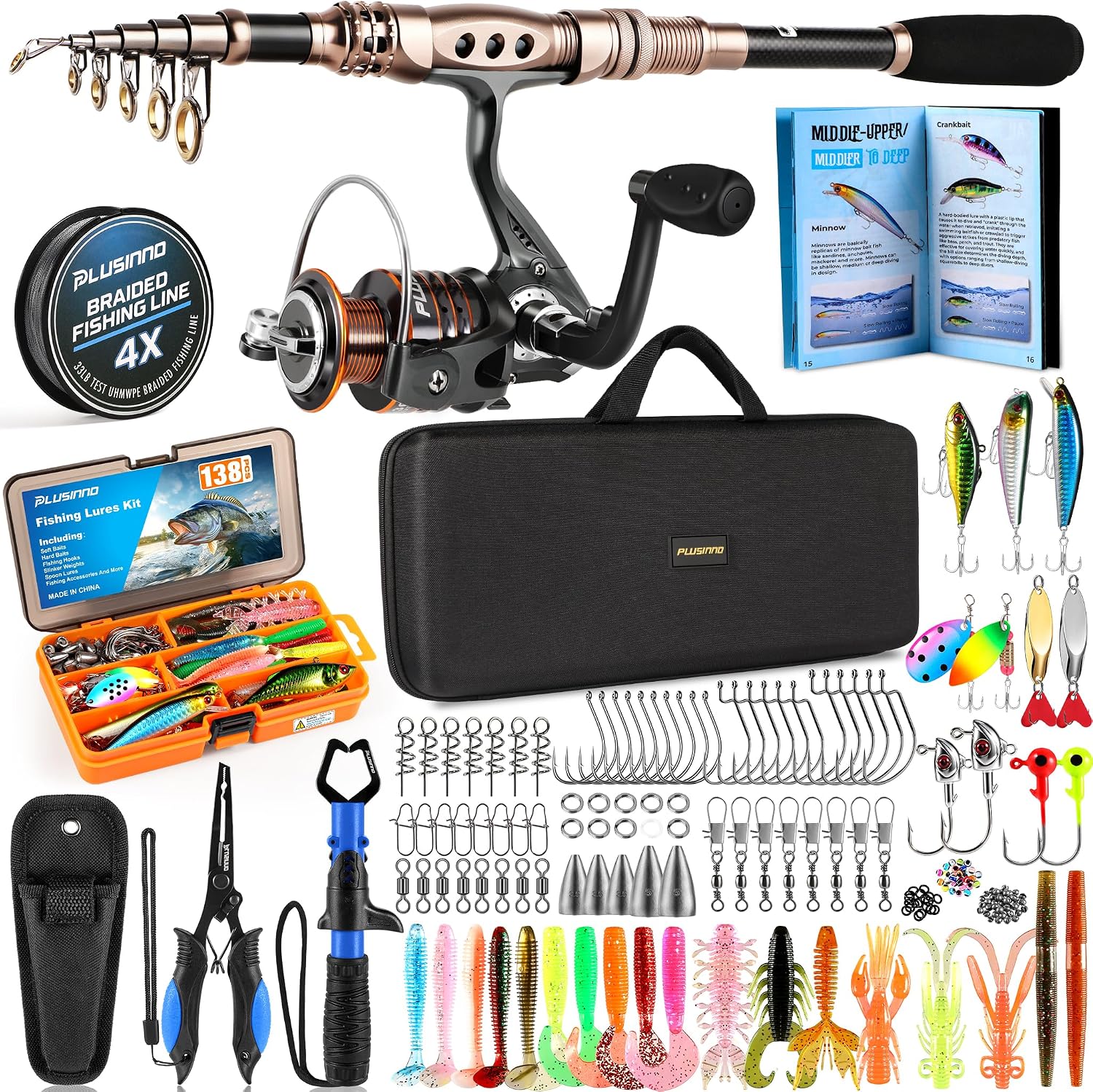
Travel pick: PLUSINNO Fishing Rod and Reel Combo with Telescopic Fishing Pole, Portable Travel Fishing Rods Kit with Tackle Box Carrier Bag & Manuals, Fishing Gear Tool Kit for Freshwater, Fishing Gifts for Men
 Visit on Amazon →
This is the kit I hand to the guy who fishes from a rental boat, a kayak, a dock, or the tailgate of a work truck. It arrives as a complete setup: telescopic pole, reel, line, a tackle box, a carrier bag, and manuals. Check current Amazon price.
Here is what matters about a telescopic rod, and it is the same thing that matters on a two-piece. Every joint is a place where the blank can flex differently than the rest of the rod. That is not a defect, it is physics. What you do about it is seat each section firmly, straighten the guides so they line up, and check the ferrules after the first hour of fishing. If a section has crept loose, you will feel a dead spot in the cast before you see it.
Flaws but not dealbreakers: The included tackle is a starting point, not a finished box. Swap the hooks for something sharp and match the jig weight to the water you fish. The convenience is the point here, not tournament-grade hardware.
Anglers who want one rig that lives in the truck and is always ready will get the most out of this kit.
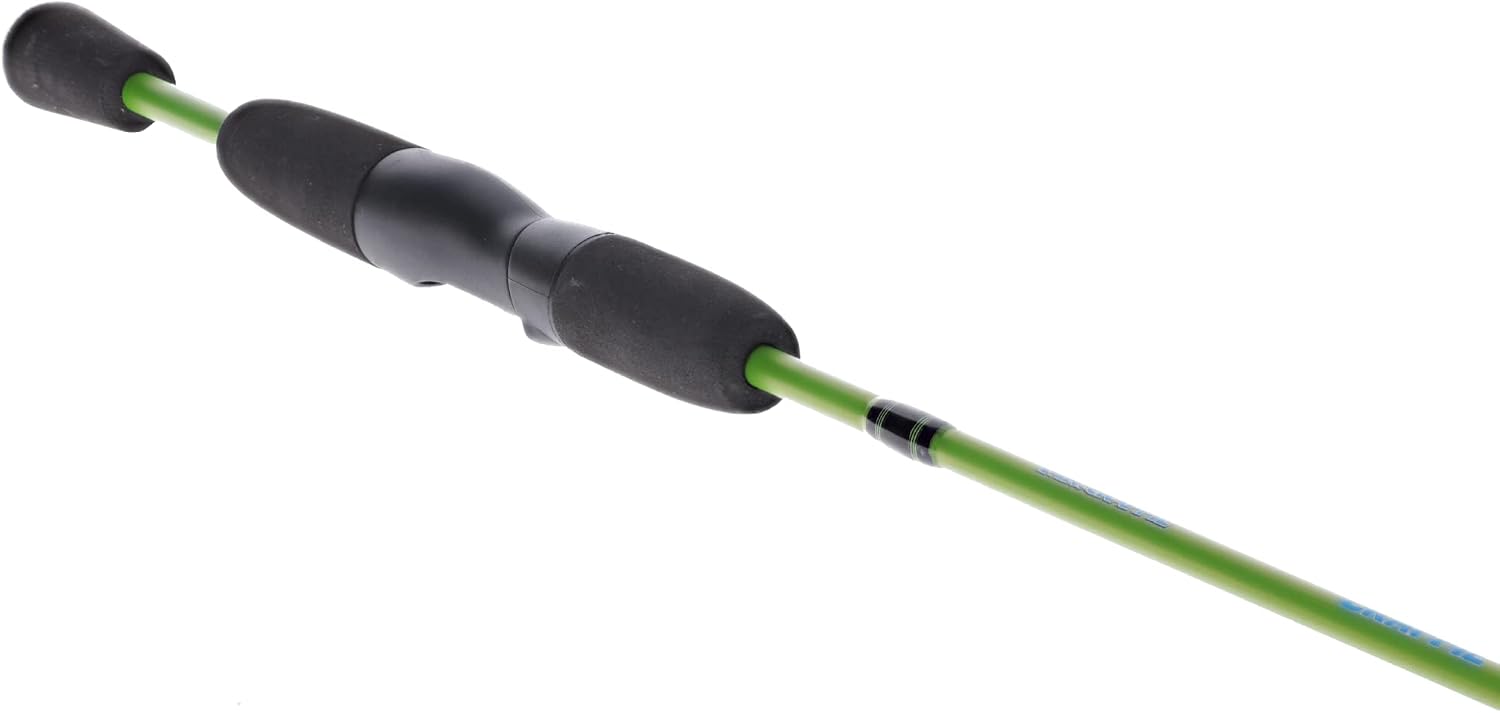
Panfish pick: Lew's Crappie Thunder Spinning Fishing Rod, Light Power, Fast Action, Premium 2-Piece Graphite Blank, EVA Split Grip Handle
 Visit on Amazon →
Read that spec out loud and you have a complete fishing plan. Light power means the blank loads under a small jig and protects light line. Fast action means the bend lives in the top third, so the tip tells you when a crappie barely breathes on your bait, and the mid-section still has enough backbone to set a hook. Premium graphite blank means the rod is light enough to hold all day and sensitive enough to feel a jig tick a brush pile. Check current Amazon price.
The two-piece build and the EVA split grip are the details I care about as a shop owner. A two-piece rod that travels in a car trunk gets fished more than a one-piece rod that stays in the garage, and the split grip keeps the blank exposed near the reel seat, which is where your fingers actually rest. That is where sensitivity comes from, not from a marketing word.
Flaws but not dealbreakers: Light power is light power. This is not the rod you throw a half-ounce spinnerbait with, and it is not the rod you take into the surf. Fish it inside its lane and it will outperform rods that cost more.
Anyone chasing crappie, bluegill, perch, or trout with small jigs and light line should start here.
The actual workflow
Now the part you came for. This works on any spinning rod, at any price.
Step one: find the bend. Tie on the lure you actually plan to throw. Hold the rod at about 45 degrees and pull the line with your other hand, or hook the lure to a fence and walk backward. Watch the blank. If only the last six inches bend, you have a fast tip. If the bend reaches past the middle, you have a moderate or slow action. Do this before you buy anything, and do it again with your current rod so you know what you have been fishing.
Step two: name your fish before you name your rod. Crappie, bluegill, perch, and stocked trout are light power fish. Bass and walleye are medium. Reds, snook, and anything that runs are medium heavy and up. Write the fish down. Then buy the rod that matches the fish, not the one in the catalog photo of a guy holding a fish you will never catch.
Step three: match the line to the power. A light power rod belongs with 4 to 6 pound line. Medium handles 8 to 12. If you want to fish 20 pound braid, you need a heavier rod, and no amount of drag adjustment will fix the mismatch. The line is the weakest link on purpose, and the rod is what protects it.
Step four: check the guides before you fish. Run a cotton swab or your fingernail around the inside of every ring. If it catches, that guide will groove and that groove will fray your line on the cast after the next hookset. Guides are the rod. Cheap guides eat line and cost you fish.
Step five: check the reel seat. Mount the reel and try to rock it. If it moves, tighten it or shim it. A wobbling reel seat under load is a disaster waiting to happen, and it is the most common failure I see on rods that come back to the shop.
Step six: balance the reel to the rod. Hold the rod at the foregrip with the reel mounted. The tip should settle slightly down, not dive. If the tip dives hard, the reel is too heavy for the blank and you will fight it all day.
Step seven: set the drag with a scale, not by feel. Pull line off the reel with a spring scale and set it to roughly a quarter of your line's breaking strength. On a light power panfish rod with 6 pound line, that is about a pound and a half. Feel is a liar. A scale is not.
Step eight: seat the ferrules, then check them again. On a two-piece or telescopic rod, push the sections together firmly and line up the guides. After the first hour, check again. Most "the rod broke on a fish" stories are really "the joint worked loose" stories.
Step nine: manage your line. This wins more fish than any rod choice you will make. Strip a few feet off and reel it back with tension before your first cast. Retie after every fish that took you into cover. A rod is only as good as the line running through it.
Step ten: rinse and inspect. Freshwater rinse, dry with a rag, check the guides and the reel seat. Do that and a rod lasts a decade instead of a season.
The competition and why it lost
There is nothing wrong with a one-piece tournament rod. It is just the wrong tool for this job. A one-piece lives in a locker, not in a trunk, and the sensitivity gain over a decent two-piece is smaller than the marketing budget behind it.
Baitcasting setups are a different discipline entirely. They cast heavier lures with more accuracy once you have paid your dues with backlash, and they are worth learning on the water where they fit. For a panfish jig and a light line, a spinning rod does the job with less grief.
Heavy surf and offshore rods are built like tanks, and they need to be. They are also a five-pound blank that turns a bluegill into a non-event, which is the exact opposite of what you want when the bite is a tap you have to feel.
If you fish one kind of water one way, buy the specialist rod. If you fish wherever you end up, the packable kit is the honest answer.
What this all costs
Rod prices move, so I will not quote you a number that will be wrong by the time you read this. Check current Amazon price on both listings and do the math against what you already spend on bait in a season.
The way I think about it: a combo kit spreads your money across rod, reel, line, and terminal tackle, which means you are fishing the same afternoon it arrives. A dedicated panfish rod concentrates the money in the blank, which means you get sensitivity and an action curve that actually matches a light jig. Neither one is a bad buy. They are answers to different questions.
What costs you money is buying three rods that do the same job badly. Pick the fish, pick the action, pick the power, and then fish the rod until you know it. That is the whole method.
That's the job. The fish is the review.