Related: Setting Your Drag Before the First Cast
Most of the rods that walk out of my shop never get fished the way the catalog photo suggests. Somebody comes in looking for travel and catfish fishing rods, and ten minutes later he is holding a stick built for a tournament he will never enter. I guided charters out of Destin for 24 years until my knees filed a complaint, and I have spooled more line than most factories. The rod is a tool. The fish is the review.
So here is the honest version. Four rods, four jobs: a telescopic kit that lives in a suitcase, a travel rod built for bigger quarry, a casting rod for whisker fish, and a beginner kit for a kid who has never held a rod. I will tell you what each one is for, what to check before you pay, and where the money is actually worth spending. None of them is the most expensive rod on the wall. That is the point.
The questions I ask of any rod never change. How does it load on a real cast? Does the backbone hold when a fish turns and runs? Do the guides survive a season of salt and sun? Would I hand it to a paying client? Four questions. If a rod fails one of them, it stays home.
The four things that decide whether a rod is worth your money
Action, backbone, guides, reel seat. Marketing will sell you "power," which is a number somebody typed into a spreadsheet. How a rod loads and unloads is engineering, and it is the only spec that changes how you fish.
Action is how the rod bends: fast at the tip, moderate through the middle, slow and deep into the butt. Fast actions cast accurately and feel light jigs, but they punish sloppy timing. Moderate actions are the forgiving middle, and they are what most anglers should own. If the label says fast and the blank bends like a noodle in the store, put it back on the rack.
Backbone is what happens in the mid-section when a fish decides it would rather be somewhere else. A rod with no backbone folds, and a folded rod gives a fish leverage. You want a blank that loads deep and still has something left to push with when the fish makes its second run.
Guides are the rod. Cheap rings groove, and a grooved ring shreds line, which is how a twenty dollar fish turns into a lost fish. Run your fingernail around the inside of every ring before you buy. If you feel a ridge, walk away. On a saltwater rod, one season tells you the truth about guide quality, and the truth is usually rust.
The reel seat is the joint that fails quietly. A wobbly reel seat on a 20-pound fish is a disaster waiting to happen. Seat the reel, tighten it down, then grab the reel body and try to rock it side to side. Any movement at all is a return, not a discount.
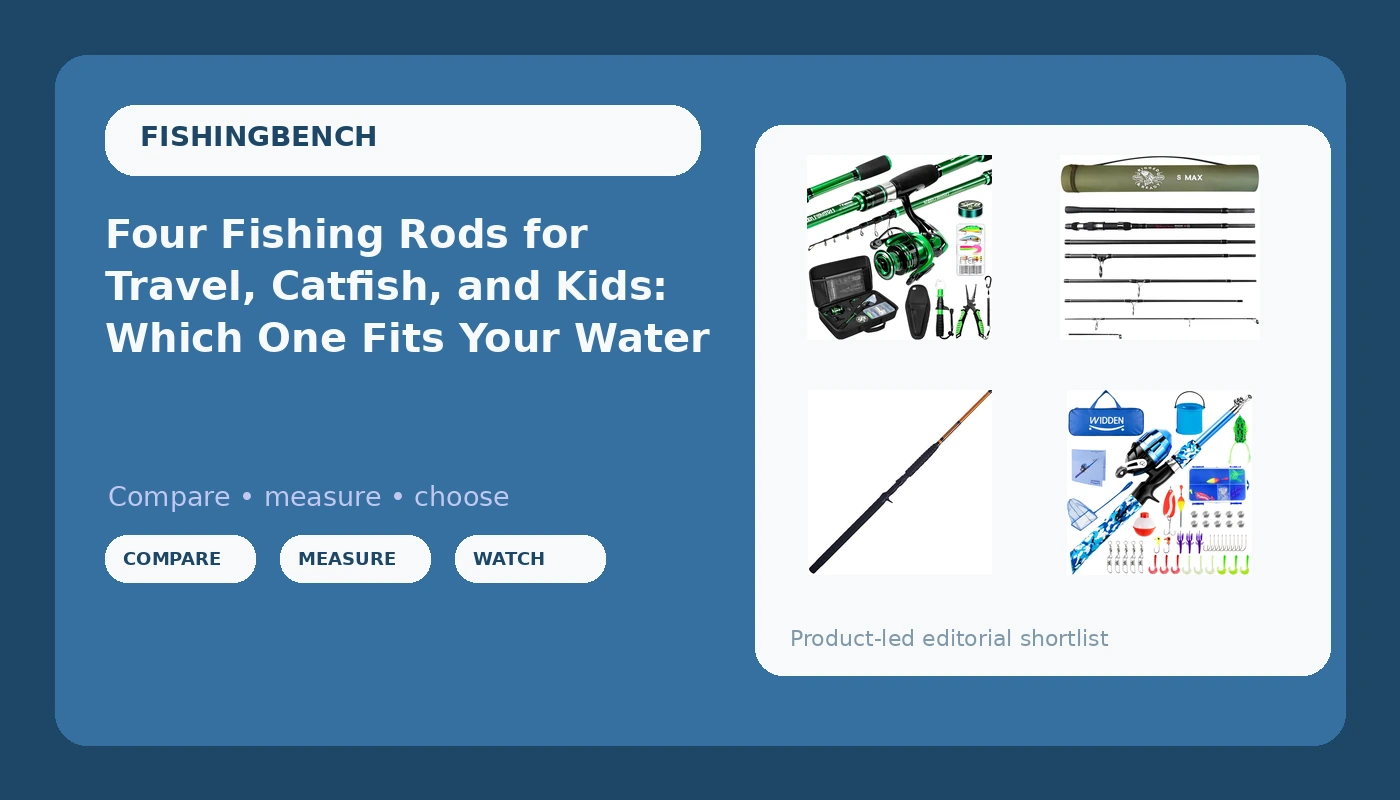
Best travel kit: Ghosthorn Telescopic Fishing Rod and Reel Combo
 Visit on Amazon → | Visit on Amazon →
If you fly, ride a bike, or hike into a pond, a rod that collapses to about the length of a water bottle changes your habits. The Ghosthorn telescopic spinning combo is the keep it in the trunk answer: a rod that packs down plus a reel, so you are not matching components in a parking lot while the light dies.
Telescopic rods get a bad name for one reason. Every joint is a place where the blank can flex differently, and cheap joints rattle. When you extend this one, pull each section out firmly and give it a slight twist to seat it. Then check it again after twenty casts. If a section starts sliding back in, that is the rod telling you where it plans to fail.
The reel is the part to judge honestly. A combo reel is a starter reel, and that is fine for pond bass, panfish, and the occasional schoolie. Rinse it with fresh water after every saltwater trip, back the drag off before you store it, and it will outlast your expectations. Treat it like a disposable and it will behave like one.
Spool it with fresh line and it becomes a genuinely fun little travel setup. I would not take it offshore, and I would not chase big surf fish with it. For everything else, it earns its space in the bag.
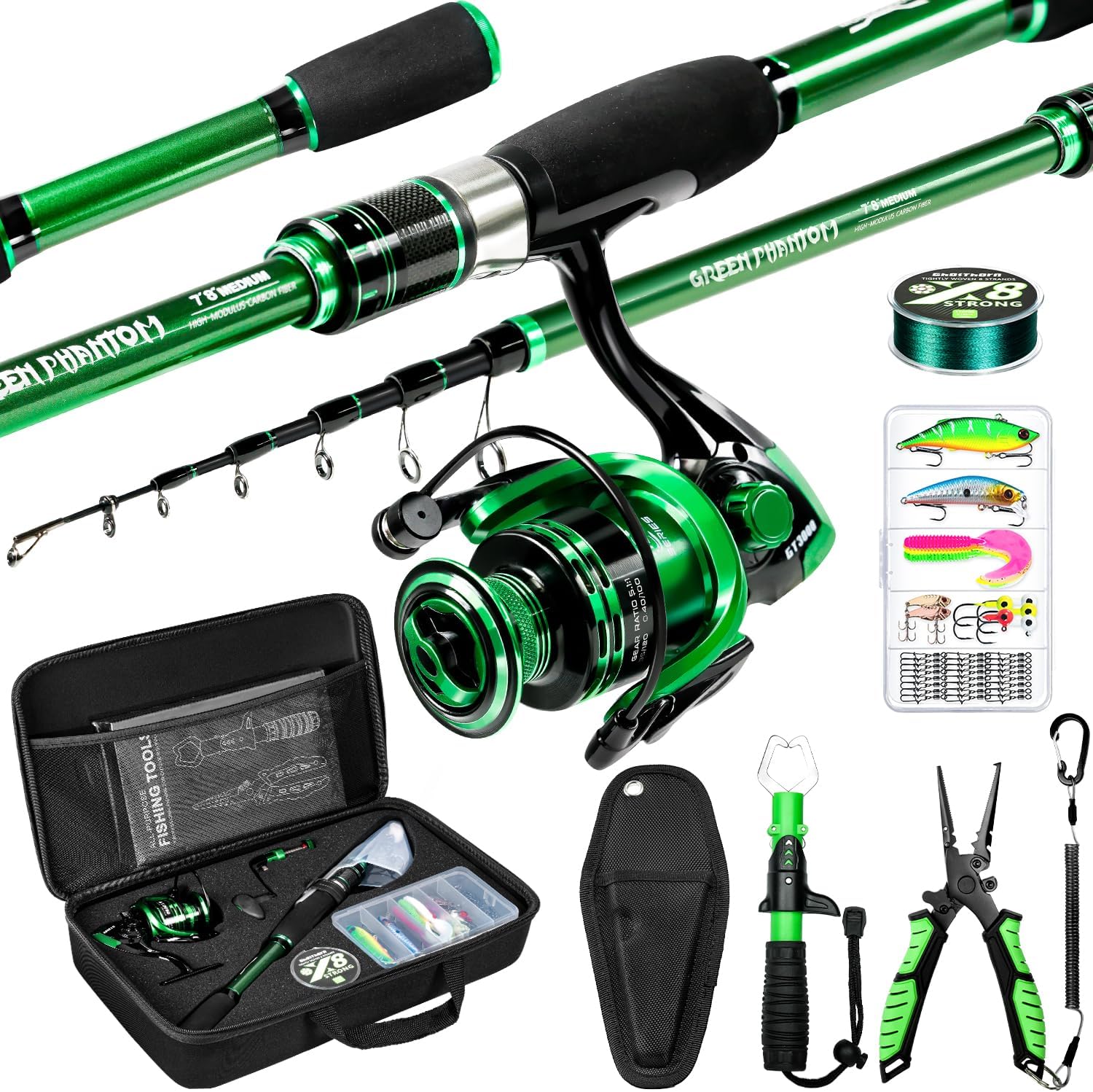
Best for surf and bigger fish: Rigged & Ready S Series Travel Rods
 Visit on Amazon → | Visit on Amazon →
This is the travel rod for people who are not traveling light in their ambitions. The Rigged & Ready S Series is aimed at bigger quarry, the kind of fish that make a rod's mid-section earn its keep. Surf, carp, predator fishing: three different waters, one shared demand for backbone.
Here is what separates a travel rod like this from a telescopic kit. Fewer and sturdier joints, and a blank meant to load under pressure rather than just survive a cast. If you are throwing bait past the breakers or lobbing a heavy rig for carp, you need a rod that moves weight without folding into a U.
Salt is the enemy, not the fish. Rinse the whole rod, guides included, after every trip. Look for green corrosion in the ring frames and grit in the reel seat. A surf rod dies from neglect long before it dies from a fish, and I have watched it happen to rods that cost five times this one.
If you are pairing it with a reel, match the reel to the drag you plan to fish, not to the biggest number on the box. Then set that drag with a scale or by feel, and leave it alone.
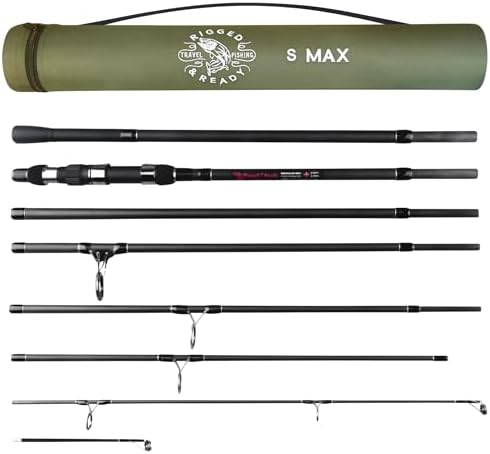
Best for catfish: Ugly Stik Catfish Special Casting Fishing Rod
 Visit on Amazon → | Visit on Amazon →
Ugly Stik is the value king. I have said that for twenty years and I will keep saying it. Indestructible, and the action is good enough for 90 percent of anglers. The Catfish Special is that same idea pointed at whisker fish: a casting rod with the backbone for a bait and wait game where the fish is almost always heavier than the angler expected.
Catfishing is not a finesse sport most nights. You put a bait on the bottom, you wait, and then something pulls like a truck. So you want a rod that loads deep, keeps pressure on, and does not quit halfway through the fight. Check the guides. Check the reel seat. Ugly Stiks are not fancy, and that plainness is exactly why they survive a season in the bed of a truck.
A casting rod means a casting reel, so plan for that. Set the spool tension and the brakes before you ever put a bait in the water, because a backlash in the dark costs you the best hour of the night. Load the rod with a slow, smooth motion and let the blank do the work. If you are forcing it, you are doing it wrong.
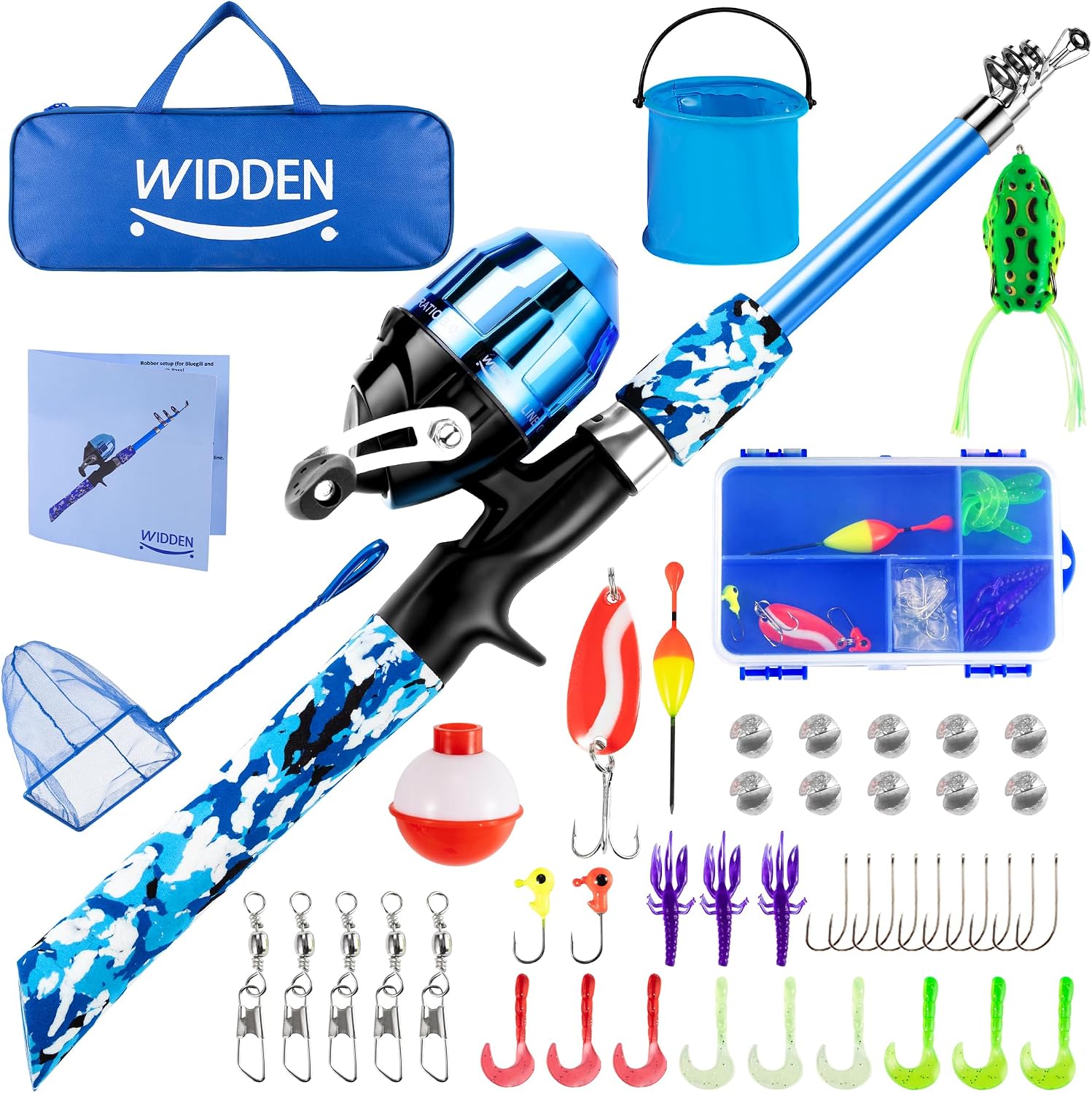
Best for kids: WIDDEN Kids Fishing Pole with Reel Beginner Kit
 Visit on Amazon → | Visit on Amazon →
Kids do not need a good rod. They need a rod that works every single time, because the first trip is the whole game. The WIDDEN beginner kit is built for ages 3 to 12, which is a wide range, so the real question is whether your kid can handle the length and the reel without help. If the answer is no, shorten the trip, not the enthusiasm.
For a kid, cheap is correct. Not because they do not deserve nice gear, but because a good rod in the hands of a six-year-old is a heartbreak waiting to happen. A kit like this can be dropped, dragged, and left in the garage, and the trip still happens next weekend.
Set the drag light before you hand it over. Light enough that a panfish can pull line, because a kid who cannot move the drag loses interest in ten minutes. Then bait up and let them cast. Tangles are going to happen. The goal is a fish, not a perfect cast, and the kid who catches one bluegill will ask to go again.
The rod reference table
This is the same breakdown I keep taped inside the shop counter. Match the rod to the water you actually fish, then check the four things that matter.
| Rod | Best for | Type | Price | What to check |
|---|---|---|---|---|
| Visit on Amazon → Ghosthorn Telescopic Fishing Rod and Reel Combo |
Trunk, carry-on, pond hopping | Telescopic spinning combo | $79.79 | Section joints seat firmly, reel rinsed after salt |
| Visit on Amazon → Rigged & Ready S Series Travel Rod |
Surf, carp, predator fishing | Travel rod, heavier quarry | $118.99 | Guide rings free of corrosion, backbone under load |
| Visit on Amazon → Ugly Stik Catfish Special Casting Rod |
Bottom fishing for catfish | Casting rod | $74.95 | Reel seat rock test, brakes set before dark |
| Visit on Amazon → WIDDEN Kids Fishing Pole with Reel Beginner Kit |
First trip, ages 3 to 12 | Beginner spinning kit | $29.99 | Drag set light, rod length fits the kid |
How I evaluate a rod
Every rod I stock gets held to the same standard, and it is not a number on a box.
A full season of real fishing comes first, because a rod that feels good in the store can feel like a fence post by August. Then the backbone test: I load the rod against heavy drag pressure, far more than most anglers will ever use, to see where the blank stops bending and starts folding. That is where rods fail, and it is where the marketing language goes quiet.
Then I hand it to two people. A beginner, to see if the rod loads on a normal cast without perfect timing. And an expert, to see whether it can place a bait where it needs to go. If both of them can cast it, the rod is honest. If only one can, it is a specialty rod and should be sold as one.
The last thing I check is the cheapest thing to fix and the most expensive to ignore: the guides. Grooved rings, corroding frames, and a reel seat that wobbles are the three failures I see most often on rods that were described as saltwater ready. I keep a logbook of action curves for every rod that stays on the wall. It is not glamorous, but it is the difference between a tool and a promise.
What the table tells you
Notice that no rod in that table is a compromise on the same thing. Each one is built for a specific water, and the failures show up when you use it somewhere else.
Telescopic kits live and die on their joints. That is the trade you make for portability, and it is a good trade if you reseat the sections and rinse the reel. If you want a rod that loads like a one-piece under a heavy bait, step up to a travel rod with fewer joints, which is exactly what the Rigged & Ready S Series is for.
Casting rods and spinning rods are not interchangeable, and the Ugly Stik Catfish Special is a casting rod for a reason. Catfishing is pressure fishing. You are holding the rod, or watching a rod holder, and the fish does the rest. Backbone matters more than sensitivity here, and the reel seat matters more than either.
Kids kits are the one place where I will tell you to buy cheap without hesitation. A kid who outgrows the kit in two seasons has won. A kid whose first trip ends in a tangle they cannot fix has lost, and no rod price fixes that.
And the saltwater rule applies to all four. Fresh water rinse, every trip. Guide rings and reel seats are where cheap rods die first, and it is always from corrosion, not from fish.
Which one should you buy?
If you need a rod that disappears into a backpack or a trunk, the Ghosthorn telescopic combo is the one. It is a starter reel and a packable blank, and it turns a walk into a fishing trip.
If your travel still involves big water and heavy baits, the Rigged & Ready S Series is the step up. Fewer joints, more backbone, built for the fish that pull hard.
If catfish are the target, the Ugly Stik Catfish Special is the boring, correct answer. It will outlast you, and it will not ask for anything but a rinse.
If you are buying for a kid, get the WIDDEN kit, set the drag light, and go catch a bluegill. That is the whole strategy.
The short version
The rod is a tool. The fish is the review. Buy for the water you actually fish, check the action, the backbone, the guides, and the reel seat before you pay, and rinse everything with fresh water when you get home. Do that, and any of these four will do right by you.