Related: Fishing Rod Action Explained: Fast, Moderate, and Slow
Choosing a fishing rod starts with one honest question: what fish are you actually going to catch? I ran charters out of Destin for 24 years before my knees retired me, and now I run a tackle shop and spend my mornings testing rods instead of baiting hooks. In that time I have watched a lot of people buy the wrong stick. Not a bad stick. The wrong one.
Action is everything. A rod's power rating is marketing, but how it loads and unloads on a real cast is engineering, and it is the difference between a rod you fish for six hours and a rod you put down after one. The guides are the rod too. Cheap rings groove and shred line, and a grooved guide will cost you a fish long before the blank does. So will a wobbly reel seat on a 20 pound fish.
The four rods below are not ranked against each other, because they are not doing the same job. One is a specialist ice stick, one is a long surf rod that breaks down for travel, one gives you two actions in a single blank, and one is a complete first setup for a beginner. Read the section that matches your water, then check the table.
KastKing Spartacus II Twin-Tip: Two Actions, One Blank
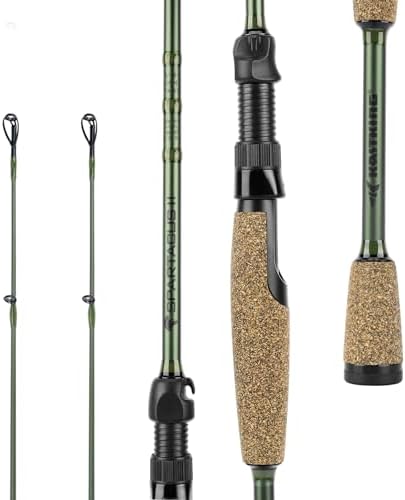
The twin-tip idea is the smartest thing in budget rod design, and it is not new. You get one butt section and two tips, so the same rod can fish as a spinning rod or as a casting rod depending on which tip you bolt on. That is two rods in the truck bed for the price of one, and it solves a real problem for the angler who fishes ponds on Saturday and the bay on Sunday.
What I look at first on any twin-tip is the ferrule. Two tips mean two joints, and every joint is a place where a rod can wobble, stick, or come loose mid cast. Seat the tip fully, check it again after twenty casts, and keep a little paraffin or ferrule wax in your box. The second thing I check is the reel seat, because a twin-tip blank usually has to accept both a spinning reel foot and a casting reel foot, and that is a compromise. A wobbly reel seat on a 20 pound fish is a disaster waiting to happen, so make sure the reel locks down tight before you spool anything.
For action, this is the rod I would point a versatile angler toward. The casting tip will generally load a little differently than the spinning tip, which is the whole point, and it lets you learn both styles without buying twice. It is not a tournament-grade blank and it is not trying to be. It is a smart, flexible tool for someone who wants options without a rod rack in the garage.
Fiblink Surf Spinning Rod: The Long Rod That Travels
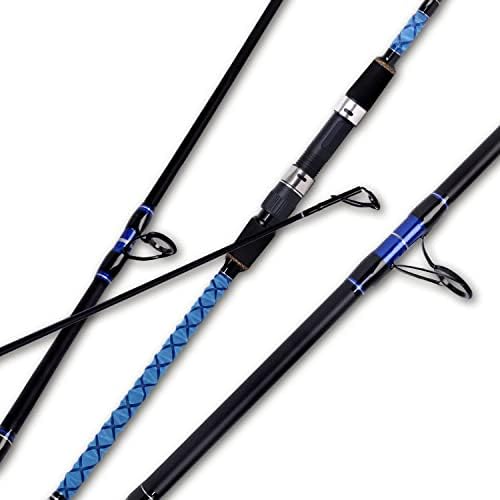
Surf fishing is a distance game, and distance comes from length, leverage, and a blank that loads deep enough to throw weight without folding. This Fiblink comes in a spread of lengths and in two, three, or four piece builds, which matters more than most people realize. A one piece twelve foot rod is a better casting machine and a worse life decision, because it will not fit in a car, a closet, or a plane.
Pick your length by your beach, not by the catalog photo. A shorter surf rod in the nine or ten foot range is easier to manage on a crowded beach and still throws a bait past the first bar. The longer lengths are for open sand and bigger water, and they ask more of your casting form. If you have never thrown a long rod, start shorter than your ego wants.
Two things decide whether a surf rod survives a season: the guides and the reel seat. Salt is relentless, and "saltwater ready" on a rod with corroding guides is a marketing phrase, not a specification. Rinse the rod with fresh water after every trip, dry it, and check the guide rings with a cotton swab. If the swab catches, the ring is damaged and it will eat your line. The multi-piece design also means you should check every ferrule for a tight fit each trip, because a surf rod that separates on a cast is a very short fishing trip.
St. Croix Skandic Ice Rod: The Specialist
St. Croix is the gold standard in my book. The action is consistent from rod to rod, the blanks are built in the USA, and the warranty is the best in the business. When a customer asks me which brand I would bet my own money on, that is the answer, and it has been the answer for years.
Ice fishing is where sensitivity stops being a buzzword and becomes the whole sport. You are not watching a rod tip bounce over a running fish. You are reading a subtle change in the bend, a tick, a load that should not be there. A dead, mushy blank hides all of that. A crisp, sensitive blank tells you the truth, and the Skandic is built for exactly that job. It is a short rod by design, because you are fishing over a hole with your shoulders hunched and your hands close together, and a long rod in that position is just extra lever working against you.
This is not an all-rounder and you should not buy it as one. It is a specialist tool for hard water. If you fish ice a handful of times a season, it earns its spot. If you have never fished ice and you are curious, borrow a rod first, because the technique is a bigger investment than the tackle. What I will say is that ice anglers are the most gear-loyal group I sell to, and the ones who fish the most tend to end up on a St. Croix.
PLUSINNO Telescopic Combo: The First Rod
I tell beginners to buy cheap and fish often. That is not me being generous, it is me being practical. A new angler does not know yet whether they prefer bass ponds, pier fishing, or a quiet dock at sunset, and buying a specialist rod before you know your water is how you end up with three rods and no fish.
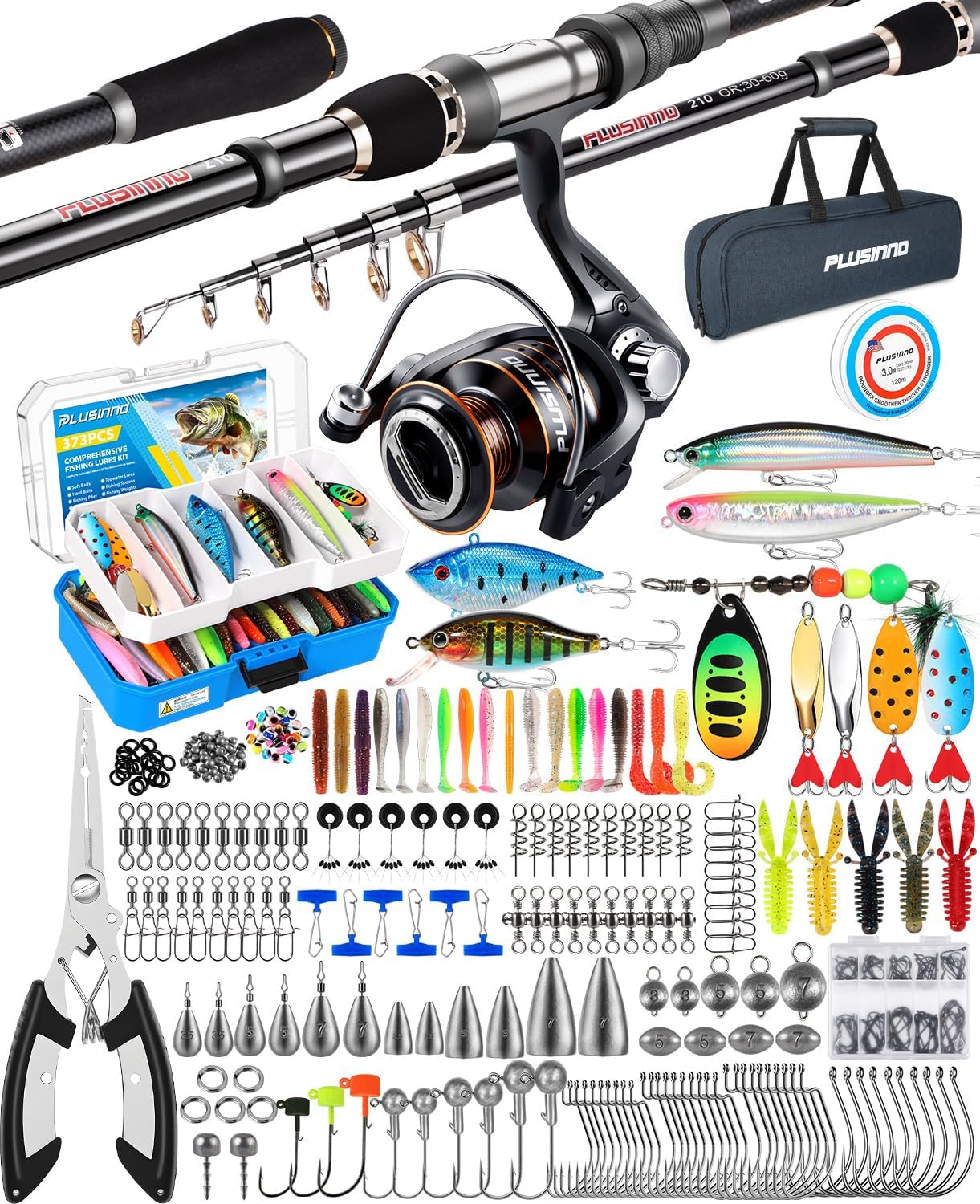
A telescopic combo like this one solves the entry problem in one purchase. Rod, reel, line, and a starter kit of tackle arrive together, which means you can be fishing the same afternoon instead of researching reel sizes for a week. The telescopic build collapses down small enough to live in a trunk or a closet, and that matters more than people admit. The best beginner rod is the one that is already in the car when you get the urge.
Here is the honest part. This is a starting point, not a destination. The components are built to a budget, and the day you start caring about how a rod loads on a cast is the day you outgrow it. That is fine. Outgrowing your first rod is a good sign, and this one gets you to that day for less money than a single tank of gas. Pair it with a proper tackle box, learn your knots, and fish it until you know what you want next.
The four rods at a glance
This is the same comparison I run through with customers at the counter. Match the job first, then the rod.
| Rod | Best For | Build | What to check |
|---|---|---|---|
 Visit on Amazon → Visit on Amazon →KastKing Spartacus II Twin-Tip |
One rod, two fishing styles | Two interchangeable tips | Ferrule fit and reel seat lockup |
 Visit on Amazon → Visit on Amazon →Fiblink Surf Spinning Rod |
Beach and long distance casting | Multi-piece carbon travel build | Guide rings and saltwater rinse routine |
 Visit on Amazon → Visit on Amazon →St. Croix Skandic Ice Rod |
Hard water and light bite detection | Dedicated ice blank, made in the USA | Pick the action for your target panfish or walleye |
 Visit on Amazon → Visit on Amazon →PLUSINNO Telescopic Combo |
First rod, trunk rod, kids | Complete telescopic kit | Line condition and reel drag smoothness |
How I test a rod
Every rod that earns a spot in my shop goes through the same three stages, and it has been that way since I was guiding. First, a full season of real fishing. Not a parking lot wiggle. Real casts, real wind, real fish, and enough trips that the honeymoon wears off. Second, a backbone test against a 40 pound drag, which is a deliberately cruel standard. I want to know where the mid section gives up and whether the blank goes flat or keeps some power in reserve. Third, a casting test with two people: a beginner and an expert. If a beginner cannot get it to load, the rod is asking too much. If an expert cannot get distance out of it, the rod is not asking enough.
I keep a logbook of every rod's action curve, which sounds obsessive until you realize it is the only way to compare two rods honestly. Marketing copy lies about action. A bend curve does not.
What the specs actually mean
Action is how a rod bends. Fast means the tip does the work and the rest of the blank stays stiff. Moderate means the middle of the rod comes into play. Slow means the whole blank loads deep. None of these is better. A fast rod is a great hookset tool and a poor tool for throwing light lures. A moderate rod is forgiving on the cast and easier for a beginner to time. Buy the action that matches your lures and your casting style, not the one with the best-sounding adjective.
The guides are the rod. This is the hill I will die on. Cheap rings groove after a season, and a grooved ring shreds line and costs you fish. Run a cotton swab around each ring after every few trips. If it catches, replace or repair before you fish again.
Reel seats matter more than the blank on a budget rod. If the reel moves in the seat under load, you have lost the fight before it starts. Check it in the shop, check it on the water, and check it again after a fish.
And be suspicious of the phrase "saltwater ready." If the guides corrode and the seat pits, it was never saltwater ready. It was saltwater adjacent.
Should you buy the KastKing Spartacus II Twin-Tip?
Yes, if you want two rods worth of fishing from one purchase. The twin-tip design is genuinely useful for the angler who switches between spinning and casting gear, and it keeps your truck bed from turning into a rod rack. Check the ferrule fit and the reel seat before you commit, and keep a little wax handy. For a versatile, budget-minded angler, it is the smartest pick in this group.
Should you buy the Fiblink Surf Spinning Rod?
Yes, if you are fishing the beach and you want a long rod that actually travels. Choose the length for your water and your casting ability, not the biggest number on the page, and match the piece count to how you transport gear. Then treat it like saltwater tackle: rinse it, dry it, and inspect the rings. Do that and a surf rod will outlast a lot of more expensive freshwater rods.
Should you buy the St. Croix Skandic Ice Rod?
Yes, if you fish hard water. Ice fishing rewards sensitivity above everything, and St. Croix builds consistent, sensitive blanks with the best warranty in the business. It is a specialist tool, so buy it for ice and leave the open-water duty to something else. The anglers I know who fish the most ice are the ones who end up on one of these.
Should you buy the PLUSINNO Telescopic Combo?
Yes, if you are just starting or you want a rod that lives in the car. A complete kit gets you fishing the same day, and the telescopic build means it goes wherever you do. You will outgrow it, and that is the point. Buy it, fish it hard, learn what you like, and then come back for the rod that matches the angler you turned into.