I have spooled more line than most factories, and after 24 years of guiding out of Destin and a few more standing behind a tackle shop counter, I can tell you the rod question never changes. What do I actually need? This comparison of surf and travel fishing rods puts four very different tools side by side: two rods built around one specific job, one twin-tip that tries to be two rods in a single package, and one complete kit for the angler who owns nothing yet. None of them is a bad purchase. They are built for different people, and picking the wrong one is how a decent angler ends up fighting the rod instead of the fish.
Short answer first: the KastKing Spartacus II Twin-Tip is the most versatile of the four, the Fiblink Surf is the long-cast tool for beach and jetty work, the KastKing Zephyr Finesse is the light-line specialist, and the Goture kit is the fastest way for a new angler to get on the water. Match the rod to the water you fish most, not the water in the catalog photo.
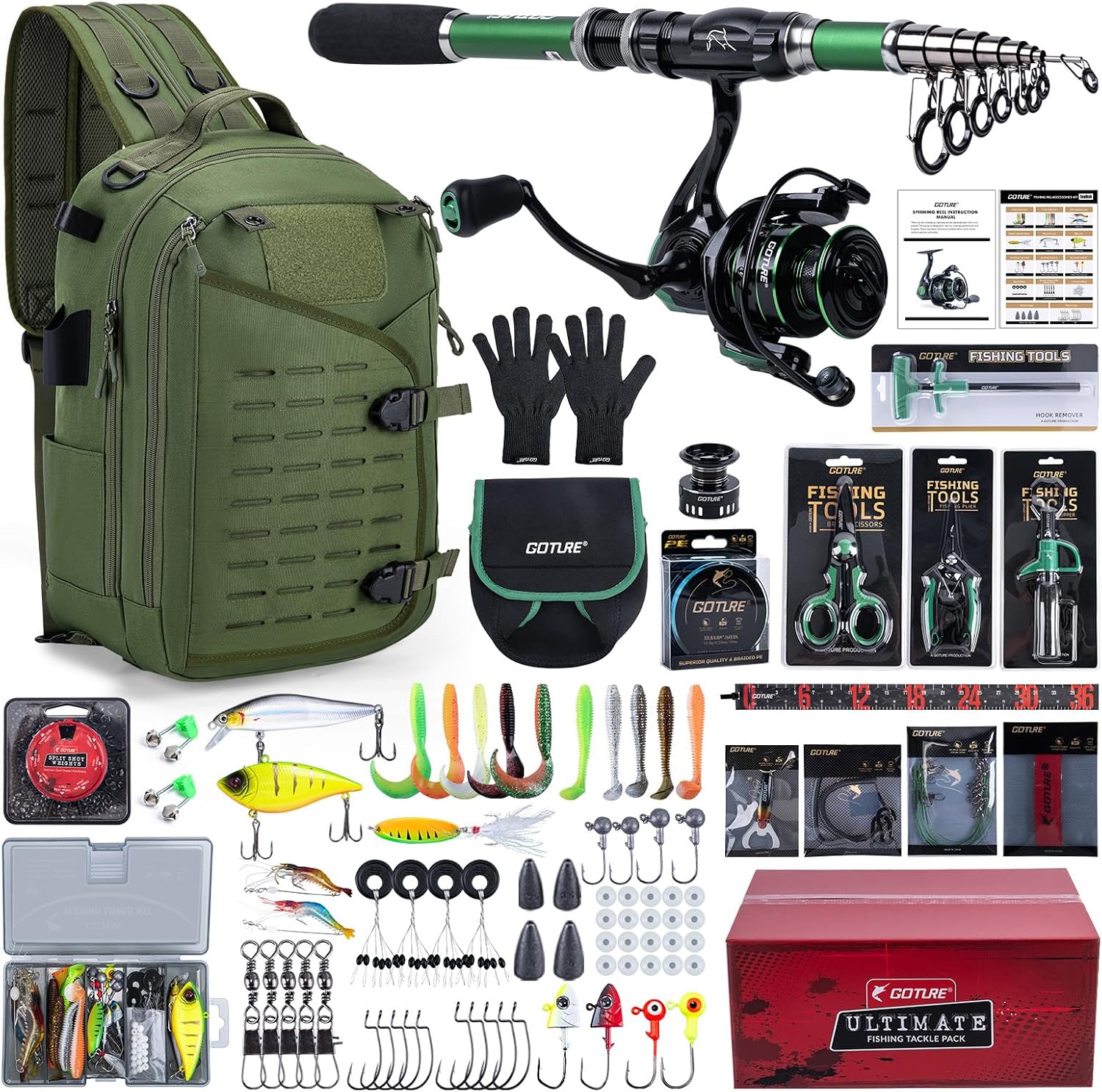
Goture Fishing Kits for Adult,Fishing Pole and Reel Combo, OpenSide Fishing Sling Tackle Storage Bag with 3 Tackle Boxes,Gift for Men
Everything arrives at once: rod, reel, sling bag, and three tackle boxes, so a beginner can fish the same day
A combo rod and reel cannot match the action of a dedicated blank, and the reel is usually the weak link
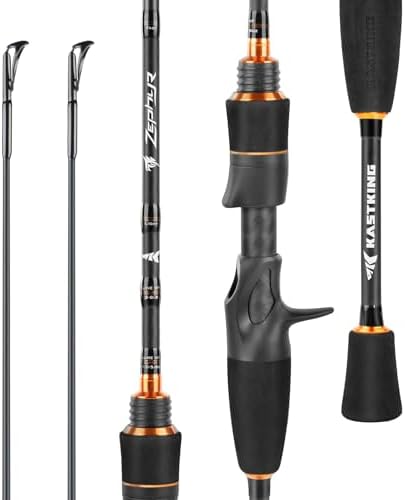
KastKing Zephyr Finesse Spinning & Casting Fishing Rods
Built for light line and small lures, which is how most pressured fish actually get caught
Finesse power means you give up the backbone you need in wind, surf, or heavy cover
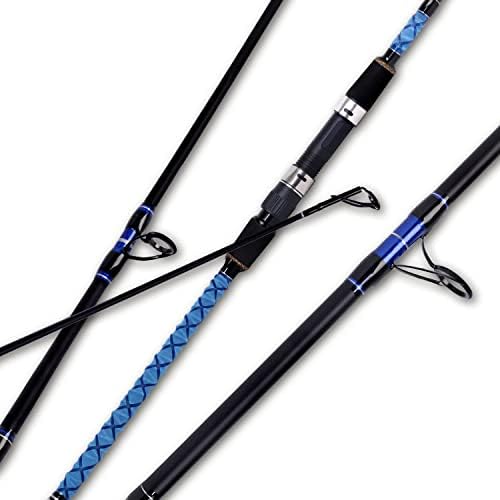
Fiblink Surf Spinning Fishing Rod Carbon Travel Surf Rod 2 Piece/3 Piece/4 Piece Spinning Fishing Rod 9'/10'/11'/12'/15'
Long lengths and multi-piece travel packing make it the beach and jetty tool, up to 15 feet
A surf rod is a one-job rod, and that extra length is a liability in a boat or a creek
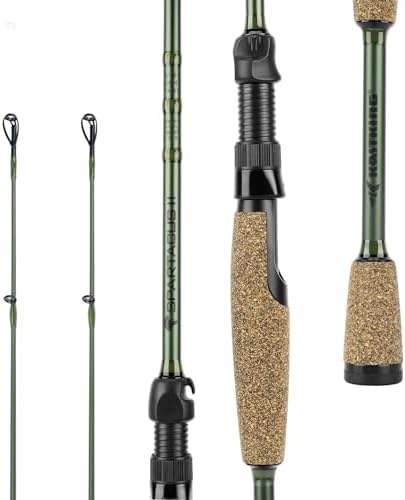
KastKing Spartacus II Twin-Tip Spinning & Casting Fishing Rods
Two tips in one package cover spinning and casting, and the second tip is spare-rod insurance
A compromise blank rarely delivers the refined action of a single-purpose rod
Prices and availability were captured from Amazon Creators API and may change.
The four questions I ask before a rod earns rack space
Every rod that comes through my shop has to answer the same four questions, because a rod is a tool and the fish is the review. How does it load on a real cast? Does the backbone hold when something heavy takes the bait? Do the guides survive a season of salt and sand? Would I hand it to a paying client without wincing?
Start with action. Action is how a rod bends, and it is the spec that actually matters. A fast action bends in the top third, a moderate action bends through the middle, and a slow action loads deep into the butt. Manufacturers love to print words like "power" and "responsive" on the blank, but none of that tells you how the rod unloads at the end of a cast. A rod that loads smoothly and releases smoothly puts a lure where you aimed it. A rod whose action rating does not match its real bend fights you on every cast, and you feel it by hour four.
Then the backbone. Backbone is the power through the mid-section when you are fighting a fish, and it is the difference between turning a fish away from structure and watching it swim into it. A rod can have a soft tip for casting and still carry real power in the middle. That combination is what most anglers actually want, and it is the hardest thing to build well at a low price.
Guides come next, and this is where cheap rods quietly cost you money. The guides are the rod as far as your line is concerned. Cheap rings groove, and a grooved guide shreds braid and adds friction you can feel on the retrieve. One season of saltwater exposes a bad guide, which is why "saltwater ready" on a rod with corroding rings is one of my least favorite phrases in this business.
Finally, the reel seat. A wobbly reel seat on a 20 pound fish is a disaster waiting to happen. Grab the reel and twist it. If the seat flexes, walk away, no matter how good the blank feels in the aisle.
That is the checklist. Here is how these four products line up against it.
Fiblink Surf Spinning Rod: the long-cast specialist
Surf fishing is its own discipline, and it punishes rods that were designed for a lake. The Fiblink Surf Spinning Fishing Rod is a carbon travel surf rod sold in 2 piece, 3 piece, and 4 piece builds, in lengths from 9 feet up to 15 feet. That range matters. A 9 foot surf rod is a manageable pier and jetty tool, while a 12 or 15 foot blank is built for distance off an open beach, where the fish sit past the bar and the wind is in your face.
The travel part is the quiet advantage. A 4 piece 12 footer packs into a tube that fits in a checked bag or the back of a small car, which means a rod that fishes like a dedicated surf stick does not have to live in your garage. For anyone who drives the coast or flies to fish, that is a real feature, not a gimmick.
The trade-off is honest: a surf rod is a one-job rod. Extra length gives you leverage on a cast and puts you at a disadvantage in a boat, a creek, or a kayak. If your fishing is 80 percent freshwater, this is not the rod you reach for. If the beach is your home water, it is the one tool in this group built specifically for it. Check current Amazon price.
KastKing Spartacus II Twin-Tip: two rods in one tube
The idea behind a twin-tip rod is simple. Two tip sections, two actions, one butt section, so the same rod serves two jobs. The KastKing Spartacus II Twin-Tip Spinning & Casting Fishing Rods are sold as a spinning and casting twin-tip, which means you can cover both styles without buying two rods or carrying two tubes.
For a traveling angler the value is obvious. For a shop owner the value is in the spare tip. Tips break. They break in car doors, on boat rails, and under the feet of an excited kid on a dock. A rod that arrives with a second tip already in the bag keeps fishing after the first accident instead of waiting on a warranty claim.
Where a twin-tip gives ground is refinement. A single-purpose blank can be tuned for one lure weight and one technique. A twin-tip has to serve two, so each tip is a compromise. It will not feel as crisp as a dedicated finesse rod at the light end, and it will not carry the same authority as a purpose-built heavy rod at the top end. What it does is cover the middle well enough that most anglers never notice the gap. Visit on Amazon.
KastKing Zephyr Finesse: the light-line specialist
Finesse fishing is the art of catching pressured fish on small lures and light line, and it asks something specific from a rod: a tip soft enough to cast a light bait, and enough mid-section to set a hook at distance. The KastKing Zephyr Finesse Spinning & Casting Fishing Rods are built for exactly that job, in both spinning and casting versions.
This is the rod for drop shots, small jigs, and finesse presentations in clear water where a heavy rod spooks more fish than it catches. The reason light rods matter is line dynamics. Light line and a light lure need a blank that loads under very little weight, or the cast collapses before it starts. A rod with a stiff tip and a light bait makes you work for every yard.
The limit is backbone. Finesse power is the opposite of what you want in wind, in heavy cover, or in the surf. Set this rod against a 20 pound fish in current and you will learn the difference between a rod that bends and a rod that turns a fish. If your water is clear, your fish are pressured, and your lure box is full of small plastics, this is the right tool. Check current Amazon price.
Goture Fishing Kit: everything in one box
Not everyone needs a rod. Some people need a start. The Goture Fishing Kits for Adult bundle a fishing pole and reel combo with an OpenSide sling tackle bag and three tackle boxes, which is the difference between owning a rod and being able to go fishing today.
That distinction is bigger than it sounds. The most common reason a new angler never gets on the water is not money, it is decisions. Which rod, which reel, which line, which hooks, which box to carry it all in. A kit removes every one of those decisions at once. The sling bag matters more than the rod here, honestly, because a bag you can wear while wading or walking a jetty is the piece of gear that gets used every single trip.
What you give up is precision. A combo rod and reel at a kit price will not match the action of a dedicated blank, and the reel is usually the first component to show its price. That is fine while you are learning. It is not fine if you are trying to cast a light lure into the wind at one specific piece of structure. Buy the kit to start, then buy the rod that fits your water once you know what that water is. Visit on Amazon.
Matching the rod to the fish you actually catch
Here is the part nobody wants to hear. The best rod in this group depends entirely on where you fish, and the catalog photo is the worst possible advisor.
Beach, jetty, and open surf: the Fiblink Surf. Length equals distance, and distance equals fish when the bar is 60 yards out.
Boat, kayak, mixed freshwater and salt: the KastKing Spartacus II Twin-Tip. Two tips, two jobs, one tube, plus a spare when something breaks.
Clear water, pressured fish, small lures: the KastKing Zephyr Finesse. Light line needs a blank that loads under almost no weight.
Nothing in the garage yet: the Goture kit. Get on the water this weekend, learn what you like, and upgrade with information instead of guesses.
Notice that price is not the deciding factor in any of those four lines. I have watched anglers catch more fish on a modest rod that matched their water than on an expensive rod that did not. The rod does not know what it cost.
Trade-offs nobody prints on the box
Multi-piece rods are convenient, and they flex differently at the ferrules. A 4 piece surf rod is a travel miracle, but every joint is a place where the action can shift slightly. Modern carbon blanks handle this far better than the rods of 20 years ago, yet if you are chasing the last five percent of casting feel, a 2 piece build is usually crisper than a 4 piece.
Twin-tip rods trade peak performance for coverage. You get two rods in one tube, and you give up the fine tuning a single-purpose blank can offer. For most anglers that trade is worth it. For a specialist, it is not.
Combo kits trade quality for completeness. You get everything at once, and the reel is where the compromise shows up first. That is not a criticism of kits. It is a reason to treat the kit as a starting point rather than a destination.
And finesse rods trade power for feel. A light rod that loads beautifully with a small lure will not turn a big fish out of cover. Own the right rod for your water, and stop expecting one rod to do both.
Bottom line
If I had to hand one rod from this group to the widest range of anglers, it would be the KastKing Spartacus II Twin-Tip, because two tips in one package solve more problems than one perfect tip ever will. If you fish the beach, buy the Fiblink Surf and stop pretending a 7 foot bass rod will reach the bar. If you fish clear, pressured water, the KastKing Zephyr Finesse is built for the way you actually fish. And if you are brand new, buy the Goture kit, fish it hard, and come back for the rod that matches your water once you know what your water is.
Action first. Guides second. Everything else is paint.