Related: Spinning Rod Action Explained: Fast, Moderate, and Slow
My grandfather caught more fish on a cane pole than I will ever catch with two thousand dollars of graphite, and he would be the first to tell you the pole was not why. But he never had to hand a rod to a paying client at five in the morning and hope the reel seat held. That is the gap a fishing rod and reel combo has to close. A combo gets you on the water for the price of dinner for two, and it either works or it does not. You find out fast.
I guided out of Destin for 24 years until my knees filed a formal complaint. Now I run the tackle shop and I test gear full time. I have spooled more line than most factories. When somebody walks in with a combo box under one arm, I do not ask what they paid. I ask three things. How does it load on a cast? Does the backbone hold when a fish turns? Do the guides survive a season? Everything else on the spec sheet is paint.
Action is everything. A rod's power is marketing. How it loads and unloads is engineering. A rod that costs three hundred dollars but needs a hundred dollars of upgrades is a two-hundred-dollar rod with good paint. A forty-dollar combo that gets fished every weekend beats a four-hundred-dollar rod that hangs on the wall.
The four setups here cover what people actually buy. A travel-friendly carbon fiber telescopic kit, a starter kit for a first-timer, a one-piece rod for the angler who is done with toys, and a kids' set that comes with everything except patience. I will tell you who each one fits, and who should keep walking.
Best Overall: PLUSINNO Carbon Fiber Telescopic Fishing Rod and Reel Combo
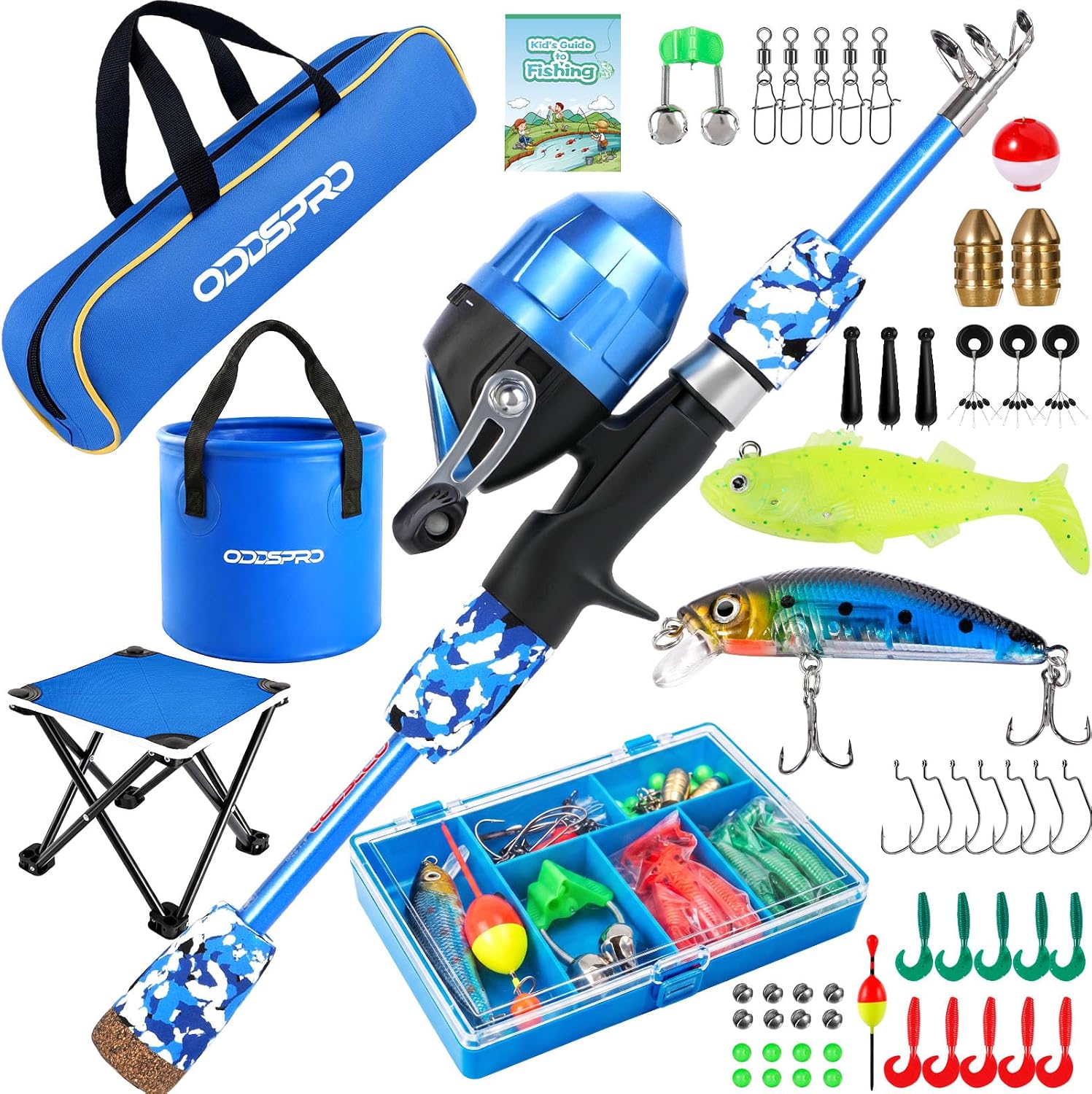
This is the one for the angler who fishes wherever they happen to be. It is a carbon fiber telescopic pole with a matching reel, sold as a sea, saltwater, and freshwater kit. I usually roll my eyes at a rod that claims all three. Here the claim is at least defensible, because a blank that collapses small enough for a backpack is genuinely useful for the way most people actually fish. A pond after work. A pier on vacation. A river they have never seen before.
The telescopic design is the entire point. A rod that breaks down and travels means you fish more often, and fishing more often beats owning better gear every single time. That is not a slogan. That is arithmetic.
What I would check first is the ferrules, the joints where the sections meet. On any telescopic rod, that is where the action goes soft and where a rod starts to rattle. Seat every section firmly, twist as you extend, and check them again after an hour of casting. Second, the guides. On a combo in this price bracket, the guides are where the money got saved. Run a cotton swab around the inside of each ring. If it snags the cotton, it will shred your line, and shredded line is a lost fish with a story attached to it.
The reel is a starter-grade spinning reel, which is exactly what it should be. Keep the drag light, rinse it after every saltwater trip, and it will do its job. Do not ask it to fight a bull red in the pass.
Best Starter Kit: PLUSINNO Collapsible Telescopic Fishing Rod and Reel Combo Starter Kit
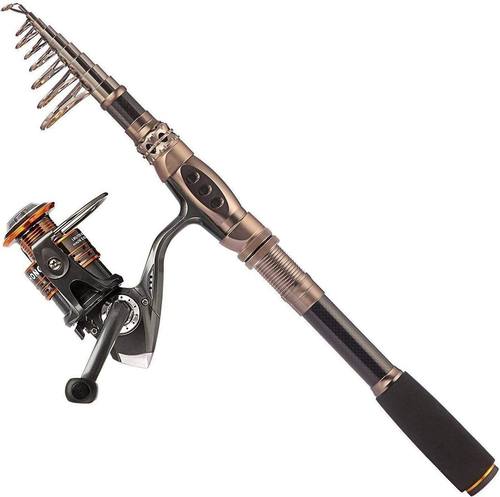
If you have never owned a rod, this is where I would start. It is a collapsible telescopic rod and reel combo sold as a starter kit, which means everything arrives matched and nothing needs research.
Here is the honest version of starter-kit advice, and it is the same thing I say across my counter every week. Buy cheap, fish a lot, and upgrade once you know what you actually want. Most beginners buy an expensive rod before they know whether they even like fishing, then discover they wanted a different action, a different length, and a different reel size. This kit exists to answer that question for the price of a tank of gas.
The compromise is the reel, and it is always the reel. Expect it to be the first thing to feel tired. Rinse it, do not dunk it, and back the drag off when it is stored. When it finally gives out, the rod is still a rod, and you will have learned enough by then to replace the reel with something better.
Best Rod Once You Are Past the Starter Stage: Lew's Laser SG1 Spinning Rod
This one is not a combo, and that is deliberate. The Lew's Laser SG1 is a 6-foot, one-piece spinning rod in ultra-light power. You supply the reel, which means you choose the reel, which means you are past the point where a matched kit makes sense.
Ultra-light is a specific tool, not a beginner downgrade. It means light line, light lures, and a lot of fight out of small fish. Bluegill, crappie, creek bass, stocked trout. If your water is full of big fish or heavy cover, ultra-light is the wrong answer and you already know it.
One-piece matters more than people give it credit for. No ferrules, no joints, no soft spots. The blank loads the way the designer intended from butt to tip. And at 6 feet it is still about the most packable full-length rod you can own, which matters when you are carrying it down a bank through brush.
Two things I would check on any one-piece spinning rod. Flex it hard and watch the reel seat. A wobbly reel seat on a 20-pound fish is a disaster waiting to happen, and it is the first thing to fail on a budget rod. Then check the guides the same way, with the cotton swab, inside every ring.
Best for Kids: ODDSPRO Kids Fishing Pole
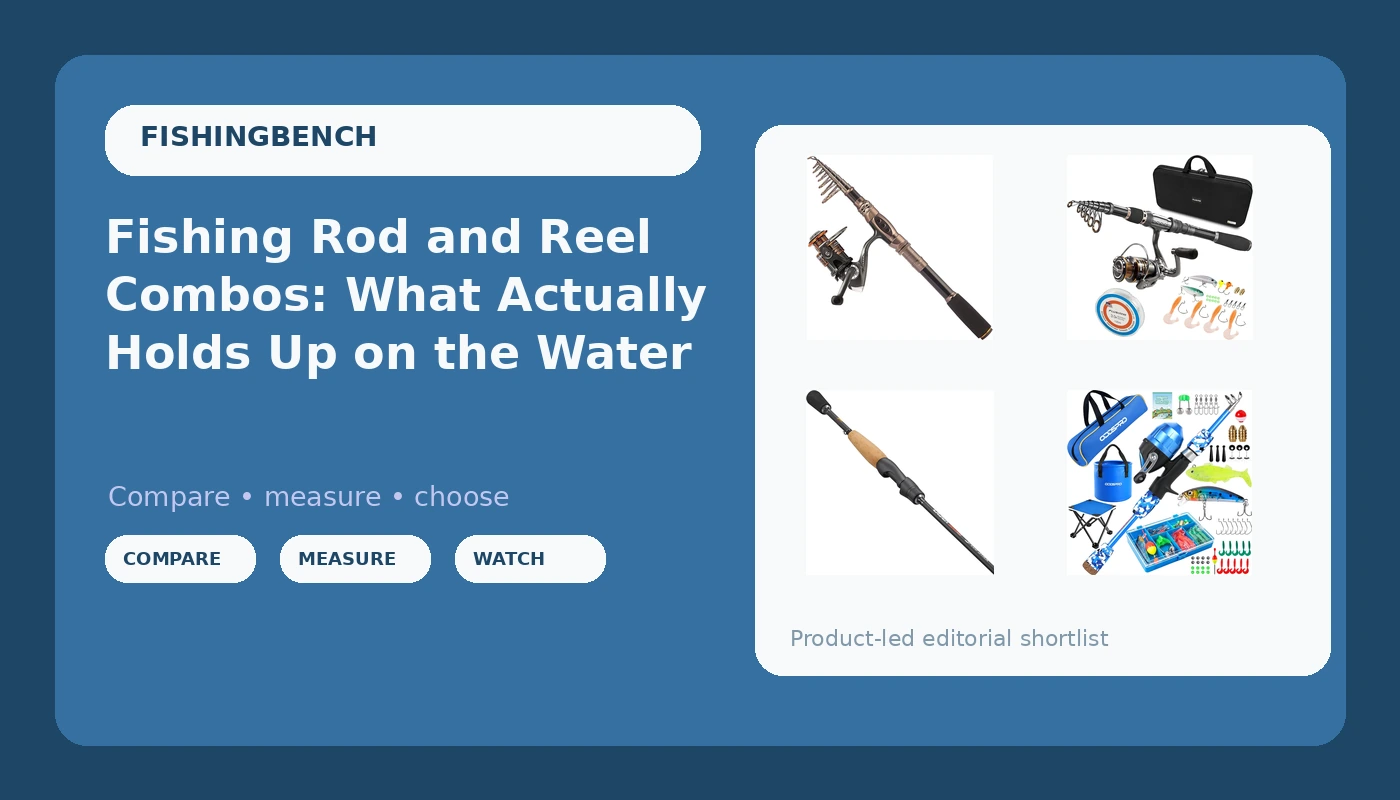
Kids' gear usually means a plastic rod that is broken by August and a parent who is done by July. This set is built differently. It is a portable kids' rod and reel combo with a spincast reel, a tackle box, a collapsible chair, and a bucket, and it is rated for ages 3 and up.
The spincast reel is the right call and I will argue with anyone about it. Push-button casting means no bail to flip, no line to pinch, no thumb on a spinning spool. A kid who can cast without you untangling them every ninety seconds fishes four times longer than a kid with better gear and a backlash.
The chair and the bucket are the part that actually matters, and they are the reason I would pick this over a bare rod. A kid who is comfortable stays. A kid standing in the sun holding a rod for an hour is finished. The bucket is the landing net, the bait holder, the seat, and the ride home.
How I test a rod or a combo
Twenty trips minimum. That is the rule I have kept since I started writing any of this down, and I do not break it. A rod that feels wonderful on the lawn is a different rod after twenty trips, and a different rod again after a season.
The backbone test comes first. I load the rod against a heavy drag and watch the mid-section, not the tip. Anyone can build a tip that wiggles. The backbone is what turns a fish, and a rod that folds into the grip under pressure is a rod that hands a big fish its head back.
Then the casting test, and this one is non-negotiable. I hand the rod to a beginner and to an expert, because those are two completely different tests. An expert can cast anything. A beginner tells you whether the rod is actually forgiving, and forgiving is what most people need.
Then the guides. Cotton swab, inside of every ring, both directions. Cheap guides groove and shred. It is the single most common failure I see on rods sold as saltwater ready, and it is why I will pay for better rings before I pay for better graphite.
Then the reel seat. Flex the blank hard and look for movement where the reel foot sits. A wobbly reel seat is not a cosmetic problem. It is a lost fish.
Analysis and what it means for you
Where these four separate is in three places, and none of them are the ones on the marketing sheet.
The first is the joint. A one-piece rod has no joint, which is an advantage you can feel. A telescopic rod has several, which is a tradeoff you accept in exchange for a rod that travels. Neither is wrong. They are different tools, and the mistake is buying the travel tool for the job that wants a one-piece.
The second is the guides. This is where a combo in a budget bracket earns or loses its keep. Grooved or rough rings destroy line, and line failure is the most expensive kind because it costs you the fish and the lure.
The third is the reel seat and the reel itself. On any matched combo, the reel is the part that ages fastest. That is not a knock on matched combos. It is simply where the budget went, and knowing it means you rinse the reel, back off the drag, and plan to replace it rather than being surprised by it.
Action is the thing people talk about least and notice most. A fast rod bends at the tip. A moderate rod bends through the middle. A slow rod bends deep. For a beginner on a pond, moderate is forgiving. For a kid with a spincast reel, a softer action is a gift. For an angler chasing panfish with tiny jigs, ultra-light is the whole point. Buy for the fish you actually catch, not the one in the catalog photo.
The rod and combo reference table
This is the chart I keep behind the counter for customers who want the short version. Match the angler, then match the rod.
| Rod or combo | Type | Best for | Notes | Price |
|---|---|---|---|---|
 Visit on Amazon → ODDSPRO Kids Fishing Pole |
Spincast combo with tackle box, chair, and bucket | Kids 3 and up | Push-button casting, fewest tangles | $39.99 |
 Visit on Amazon → PLUSINNO Carbon Fiber Telescopic Combo |
Telescopic spinning combo | Travel, saltwater and freshwater | Collapses small, check the ferrules | $41.97 |
 Visit on Amazon → PLUSINNO Collapsible Starter Kit |
Telescopic spinning combo kit | A first rod | Everything in one box | $48.97 |
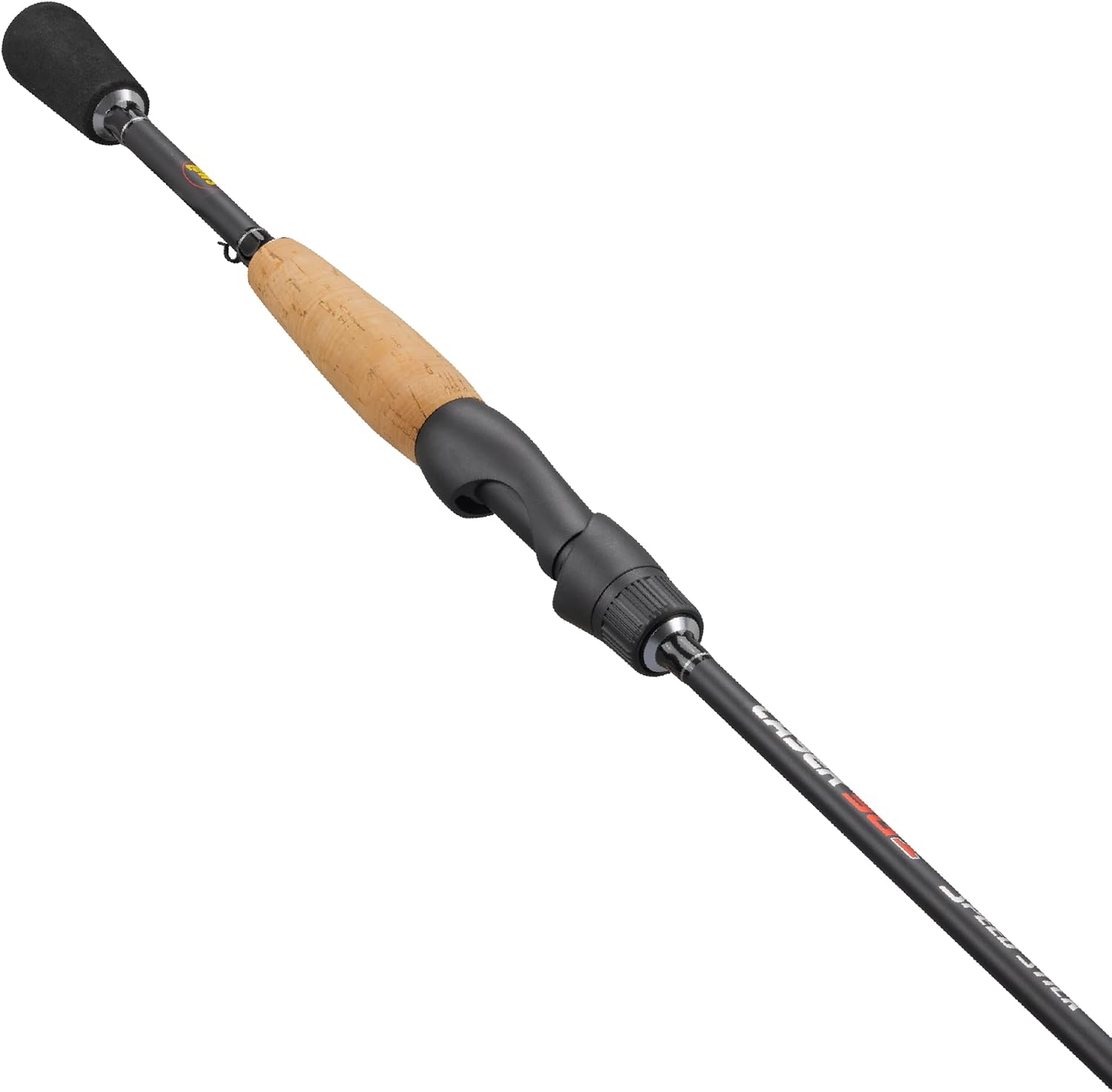 Visit on Amazon → Lew's Laser SG1 |
One-piece spinning rod, no reel | Panfish, trout, creeks | 6-foot, one-piece, ultra-light power | $79.99 |
The pattern in that table is simple. If the angler is a kid, buy the set with the chair. If the angler has never held a rod, buy the starter kit. If the angler travels, buy the telescopic. If the angler already knows they want to feel a bluegill breathe on a tiny jig, buy the one-piece.
Should you buy the PLUSINNO carbon fiber telescopic combo?
Yes, if your fishing happens in a lot of different places. The rod that lives in your trunk gets fished. The rod that lives in the garage does not, no matter how good it is. Seat the ferrules firmly, swab the guides, keep the drag light, and rinse the reel after saltwater.
If you fish the same dock every weekend with heavy tackle, this is not your rod. Buy a one-piece and be done.
Should you buy the PLUSINNO collapsible starter kit?
Yes, if it is your first rod. Buy cheap, fish a lot, upgrade later. That order matters, and almost nobody follows it. You will learn more about your own casting style in ten trips with this kit than you will in ten hours of reading rod specs.
Just do not expect the reel to be the last one you own. It is the part that ages, and it is the part you upgrade first.
Should you buy the Lew's Laser SG1?
Yes, if you already own a reel you trust and you fish small water. A 6-foot, one-piece, ultra-light rod is a precision tool for panfish, trout, and creek bass, and the one-piece build means no ferrules to soften the action.
Check the reel seat before you commit to it. Flex the blank hard and look for wobble where the reel foot sits. That is the failure point on any rod in this bracket, and it is the one thing that will cost you a fish.
Should you buy the ODDSPRO kids fishing pole?
Yes, for a kid around 3 and up. The spincast reel means they can cast on their own, the tackle box means the gear has a home, and the chair and bucket mean they can sit still long enough to actually catch something. Fewer tangles, more fishing, and a kid who wants to go again next weekend.
That is the test I hold every rod to, whether it costs forty dollars or four hundred. Not the spec sheet. Whether you want to pick it up again tomorrow.