Related: Spooling a Spinning Reel Without Line Twist
I have spooled more line than most factories, and I still keep a collapsible rod behind the counter for the customer who walks in an hour before his charter leaves. A telescopic fishing rod and reel combo gets dismissed as a toy by people who have never packed one into a carry-on. That is a mistake. It is a different tool, and for travel, for a truck bed, or for a kid's first season, it is often the right one.
Here is what I tell every beginner who picks one up. The rod is a tool and the fish is the review. You do not need the most expensive rod on the wall. You need one whose reel seat does not wobble, whose guides do not groove, and whose line matches the fish you actually catch rather than the one in the catalog photo.
I have watched a man lose a good fish to a guide that had grooved after one season. I have also watched a kid land a keeper on a pole that cost less than his lunch. The difference was never the price tag. It was whether the parts matched the job.
These are the four pieces of gear I would hand across the counter right now, in the order I would hand them.
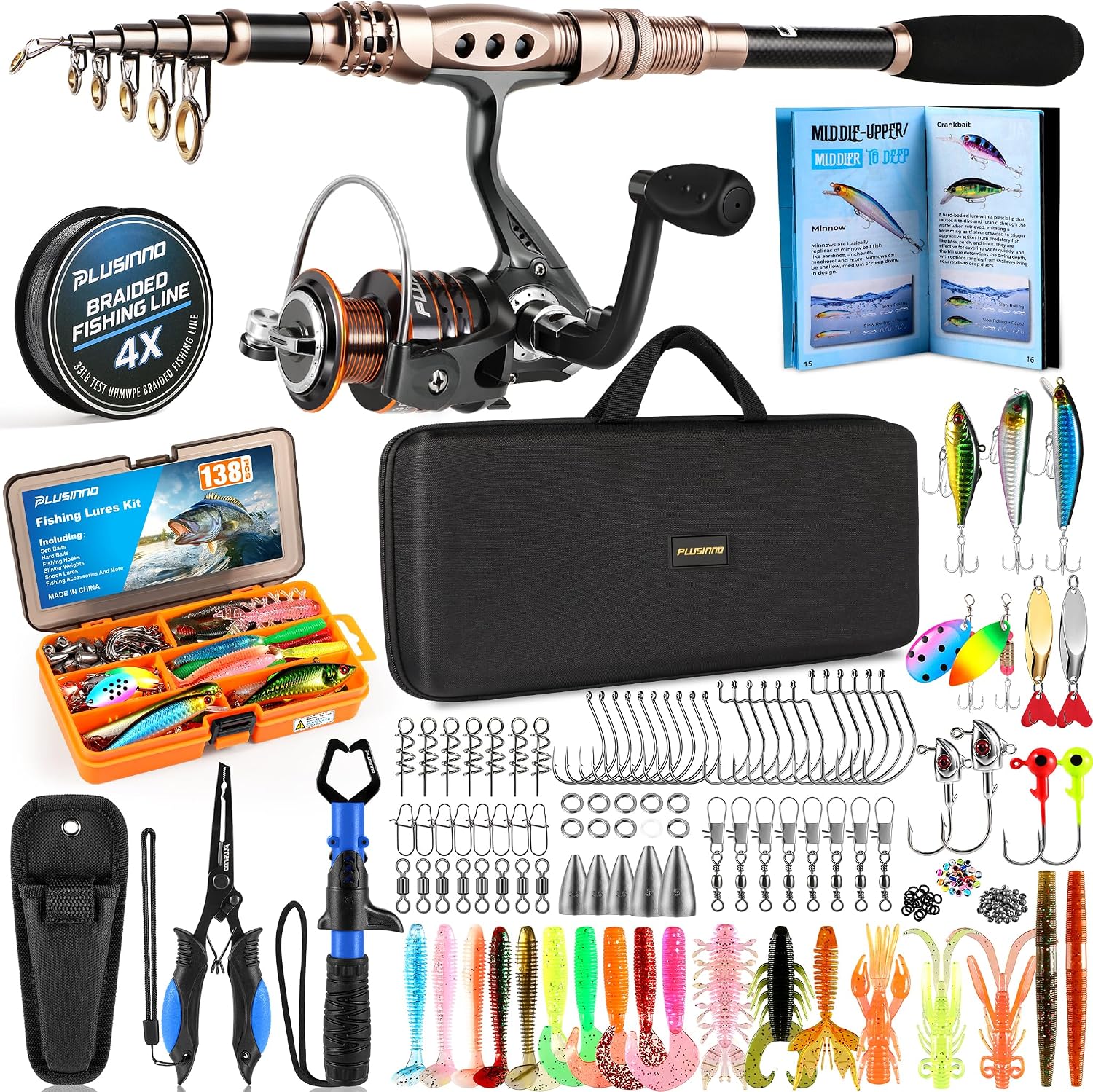
Best Overall: PLUSINNO Fishing Rod and Reel Combo with Telescopic Fishing Pole
This is the kit I would put in a beginner's hands if he told me he wanted to fish on vacation and did not want to think about it. Rod, reel, tackle box, carrier bag, manuals. That last item tells you who the kit was built for: someone who has never tied a knot and does not want to admit it. A manual is not a gimmick. It is the difference between a rod that gets used twice and a rod that gets used for years.
The tackle box is the part that earns its place. Most travel combos give you a rod, a reel, and a promise. This one gives you somewhere to put the small stuff, and small stuff is what actually catches fish. Hooks, split shot, a couple of swivels. Without a box, all of that ends up in your pocket and then in the wash.
What I would check before I trusted it: mount the reel, snug the seat down, and load the rod against your hand. A wobbly reel seat on a twenty pound fish is a disaster waiting to happen, and it is the single most common failure on any telescopic rod, regardless of brand. Then extend it fully and sight down the blank. Every guide should line up in a straight line. Telescopic rods have more joints than a two piece, so alignment is not a given, it is something you verify.
The carrier bag matters more than the photos suggest. A collapsible rod lives or dies by how it is stored. Tossed loose in a truck bed, a rod like this picks up scratches and nicks, and a nicked guide eats line. In a bag, it survives the season.
If you are buying one combo and you want the whole thing to arrive at once, this is the one.
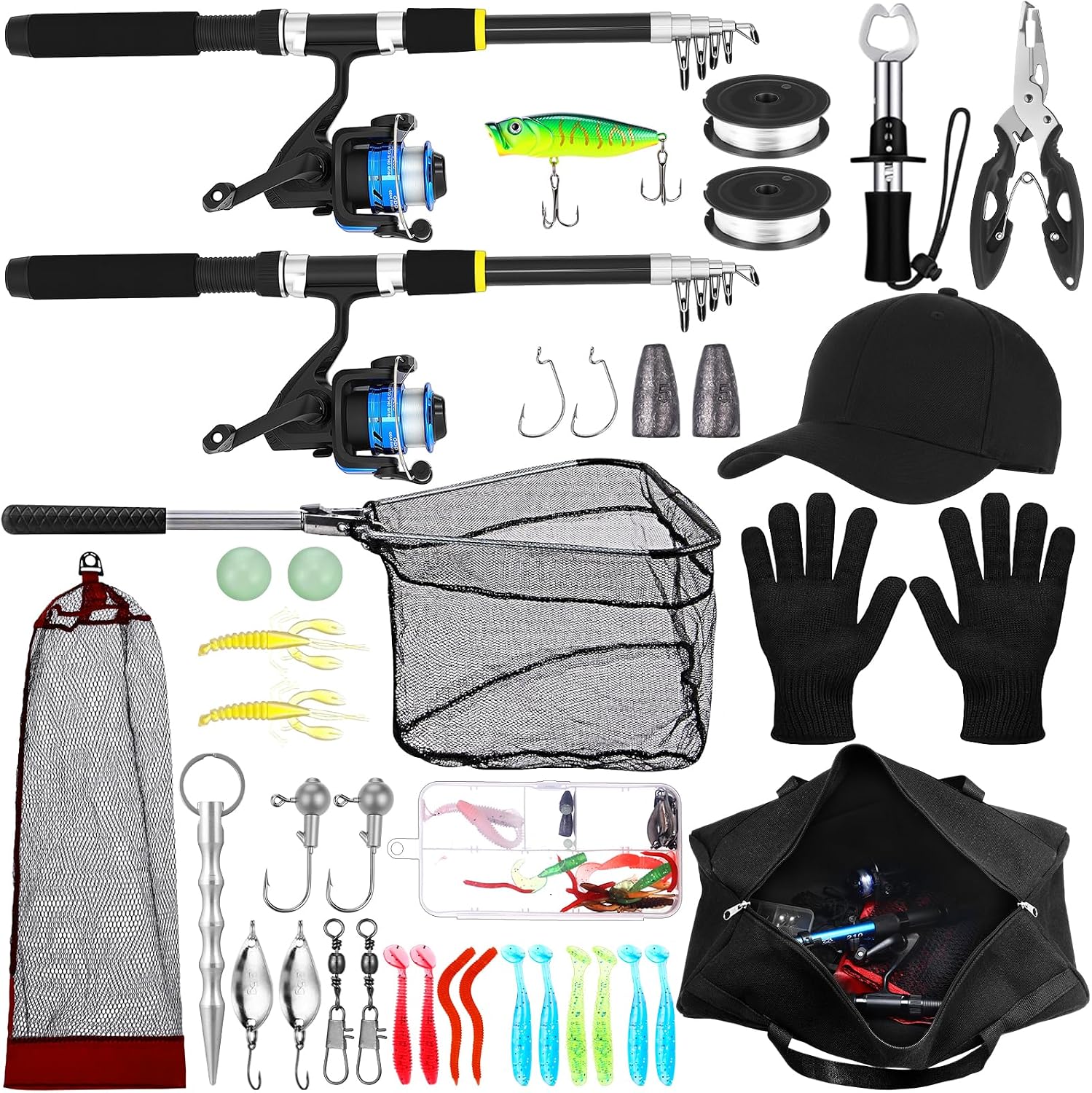
Best Value: 2-Piece Collapsible Rod and Reel Kit with Pre-Loaded Spinning Reel
This is the kit I recommend when somebody wants to spend less and still walk out the door ready to fish. Two collapsible poles, a pre-loaded spinning reel, a plier, a lip gripper, lures, and a carrier bag. The reel arrives spooled, which means you can be on the water the day it shows up instead of waiting on a line order.
The lip gripper is the piece nobody talks about and everybody needs. Unhooking a fish without putting your fingers anywhere near teeth is worth real money, and it is the tool that keeps a beginner from developing a flinch. The plier handles the rest. Together they turn a scary moment into a routine one, and routine is how people stay in this sport.
Two poles in one kit is more useful than it sounds. Keep one rigged and one as a spare, or hand the second to whoever came with you. The most common reason a beginner has a bad first trip is a broken rod or a tangled reel with no backup. This kit solves that before it happens.
Now the honest part. Pre-loaded line on a budget combo is a starting point, not a finish line. It is usually fine for a season of panfish and small bass. If you are chasing anything with shoulders, respool it with fresh line before you go, and check every guide with a cotton swab first. If the swab catches, the guide will shred your line, and no reel on earth can fix that.
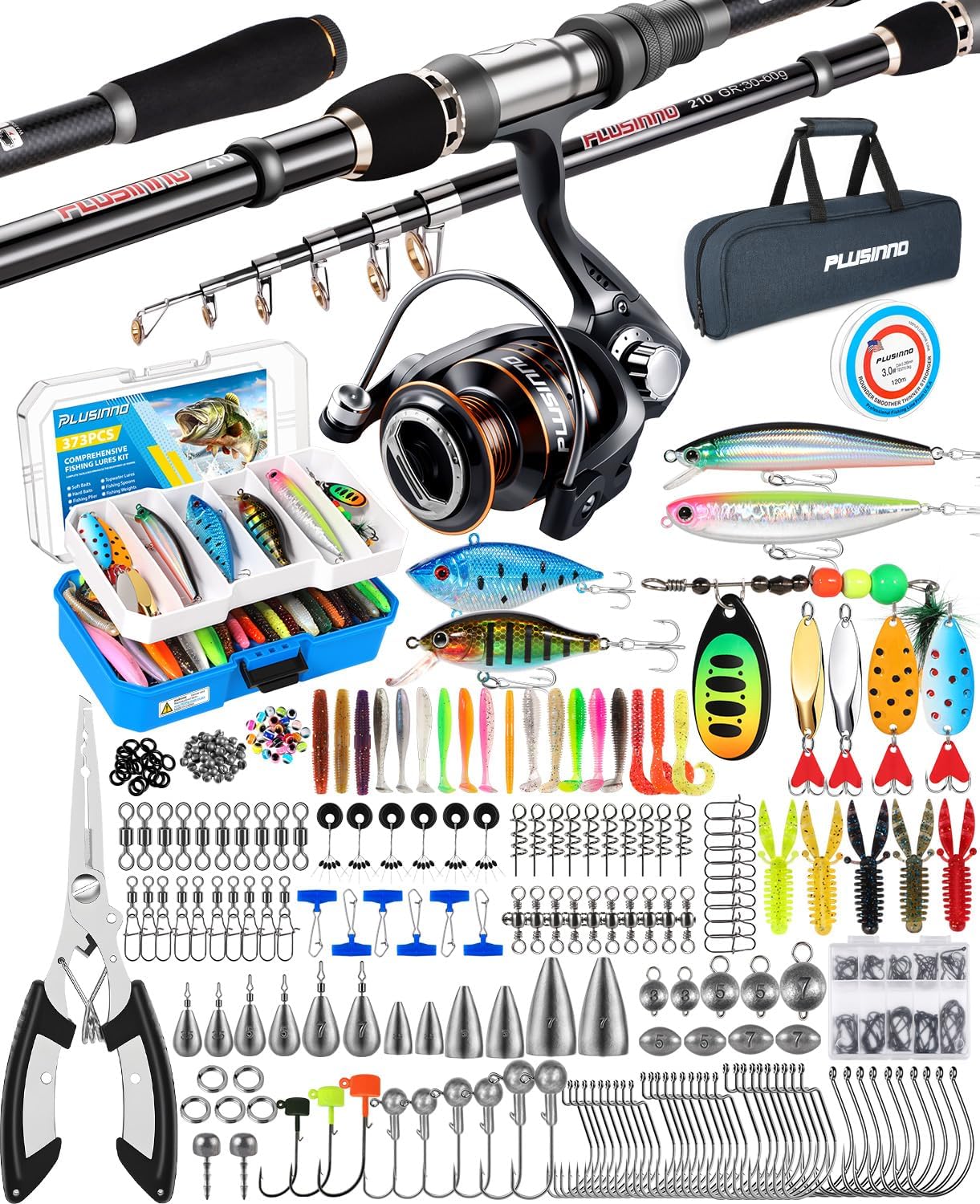
The Leaner Option: PLUSINNO Fishing Rod and Reel Combo Pole Gear Kit
Same family as the best overall pick, leaner package. If you already own a tackle box, pliers, and a bag, this is the version that does not make you pay for duplicates. You get the telescopic pole and the reel, and you supply the rest from the box you already have in the garage.
Who is this for? The angler who fishes a few times a year and keeps gear in a closet. The grandparent who wants something in the trunk for when the grandkids visit. The traveler who already carries a small plano of hooks and sinkers in a backpack.
Who is it not for? The person starting from absolute zero. If you have no hooks, no weights, and no bag, buy the kit with the box and the manuals. Buying this one and then realizing you need six more items is how a cheap rod becomes an expensive afternoon.
The Line: Clear Monofilament Fishing Line Wire
This is not a rod, and I am including it anyway, because line is where budget combos quietly lose fish. It is a spool of clear nylon monofilament, sold for fishing and also for craft work, which tells you it is a general purpose clear mono rather than a specialty line. That is fine. General purpose clear mono is exactly what a beginner needs for panfish, stocked trout, and small bass in clear water.
Why keep a spare spool? Two reasons. First, any line that has sat on a reel in a hot garage for a year has lost the qualities you bought it for, and respooling is a ten minute job that resets the whole setup. Second, when you get a wind knot that will not come out, you cut back and retie rather than quitting for the day.
Clear mono earns its keep in pressured water. Fish that have seen a few hundred lures get shy, and a visible line does not help. This is the cheap insurance policy. Buy it with the combo, not after your first bad trip.
How I judge a telescopic combo
Same checklist for every rod that comes through the shop, no exceptions.
First, the reel seat. Mount a reel, snug it, and load the rod. If the seat moves, the rod fails, and it does not matter what the label says about power or action. A wobbly seat is the number one reason a fish gets away on gear that was otherwise fine.
Second, the guides. Run a cotton swab around the inside of every ring. If it catches fibers, that guide will groove and it will shred line. Cheap guides are the most expensive part of a cheap rod, because they cost you fish you never see.
Third, the backbone. A telescopic rod should stiffen through the mid section as you load it. If it folds all the way to the handle under light pressure, it has no backbone, and you will not be able to steer a fish away from a dock piling.
Fourth, a casting test with two people: one who has never cast before, and one who has been doing it for thirty years. If the beginner can get it out there without a backlash and the veteran cannot feel the rod fighting him, the action is honest. If only the veteran can cast it, it is not a beginner rod, whatever the box says.
Fifth, rinse it. Freshwater rinse after every saltwater trip. Guides that corrode are the pet peeve that ends more budget rods than broken blanks.
Analysis: where telescopic combos actually fail
Not at the blank. Blanks are the most reliable part of a budget combo in my experience. They fail at the three contact points: the reel seat, the guides, and the line.
A telescopic rod has more joints than a two piece, and every joint is a place where alignment can drift. That is why I sight down the blank before every trip. If a guide is twisted even slightly, line rubs, and rubbed line breaks at the worst moment.
The second failure is storage. Rods that live loose in a truck get nicked guides. Nicks shred line. The carrier bags in these kits exist for exactly this reason, and they are not marketing filler.
The third is the "saltwater ready" label. Saltwater ready means the components will survive salt if you rinse them. It does not mean they will survive salt if you do not. Rinse the rod, rinse the reel, back off the drag, and let everything dry before it goes back in the bag. That routine is worth more than any upgrade you can buy.
The telescopic combo reference table
The same table I would write on the back of a receipt for a customer who is standing in front of me with a credit card and five minutes.
| Product | Best for | What comes in the kit | Notes |
|---|---|---|---|
 Visit on Amazon → PLUSINNO travel combo with tackle box |
Starting from zero | Rod, reel, tackle box, carrier bag, manuals | Check current Amazon price. The only kit here that assumes you own nothing else |
 Visit on Amazon → 2-piece collapsible rod and reel kit |
Best value, two poles | Two collapsible poles, pre-loaded spinning reel, plier, lip gripper, lures, carrier bag | Check current Amazon price. The lip gripper is the sleeper item |
 Visit on Amazon → PLUSINNO pole gear kit |
Anglers who already own tackle | Rod and reel, lean package | Check current Amazon price. Skip it if you have no hooks or bag |
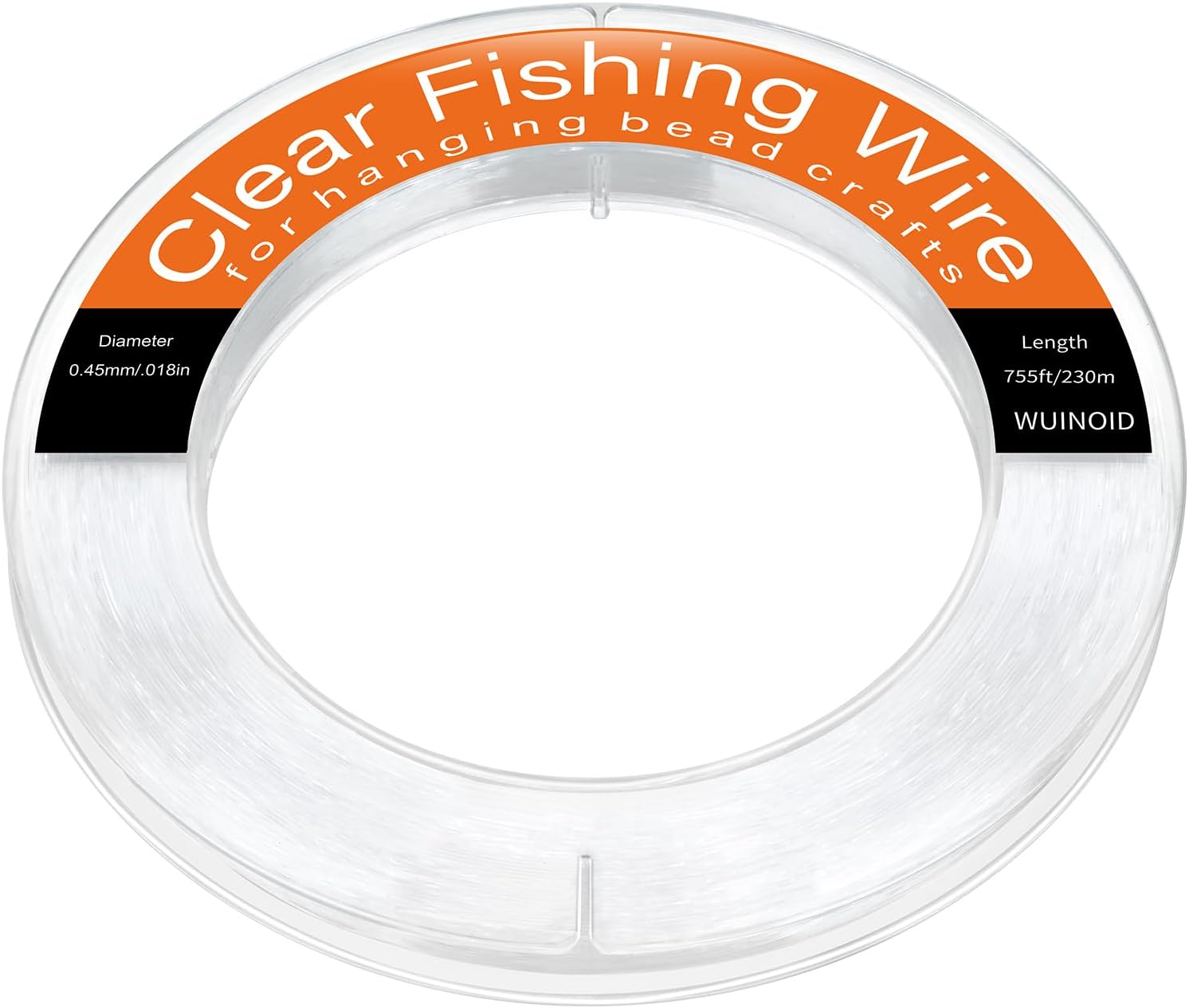 Visit on Amazon → Clear monofilament line |
Respooling and backup | One spool of clear nylon mono | Check current Amazon price. Not a rod, but the cheapest upgrade you can make |
Should you buy the PLUSINNO travel kit with the tackle box?
Yes, if you are starting from nothing. It is the only combo here that assumes you own no terminal tackle at all, and the included manuals matter more than people admit. A kit that ships with instructions was built for someone who has never tied a knot, and that is exactly who buys a telescopic rod.
Check the reel seat first. Mount the reel, load the rod, wiggle it. If the seat holds firm and the guides line up straight when the pole is extended, you have a travel rod you can hand to a guest without apologizing for it. Rinse it after saltwater and it will outlast the trip that inspired the purchase.
Should you buy the 2-piece collapsible rod and reel kit?
Yes, if you want the cheapest honest way onto the water. Pre-loaded reel, plier, lip gripper, lures, carrier bag, and two poles so a broken rod does not end the day. You can fish the afternoon it arrives.
Respool the line before your first serious trip and check every guide with a cotton swab. If the swab stays clean, fish it hard. If it catches, that guide will eat line and you will blame the reel for something the guide did.
The bottom line
Buy for the fish you actually catch. If that is panfish in a farm pond and a week of vacation casting off a dock, any of these three combos will do the job, and the one with the tackle box and the manuals will teach you faster. If you are chasing bigger fish, buy the kit anyway and spend the difference on fresh line.
The rod is a tool. The fish is the review. Everything else on the box is decoration.