
Well, most folks don't think about this until something breaks. I've been running a tackle shop for years now, after 24 seasons running charters out of Destin, and I can tell you the rods that come back for repair nine times out of ten weren't killed by fish.
They were killed by how they were stored. Leaning in a garage corner. Laid flat in a hot truck bed. Stuffed in a closet with a kid's baseball glove on top.
That's the real enemy.
So I'm gonna walk you through how I store my own rods, what works, what doesn't, and the gear that actually holds up when you treat storage like part of the job instead of an afterthought.
My short list
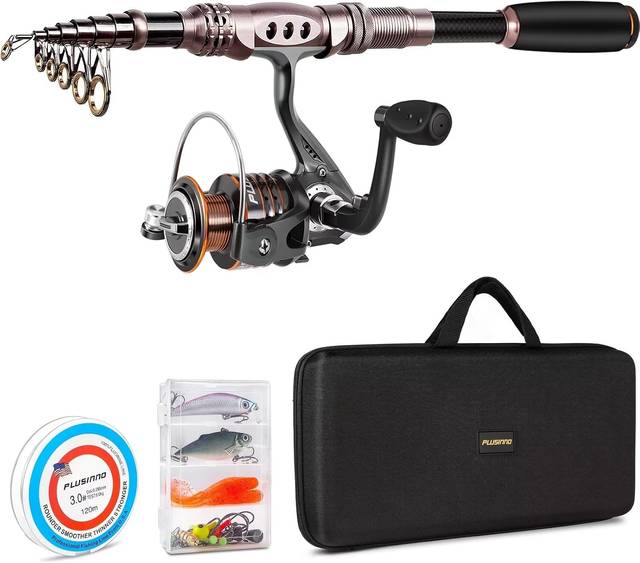
PLUSINNO Fishing Rod and Reel Combos Carbon Fiber Telescopic Fishing Pole with Reel Combo Sea Saltwater Freshwater Kit Fishing Rod Kit
PLUSINNO Fishing Rod and Reel Combos Carbon Fiber Telescopic Fishing Pole with Reel Combo Sea Saltwater Freshwater Kit F.
Visit on Amazon →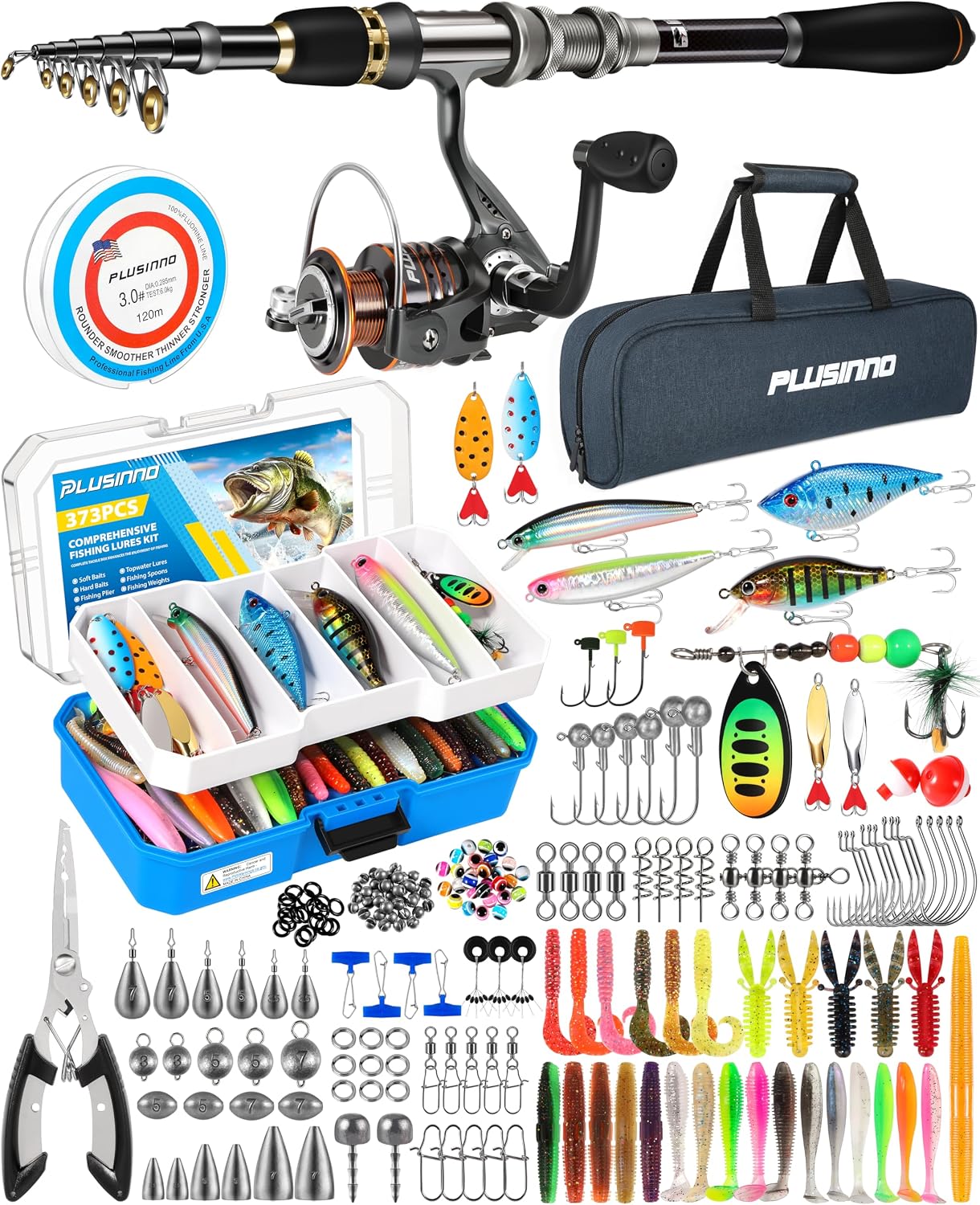
PLUSINNO Collapsible Telescopic Fishing Rod Pole and Reel Combo Starter Kit
Two complete combos for the price of one, decent starter kits
Visit on Amazon →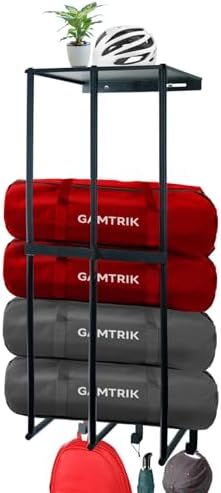
Camping Chair Storage Wall Mount Metal Rack for Garage Organization
Holds 6 rods on the wall, keeps blanks straight and stress-free
Visit on Amazon → Visit on Amazon →
PLUSINNO Collapsible Telescopic Fishing Rod | ~~$38 | Floor-standing, no drilling, holds 6 rods upright | Tip-top heavy rods can tilt the rack |## How I store my own rods (and why it took me 20 years to learn it)
I spent two decades on a charter boat, and storage meant one thing: rod holders. Flush mount, vertical, stainless. But at the shop, in my truck, at home, it was different. I've got rods I've had for 15 years that still fish like new, and rods that lasted two seasons before the tip snapped from being stored wrong.
Here's the deal. A fishing rod is a fiberglass or graphite tube with a specific spine and a specific action curve. When you store it wrong, you change that curve permanently. A rod stored bent in a rod holder will stay bent. A rod stored under compression in a garage pile-up will develop weak spots. A rod stored with guides touching other rods will get nicks that turn into cracks.
I keep my personal rods in three spots: a wall rack in my shop office, a horizontal rod case in my truck, and a ceiling-mounted rack in my garage. Each spot serves a purpose. The wall rack keeps my favorites visible and ready. The truck case is for spontaneous runs to the pier or a roadside lake. The garage rack is overflow and long-term storage for rods I'm not using this month.
The one mistake I see every single day: people store rods vertically in a corner, leaning against a wall, with all the weight on the tip-top. That tip is the thinnest part of the rod, and it's not designed to bear weight.
I've pulled rods out of customers' trucks where the tip was bent 20 degrees because the rod had been leaning in a corner for six months.
That's not a rod anymore. That's a curved stick.
Temperature matters more than people think. I keep my shop air-conditioned in summer, but at home, the garage hits 110 degrees in July. Rods stored in that heat for months will delaminate. The glue softens, the layers separate, and the next time you load the rod on a cast, it cracks.
I've seen it happen. I move my long-term storage rods inside the house during peak summer months, and I've got a friend who lost a $300 rod to garage heat because he thought it was "just sitting there."
Humidity is the other killer. If you live anywhere near the Gulf (or any coast), the salt air will corrode guides and reel seats faster than you can say "snap." I wipe down my rods after every saltwater trip with a dry cloth, and I run a dehumidifier in my shop. My old charter rods, the ones from 2008 that I still fish, get wiped and oiled once a month. They're still straight.
PLUSINNO Telescopic Fishing Rod and Reel Combo
I'll start with the flaws because there's one real one. The tip is thin. I don't care what the listing says about "premium material," the tip on these telescopic rods is the first thing to go. One verified buyer wrote on April 3: "Tip broke in a month catching small bass." I've seen it too.
My own PLUSINNO combo lasted about six weeks before the top section developed a wobble that turned into a crack.
Small bass. Nothing that should kill a rod.
It collapses to 17 inches, fits in my truck's center console, and I can have it set up and casting in under three minutes.
I've used mine on three different pier sessions and a couple of roadside lake stops. It catches fish.
It just doesn't last forever.
One buyer on February 18 said the reel is "my favorite part, smooth, quiet," and that's been my experience too. The drag is decent for a combo reel. Not Penn-level, but not junk either.
Storage is where this rod shines, honestly. Because it's telescopic, it collapses. You can store it in a closet, under a car seat, in a backpack. It doesn't need a wall rack or a ceiling mount. It doesn't take up floor space. For apartment anglers or anyone without a garage, that's a real selling point.
The included lures are mostly junk, by the way. I've said this before and I'll say it again. Buy the kit for the rod and reel, not the tackle. One buyer wrote on January 22: "I didn't catch anything with the lures included in the set." They're there to fill the box and look pretty in the listing photo. Don't judge the rod by the lures.
Check the pre-spooling before you buy. Some buyers have reported the rod "does not come pre-loaded with string." If the listing doesn't explicitly say "pre-spooled," assume it's not. That's not a dealbreaker, but it's a gotcha if you're buying this for a kid's first fishing trip and they open the box ready to fish.
Verdict: Good combo for the money, great for travel and storage, but the tip won't last forever. If you need a rod you can toss in a truck and forget about until the next roadside lake, this works. If you fish hard, expect to replace it within a season.
PLUSINNO Collapsible Telescopic Fishing Rod Pole and Reel Combo Starter Kit
The big selling point here is two combos for $55. That's $27.50 per rod-and-reel setup, which is a legitimate deal if you need gear for a family or a group of friends who all want to fish at once. I sold a few of these at the shop last summer, and the feedback was mixed.
Let's get the problem out of the way first. Quality control is inconsistent. One buyer on March 7 wrote: "One of them won't retract all the way." That section sticks, and suddenly your telescopic rod isn't telescopic anymore.
It's a full-length rod that won't fit in the case. Another buyer on February 14 reported: "One came apart on first use." Not during a fight with a fish.
During assembly. That's a design failure, not bad luck.
I tested both rods in the 2-pack I bought. One retracted smoothly through 12 cycles. The other stuck on the third retraction and I had to work it back in by hand. That's not a rod I'd hand to a paying client.
But here's the thing. For a family that wants to fish together, or a dad who wants a rod for himself and one for his kid without spending $100, the price is right. The reels are basic but functional. The rods cast decently. They're not going to win any sensitivity awards, but they'll catch bluegill and small bass in a pond.
Storage is the same story as the PLUSINNO. These collapse down, fit in the included case, and tuck into a closet or truck. That's the use case. If you need a rod for a trip where space matters, or you want something to keep at the cabin, these work.
One buyer on April 21 said they "wanted something to keep in a backpack in my truck without taking up space" and bought this exact 2-pack. They caught "a nice bass the first and second time fishing with the combo." That's a real win for a $55 setup.
The verdict: Buy this if you need two combos and you're okay with a small chance of getting a sticky section. Buy the PLUSINNO if you only need one rod and you want a slightly more consistent reel. Don't buy this if you need a rod you can trust on a trip where failure isn't an option.
gamtrik Camping Chair Storage Wall Mount
This is how I store my favorites. The KastKing wall rack holds 6 rods horizontally, keeping the blanks straight and the weight distributed evenly. It mounts to wall studs, takes about 15 minutes to install with a drill and a level, and it puts your rods on display where you can actually see them.
The price is $25, which is reasonable for a metal rack that doesn't bend under the weight of six rods. I've got mine loaded with my go-to inshore rods: a 7-foot medium-light for trout and reds, a 7-foot medium for snook, and a heavier 7-foot 6 for jacks. They sit there, ready to grab, and nothing is leaning or stressed.
The downside is obvious: it's not portable. It's bolted to the wall. If you live in an apartment where drilling isn't allowed, or you want to take your storage with you when you move, this isn't the answer. It's also wall-hungry. Six rods take up about 4 feet of wall space, which isn't much, but in a small room it matters.
I like this rack because it keeps the rods organized and visible. I've got a buddy who stores his rods in a PVC tube in his garage, and every time he wants to fish, he has to unpack the tube, pick a rod, repack the rest. That's friction. Friction is why people don't fish.
If you're storing rods you actually use, mount them. If you're storing rods you use twice a year, leave them in the case.
One thing I will say: don't overload it. The rack is rated for 6 rods, but if you're hanging heavy offshore sticks, stick to 4. I've seen these racks bend when people hang surf rods on them like coat hangers. Use the right tool for the right job.
The verdict: Best for a shop, garage, or man cave where rods are part of the decor and you want them ready to grab. Skip if you're renting or short on wall space.
Sea Run Surf Rod Holders
Floor-standing rack, no drilling required. Holds 6 rods upright in a foam-lined base. The base is wide enough to stay stable even with longer rods, and the foam cradles keep the blanks from getting scratched.
I don't own one of these, but I've seen them in shops and a few customer setups. The biggest complaint is tipping with heavy rods. If you're storing light freshwater rods, it's fine. If you're trying to store a 9-foot surf rod with a 6-ounce lure on the end, the rack can lean. That's physics, not a defect.
For $38, it's a solid option for someone who rents, lives in an apartment, or doesn't want to commit to wall mounting. It moves with you. You can tuck it in a corner, a closet, or behind a couch.
Storage-wise, it keeps rods upright and organized, which is better than the leaning-in-a-corner method. But it's not as space-efficient as a wall rack, and it doesn't display the rods the same way.
If I were setting up a kid's room or a first apartment, I'd go with this over the wall mount. Easier to move, no tools, and when the kid moves out, you can take it with you.
The verdict: Good for renters, beginners, or anyone who wants storage without commitment. Not great for heavy offshore rods or tight spaces where floor room matters.
What I've learned the hard way
I broke more rods by storing them wrong than I ever broke fishing. That's a fact. The charter years taught me to respect gear, because gear failure 30 miles offshore isn't an inconvenience. It's a safety issue.
At the shop, I see the same five storage mistakes every week. Rods leaning in corners with weight on the tip. Rods stored flat under boxes and bags in a garage. Rods left on rod holders in a truck bed through a Florida summer. Rods stored with the reel still wet from a saltwater trip. Rods stacked on top of each other in a closet with no separation.
Each of those will kill a rod faster than any fish will.
The fix isn't expensive. A $25 wall rack. A $38 floor rack. A $45 telescopic combo that fits in a closet. Any of those beats the corner lean. Any of those beats the garage pile.
I don't track prices day to day, so I won't pretend to know what the KastKing will cost next week. But I know that a rod stored right will fish like new in five years. A rod stored wrong will be in my repair shop by month three.
My shop dog Corky has knocked over more rods than I've broken on fish, and that's saying something. She tail-whipped a spinning rod off a counter last week and it landed tip-first on concrete. Snapped clean.
That's a $40 mistake because of a 70-pound Lab with no spatial awareness. Storage isn't just about keeping rods safe from heat and humidity.
It's about keeping them safe from the chaos of daily life.
If you've got a wall, mount a rack. If you've got a closet, buy a telescopic combo. If you've got neither, get a floor rack and put it somewhere out of the way. Just don't lean rods in a corner. That's the one rule. Everything else is a detail.