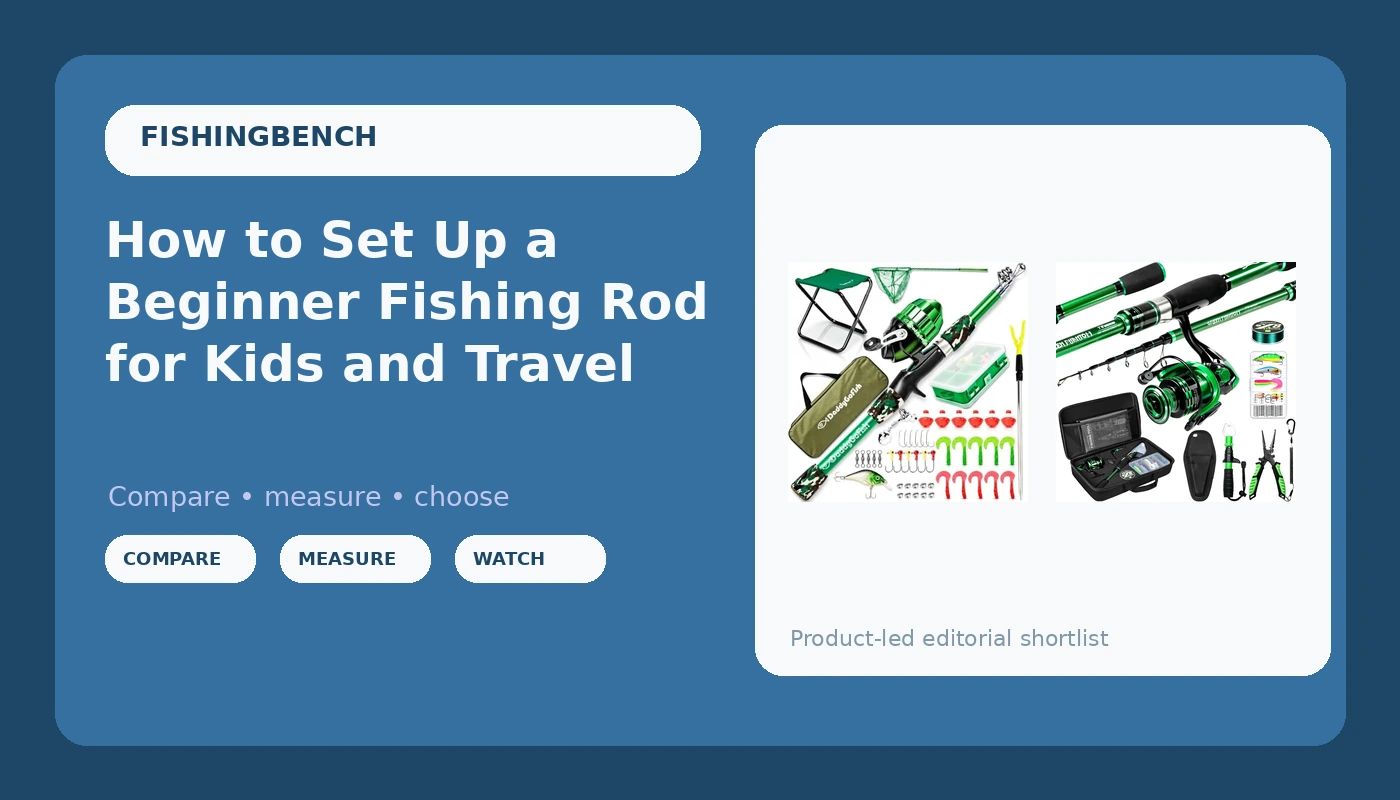
Most beginners do not lose fish because they bought the wrong rod. They lose fish because nobody showed them how to set the rod up before the first cast. A bad beginner fishing rod setup, guides that groove, a reel seat that rocks, line spooled on loose as a clothesline, will cost you more fish than a cheap blank ever will.
I have been guiding out of Destin for 24 years, and my knees finally told me to stop running charters. Now I run a tackle shop and test rods full time, which means I spend my days watching people buy their first setup and watching them come back a week later with a mess of line and a question.
This is the article I wish I could hand every one of them. Two setups that make sense for beginners, one for travel and one for a kid, and the exact order of operations I use before anything touches water.
Why you should trust me
I have spooled more line than most factories. Twenty four years of charter clients, a tackle shop counter, and a logbook where I chart the action curve of every rod that comes through the door. Every rod I look at gets the same three questions: how does it load on a real cast, does the backbone hold under pressure, and do the guides survive a full season of salt and sun.
My rules are simple and they cost me sales. No review without at least 20 real fishing trips on the rod. No fish fighting claims without an actual drag test. No rod goes in the shop as a recommendation unless a beginner and an expert have both cast it. What follows is a setup guide, not a season long review, and I will be honest about that line the whole way through.
How I picked the two setups in this guide
I did not pick these two because they are the best rods in the world. I picked them because they solve two different beginner problems, and because both of them pass the checks that actually matter at this price and this purpose.
For the travel kit I looked at whether the rod collapses small enough to live in a duffel, whether the reel seat locks the reel down without rock, and whether the guides are smooth enough that a beginner's line survives a morning of casting. For the kid pole I looked at length, weight, grip size, and whether a child can actually reach the handle and the button at the same time.
What I do not do is pretend a travel kit is a tournament rod. If you want the rod I would hand a client chasing big redfish, that is a different conversation and a different budget. These two are for the angler who is learning, or for the parent whose kid is learning, and that is a job worth doing right.
Two setups I would start a beginner on
Both of these are complete enough that you are not hunting for a reel on day one, which matters more than people think. Half the bad first trips I see start with a rod and a reel that were never meant for each other.
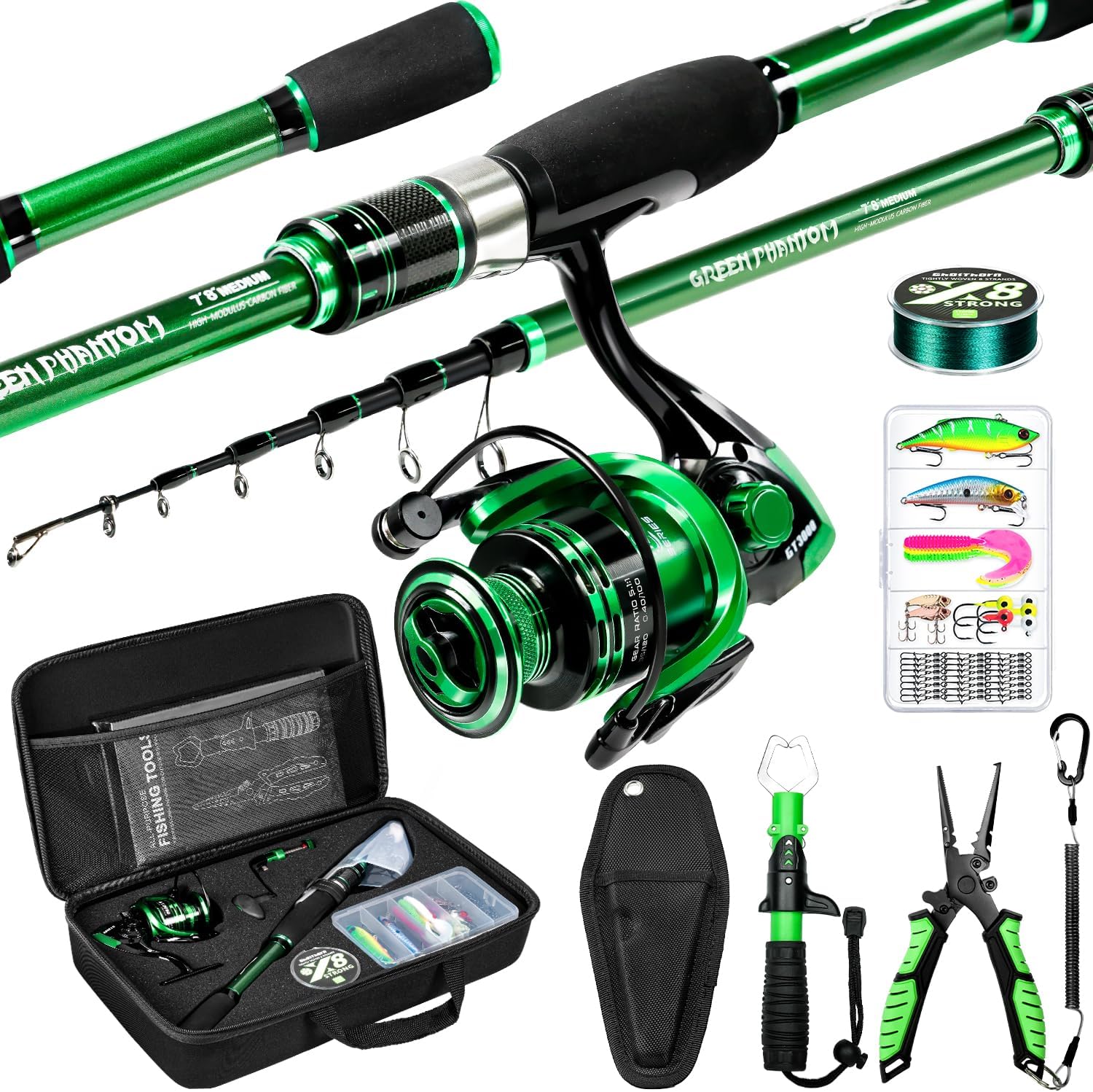
The travel setup: Ghosthorn Telescopic Fishing Rod and Reel Combo,Spinning Travel Kit
 Visit on Amazon →
This is the one I would tell a traveling beginner to look at first. It is a telescopic spinning combo, which means the rod collapses down into its own sections and the reel comes with it, so the whole kit lives in a backpack instead of a rod tube in the truck bed. If you fish a few weekends a year and you fly or drive to get there, that is the feature that decides it.
The spinning reel matters here. A spinning reel is the most forgiving reel to learn on because the line leaves the spool straight off the front and a bird nest is rare. You will still backlash a spinning reel once in a while if you overfill it, but it will not blow up in your hands the way a baitcaster does for a beginner.
Check current Amazon price, because travel kits move around with the season and the listing is the only place that stays accurate.
Flaws but not dealbreakers: Telescopic rods have joints, and joints collect grit. Rinse the sections in fresh water and dry them before you collapse the rod, every single time. Collapse it wet once, leave it in a hot car, and you will be fighting the sections for the rest of the rod's life.
Anyone who fishes a handful of trips a year and wants one kit that travels without a fuss should start here.
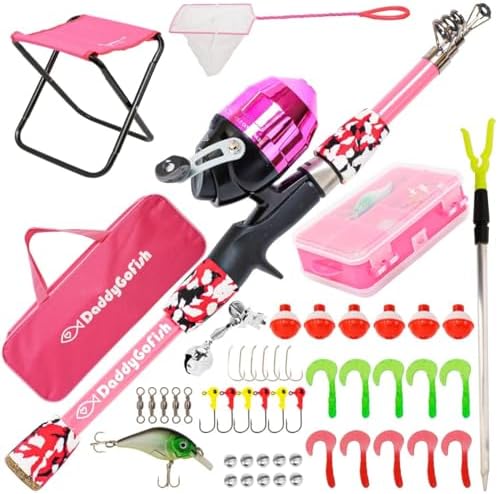
The kid setup: Kids Fishing Pole for Boys, Girls & Youth Age, Toddler Fishing Pole Set Kit
 Visit on Amazon →
This is the other half of the equation, and it is the one I get asked about at the counter every weekend. It is built as a set kit for boys, girls, and younger anglers, sized so a small hand can grip the handle and work the reel without fighting the rod.
Here is the honest version of what a kid pole is. It is a teaching tool. The drag on a small push button reel is closer to a suggestion than a system, the rod is short by design so a child can control it, and the whole point is that a five year old can hold it for an hour without their arms giving out. Buy it for that, not for the fish of a lifetime.
Check current Amazon price on the listing and look at the sizing notes before you order, because the right length for a toddler is not the right length for a ten year old.
Flaws but not dealbreakers: Expect tangles. Every kid reel tangles, and the fix is patience plus lighter line, not a better reel. Set the drag light, keep the line light, and plan on re-rigging twice a trip for the first month.
Parents who want a complete starter set that a child can actually carry and cast will get their money's worth here.
The actual setup workflow
Now the part you came for. Do these in order before the first cast, and you will skip about 80 percent of the problems I see on the water.
Step one: inspect the guides. Run a cotton swab around the inside of every guide ring, tip top included. If the cotton snags, the ring is cracked or grooved, and that ring will shred your line on the first good fish. This takes 30 seconds and it is the single most skipped step in fishing.
Step two: seat the reel and test it. Mount the reel, tighten the seat down, then grab the reel body and try to rock it side to side. Any wobble means the seat is not holding, and a wobbly reel seat on a decent fish is a disaster waiting to happen. Re tighten it, and if it still rocks, that rod goes back.
Step three: match the line to the reel. A small spinning reel is happy with light monofilament, and a kid push button reel is the same. Do not buy heavy line because it feels stronger. Heavy line does not cast well on a light reel, it coils off the spool, and a beginner cannot manage it. Light line, fresh from the spool, is the right call.
Step four: spool it with tension. Run the line through the guides and tie it to the spool arbor. Then spool it on while holding the line between your thumb and finger so it goes on snug, not loose. Stop when the line sits just shy of the spool lip. Overfill it and you will get loops and wind knots on the first cast, every time.
Step five: set the drag. On a spinning reel, set it so line comes off under a firm, steady pull, not a hard yank. On a kid reel, go lighter than you think is right. A child cannot manage a locked down drag, and a locked drag means a broken line or a bent rod instead of a fish.
Step six: rig it for what is actually there. For a kid, a bobber, a split shot, and a hook with a worm is the correct answer. It is visible, it is simple, and the kid can watch the bobber go down, which is the whole point of the first trip. For the travel kit, a small jig or a simple bobber rig works the same way. Keep the terminal tackle light and simple until the casting is smooth.
Step seven: the first cast. With a spinning reel, open the bail, trap the line against the rod with your index finger, look behind you, and swing the rod forward in one smooth motion, releasing the line as the rod loads. With a push button, press the button, hold it, swing, and release at the front of the cast. Do not let a beginner try to muscle it. The rod does the work when it loads, and that is a lesson worth learning on day one.
Step eight: rinse and store it right. Fresh water rinse after salt, every trip. Back the drag off before storage. For the telescopic rod, dry the sections before you collapse them. For the kid pole, hang it up rather than leaving it in a bucket in the garage, because a bent tip is the most common way a kid pole dies.
The competition and why it lost
A baitcasting reel is not a beginner reel. It is a wonderful tool for an angler who casts every week and is willing to spend a month picking out backlashes, and it is the wrong first purchase for everyone else. If you are asking which reel to learn on, the answer is a spinning reel, and it is not close.
Fly rods are their own discipline with their own casting stroke, and nothing about a first family fishing trip needs one.
A two hundred dollar graphite rod with fast action is a genuinely better tool than either kit in this guide, and it is also a rod that will punish a beginner's casting mistakes and a child's grip. Buy the beginner setup, learn to load a rod and read a bite, and then go spend real money on a rod that matches the fish you actually catch. I sell those expensive rods, and I still tell people this at the counter.
And a cane pole still catches fish. My grandfather caught more on one than I will ever catch on graphite. There is no shame in simple.
What this actually costs
I am not going to quote you numbers, because they move, and a stale price is worse than no price. Check current Amazon price on both listings and treat those as your starting point. What I can tell you is how the money usually splits.
The rod and reel combo is the visible purchase and the smaller part of the total. The line, hooks, bobbers, and weights are what you will replace most often, and the line especially should be fresh and cheap rather than old and expensive. A spool of line that has sat in a hot garage for two seasons is worse than a budget spool bought this month.
Then there is the part nobody budgets for, which is the second trip. The first trip is gear. The second trip is where you find out whether the kid likes it, and that is the money that actually matters. A beginner setup that gets used twice a month beats a fine rod that stays in the closet, and it is not close.
Buy the kit that matches the trip you are actually taking. Set it up in the driveway before you leave. Check the guides, seat the reel, spool the line snug, set the drag light, and keep the rig simple.
That is the job. The rod is a tool and the fish is the review.