Related: Best Spinning Rods for Freshwater and Saltwater
There is no such thing as a beginner rod. There is only a rod that matches the fish you actually catch. I spooled line in a tackle shop before I ever held a charter license, guided out of Destin for 24 years until my knees quit on me, and now I sell rods in the morning and fish them in the afternoon. The four setups below are the ones I keep pointing people toward when they walk in and say they want to start fishing. Every one of them is a fishing rod and reel combo that gets you on the water without a second trip to the store.
Here is what I tell every one of them before they spend a dollar. Action is everything. A rod's "power" rating is marketing, but how it loads and unloads is engineering, and you can feel the difference on the first cast. The guides are the rod, because cheap guides eat your line and cost you fish. The reel seat is where good rods quietly separate from bad ones. And a rod that costs $300 but needs $100 of upgrades is a $200 rod with good paint.
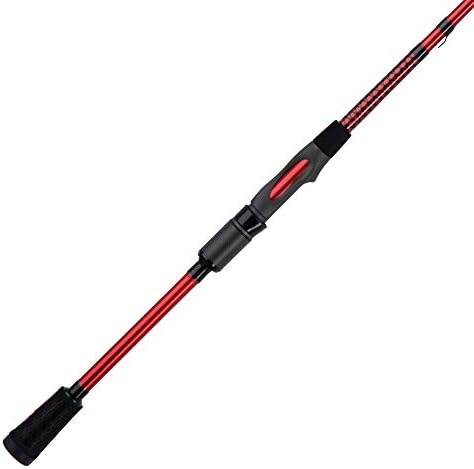
Best Overall: Ugly Stik Carbon Spinning Fishing Rod
If somebody walks into my shop with a modest budget and a plan to fish most weekends, this is where I point first. Ugly Stik earned the value-king reputation the slow way. The blanks take abuse that would turn a thinner graphite rod into a two-piece souvenir. The Carbon version keeps that toughness and drops the weight, which matters more than anything printed on the tag.
The first thing I check is the guides. Cheap guides groove. Once a ring has a groove in it, it shaves line on every cast, and you find out about it when a fish is running. These hold up to braid, and braid is the real test, because braid is what eats soft rings. If you fish mono, you will get even more seasons out of them.
Second is the reel seat. A wobbly reel seat on a 20-pound fish is a disaster waiting to happen. You want the reel to lock down solid with no rock in the hoods. Mount your reel in the store, tighten it, and try to twist it. If it moves, walk away.
The action here is a middle-of-the-road bend. It loads easily on a short cast and still has backbone through the mid-section when you lean on a fish. That is the right action for 90 percent of anglers, which is exactly why it is my default recommendation. It is not a specialty tool. It is the rod you learn on and then keep.
Where it gives up ground: it is a standard-length spinning rod that does not break down small. If your fishing involves a suitcase, read the next section.
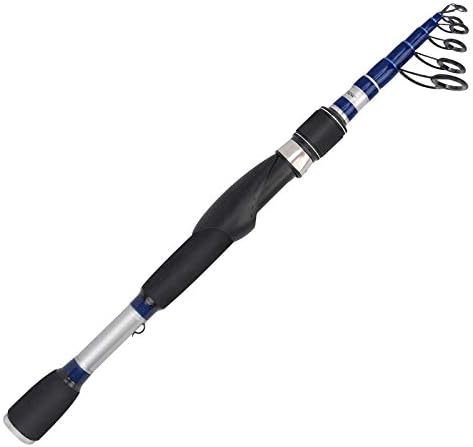
Best Travel Rod: KastKing Compass Telescopic Fishing Rod and Combo
The Compass is the rod I would put in a truck, a boat locker, or a carry-on. Telescopic rods get a bad name because the cheap ones rattle at every joint, and a rod that rattles under load is a rod that loses fish. This one handles that better than most in its class, because the sections lock down tight and the reel seat is a real reel seat instead of a plastic afterthought.
Telescopic does cost you something. You give up a little sensitivity compared with a one-piece blank, because every joint is a place where vibration gets absorbed. For panfish, stocked trout, and schoolie bass, you will never notice. For finesse work where you need to feel a soft take on a light jig, you will.
The combo angle matters too. Buying a rod and a reel separately is how you end up with a reel that balances wrong, and balance is what keeps you casting for hours without your wrist screaming at you. A matched combo solves that on day one.
If you travel, or if your fishing is opportunistic and lives in the trunk of a car, this is the one. If you fish the same dock every evening, the Ugly Stik is the better tool.
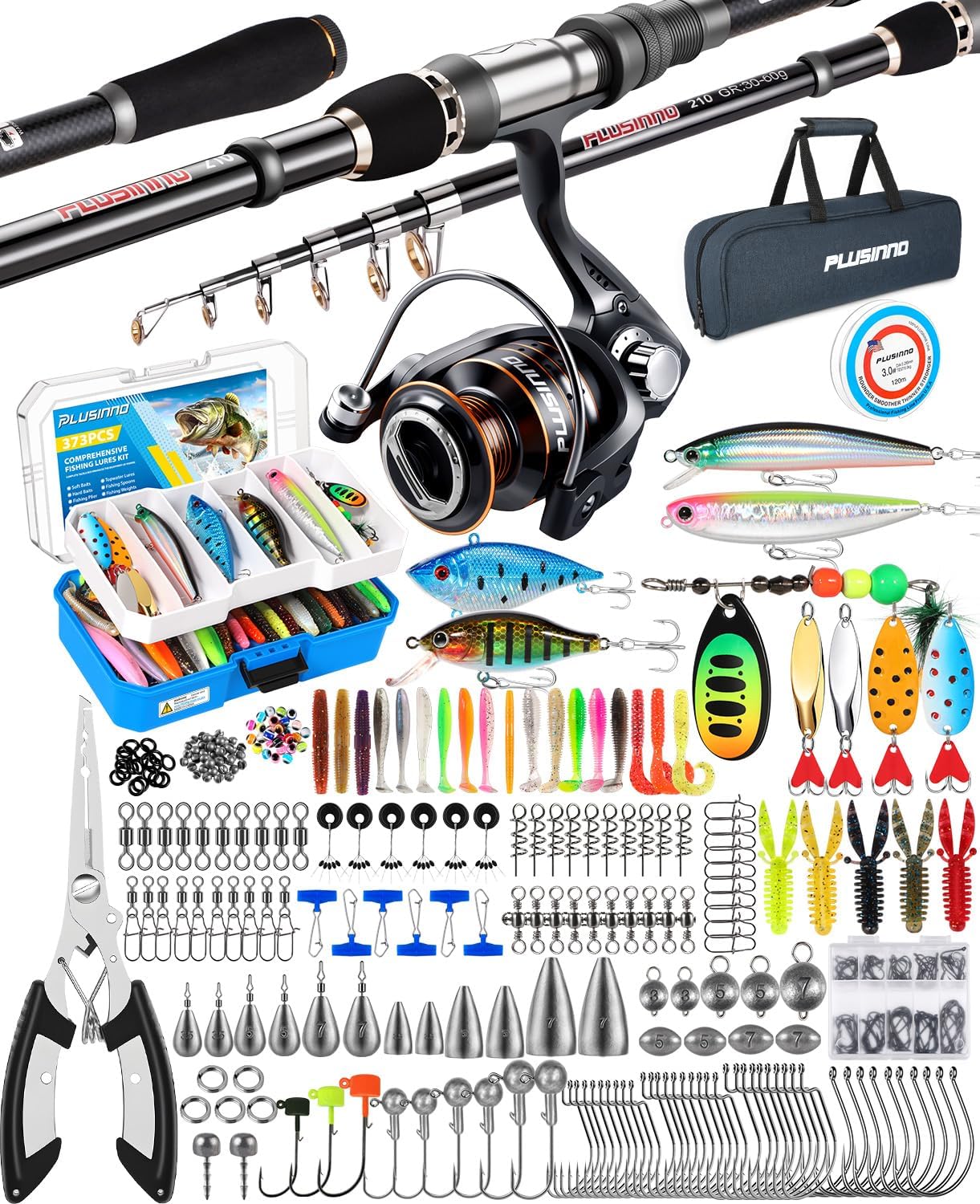
Best Complete Starter Kit: PLUSINNO Telescopic Rod and Reel Combo
This is the box I hand to somebody who has never held a rod. The kit puts the rod, the reel, line, and the small terminal tackle in one purchase, and for a beginner that matters more than any spec sheet. The fastest way to kill a new angler's interest is to send them home with a rod and no line on it.
The telescopic build keeps it packable, so it lives in a closet, a car trunk, or a backpack without turning into a piece of furniture. The reel is a beginner reel. It will land panfish, stocked trout, and small bass all day long. It is not the reel you take to the jetty, and I would not ask it to be.
Here is the honest part. A kit reel is a starter reel. Expect to replace the line first, because factory line on budget combos is usually the weak link, and expect to upgrade the reel in a season or two if you stick with it. That is not a knock on the kit. It is how the math works at this price point, and the rod will outlast the reel.
The other thing I tell every beginner: learn to manage your line. A tangled spool costs you more fish than a cheap rod ever will.
Best Fly Fishing Starter Kit: PLUSINNO Fly Fishing Rod and Reel Combo Kit
Fly fishing is the one discipline where a combo actually teaches you something. The rod, the line weight, and the reel have to agree with each other, and a matched kit gets that right for you. Buy the pieces separately as a beginner and you will end up with a line that fights the rod all day.
This kit is built for starters and it is honest about that. The rod loads deep and slow, which is exactly what you want while you are learning to feel the line load behind you. A fast fly rod punishes bad timing. A softer rod forgives it, and forgiveness is the whole game in your first month.
Fly fishing is not the cheapest way in, and it is not the easiest place to start if your only goal is to catch dinner. But if you have watched somebody roll a cast across a flat and thought, I want to do that, this is the cheapest legitimate on-ramp I know of.
Check the guides and the ferrules when it arrives, and keep the ferrules clean. Grit in a ferrule is how a rod gets loose at the joint, and a loose fly rod casts like a wet noodle.
How I test a rod
Twenty-four years of guiding taught me that a rod review written from a parking lot is worthless. My rules are simple and they have not changed.
A rod has to survive a full season before I will call it good. That means real trips, real fish, real weather, and a lot of casts that miss. My grandfather caught more fish on a cane pole than I will ever catch with two thousand dollars of graphite, and that keeps me honest about what actually matters out there.
Then there is the backbone test. I load the rod against a heavy drag and watch where it bends. A rod that folds into the butt under pressure has no backbone, and no backbone means you cannot turn a fish away from a dock piling. A rod that locks up in the tip has no forgiveness, and no forgiveness means you pull hooks.
Then the guides. I check the rings after a season of braid. Cheap rings groove, and a grooved ring is a line shredder.
Then the reel seat. I mount a reel, tighten it down, and try to make it move. Any wobble is a fail, no matter how pretty the blank is.
Last, I hand it to a beginner and watch them cast for an hour. If a new angler can cast it without tangling, it passes. If they fight it, the rod is the problem, not the angler.
Analysis: what actually matters on these rods
Action is how a rod bends. Fast bends in the tip, moderate bends through the middle, slow bends deep into the butt. That is the spec that actually matters, and it is the one most buyers never read. A fast rod is a casting machine in experienced hands and a heartbreak in new ones. A moderate rod gives you a wider window of timing, which is why every rod on this list leans that direction.
Power ratings are marketing. You will see heavy, medium heavy, and medium on rods that bend almost identically. Ignore the label and load the rod in the store. If it bends where you want it to bend, the label is irrelevant.
Guides are where budget rods quietly cut corners. A hard ring survives braid for seasons. A soft ring grooves, and once it grooves it shreds line on every cast. This is the single most common failure I see on rods that people bring into the shop for repair.
Reel seats are the second. A rod with a wobbly seat is a rod that will fail you on the one fish that mattered. Test it before you buy, every time.
And be skeptical of "saltwater ready" on any rod with guides that pit after one season in the salt. Rinse everything with fresh water after every trip. That habit will double the life of any rod on this list, including the cheap ones.
The price logic is simple. You do not need the most expensive rod. You need the one that matches your target species and your casting style. Buy for the fish you actually catch, not the one in the catalog photo.
The beginner rod comparison table
This is the table I keep behind the counter. Match the rod to the water you actually fish, not the water you plan to fish someday.
| Rod | Best for | Where it shines | Watch out for | Price |
|---|---|---|---|---|
 Visit on Amazon → Visit on Amazon →Ugly Stik Carbon Spinning Fishing Rod |
One rod for most weekends | Tough blank, guides that survive braid, easy-loading action | Does not pack down for travel | $99.95 |
 Visit on Amazon → Visit on Amazon →KastKing Compass Telescopic Fishing Rod and Combo |
Trunks, boats, carry-ons | Sections lock down tight, real reel seat, balanced combo | Joints soften the feel of a light jig | $37.04 |
 Visit on Amazon → Visit on Amazon →PLUSINNO Telescopic Rod and Reel Combo Kit |
First rod, first fish | Everything in one box, packable, ready to fish | Starter reel and factory line | $69.99 |
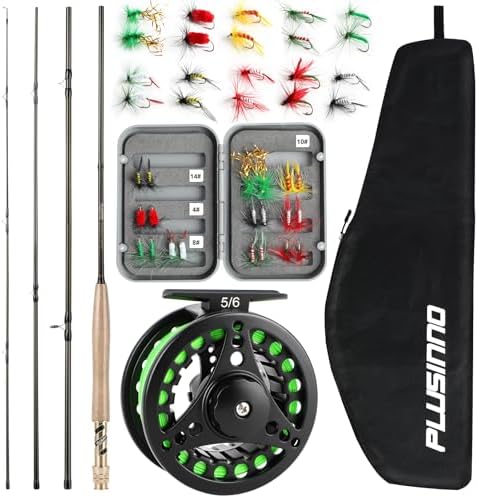 Visit on Amazon → Visit on Amazon →PLUSINNO Fly Fishing Rod and Reel Combo Kit |
Learning to fly cast | Matched rod, line, and reel, forgiving slow load | Not a bait or lure rod | $63.97 |
Should you buy the Ugly Stik Carbon Spinning Fishing Rod?
Yes, if you fish the same water most weeks. It is the value king for a reason, and the action is good enough for the vast majority of anglers. The blank takes abuse, the guides hold up, and the reel seat locks down. It is the rod I would hand a client without worrying about it.
It is not a travel rod. It is not a finesse tool. It is the rod that shows up, works, and does not ask for much. For most people reading this, that is the whole job.
Should you buy the KastKing Compass Telescopic Fishing Rod and Combo?
Yes, if your fishing has to fit in a small space. The Compass solves the problem that stops a lot of people from fishing at all, which is that a full-length rod does not fit in their life. It locks down, it balances, and it fishes well enough for panfish, trout, and school bass.
You give up a little sensitivity at the joints. If you can live with that, this is the most convenient rod on the list.
Should you buy the PLUSINNO Telescopic Rod and Reel Combo Kit?
Yes, if you have never held a rod. It puts everything in one purchase, which means you can fish the day it arrives instead of the day you finish shopping. The rod will outlast the reel, and that is normal at this price point.
Check current Amazon price and budget for a line swap. Fresh line on a starter reel changes the whole experience.
Should you buy the PLUSINNO Fly Fishing Rod and Reel Combo Kit?
Yes, if you want to learn to fly cast. A matched kit gets the rod and line weight right for you, and the slow load forgives the timing mistakes every beginner makes. Keep the ferrules clean, rinse it after every trip, and it will teach you the cast.
If you want one rod to cover bait, lures, and everything else, this is not it. Buy the spinning rod above instead.